


1of 38
Ντούτσιο ντι Μπουονινσένια 1255–1319
Ιταλιάνος From Σιένα Σιενέζικη Σχολή, Γοτθικό Τρεκέντο On Wikipedia in 31 of 32 languages


New to Gothic? Start here
If you remember one Gothic καλλιτέχνης, make it Ντούτσιο ντι Μπουονινσένια (1255–1319), the name behind Rucellai Madonna και Η Μεστά (Μαρία η Θεοτόκος με Αγγέλους και Αγίους). After that come Σιμόνε Μαρτίνι, Τζεντίλε ντα Φαμπριάνο, Πιζανέλλο και Στέφαν Λόχνερ. Our 38 picks go from Μάστερ Ματέο (born 1161) to Jan Baegert (born 1465), from 9 countries.
How we picked them. We list the artists our catalogue links to Gothic, from the most famous down. Artists born after 1955 that we cannot yet check on Wikidata are left out. The Wikipedia number shows in how many of our 32 languages Wikipedia writes about them.
Quick facts
Meet them one by one
1of 38
Ιταλιάνος From Σιένα Σιενέζικη Σχολή, Γοτθικό Τρεκέντο On Wikipedia in 31 of 32 languages
2of 38
Ιταλός From Σιένα Διεθνής Γοτθική Τέχνη On Wikipedia in 28 of 32 languages

3of 38
Ιταλία From Φαμπριάνο Διεθνής Γοτθική Τέχνη On Wikipedia in 23 of 32 languages

4of 38
Ιταλία From Πίζα Γοτθική τέχνη και Πρώιμη Αναγέννηση On Wikipedia in 28 of 32 languages

5of 38
Γερμανός From Μέερσμπουργκ Ύστερη Γοτθική, Διεθνής Γοτθική On Wikipedia in 19 of 32 languages

6of 38
Ιταλός From Φλωρεντία Πρώιμη Αναγέννηση On Wikipedia in 23 of 32 languages
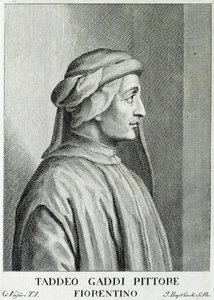
7of 38
Italian From Σιένα International Gothic On Wikipedia in 22 of 32 languages

8of 38
Ολλανδική From Νάιμεγκεν Διεθνές Γοτικό στυλ On Wikipedia in 21 of 32 languages

9of 38
Italian From Φλωρεντία Gothic, Early Renaissance On Wikipedia in 20 of 32 languages

10of 38
Ιταλός From Βενετία Βυζαντινή επιρροή & Γοτθική τέχνη On Wikipedia in 15 of 32 languages

12of 38
Ιταλός From Φλωρεντία Πρώιμη Αναγέννηση On Wikipedia in 17 of 32 languages

Loggia del Bigallo, Φλωρεντία: Εξερευνήστε την τέχνη του 14ου αιώνα και ιστορικά τεχνούργημα από την Compagnia del Bigallo, συμπεριλαμβανομένων έργων των Arnoldi & Daddi. Ένα μοναδικό Φλωρεντινό διαμάντι! Bernardo Daddi - Getty Museum: Εξερευνήστε τη συλλογή του J. Paul Getty Museum στο Getty Center και τη Getty Villa.
13of 38
Ιταλιάνος From Αρέτσο Γέφυρα μεταξύ της σχολής του Τζότο και της Σιενέτικης σχολής On Wikipedia in 16 of 32 languages

Born into a family of Florentine goldsmiths, his true name was Spinello Di Luca Spinelli, but he became known to history by the moniker "Aretino," signifying his connection to Arezzo.
15of 38
Italian From Φλωρεντία Gothic-Late Gothic

Andrea di Cione, known to history by the evocative moniker Orcagna, stands as one of the most influential figures in Florentine art during the mid-14th century—a period marked by a fascinating confluence of Gothic and Late Gothic artistic traditions. Born around 1308 in the heart of Florence, he emerged from a family deeply rooted in the city's prestigious artisan culture.
16of 38
Ισπανός Ρομανική Γλυπτική

Master Mateo, a sculptor whose name remains shrouded in mystery despite his monumental contribution to the Catedral de Santiago de Compostela Cathedral, stands as one of the most revered figures of Romanesque art in Spain. Born around 1161 in Galicia, though precise details about his life are scarce, Mateo’s legacy rests primarily on his unparalleled achievement: the Portico de la Gloria.
17of 38
Ιταλός From Σαντ Σελονί Διεθνές Γοτικό Στυλ On Wikipedia in 11 of 32 languages

In the shadowy corridors of art history, where names have been swallowed by the passage of centuries, the Master of the Codex of Saint George remains one of the most captivating enigmas of the fourteenth century. Active approximately between 1320 and 1330, this anonymous creator breathed life into sacred texts, transforming vellum into a window of divine revelation.
18of 38
Ολλανδική (Νε덜λανδική) From Ναϊμέχεν Διεθνές Γοτθικό στυλ On Wikipedia in 16 of 32 languages

19of 38
Γερμανός From Η Heiligenstadt Ύστερος Γοτθικός & Αναγέννηση

20of 38
Ολλανδός From Ζούτφεν Γοτϊκή Αναγέννηση On Wikipedia in 14 of 32 languages

Johannes Francke, known as Frater Francke, stands as a pivotal figure in the burgeoning artistic landscape of 15th-century Germany – specifically within the vibrant Gothic tradition of Hamburg. Early Life and Training: Precise information regarding Francke's formative years is scarce.
22of 38
Italian From Φλωρεντία Gothic On Wikipedia in 7 of 32 languages

Born in Florence sometime between 1320 and 1330, he emerged from a family deeply rooted in artistic tradition—his three elder brothers, Andrea di Cione (Orcagna), Nardo di Cione, and Matteo di Cione—were themselves accomplished painters, establishing a lineage of creative excellence.
23of 38
Catalan From Μπαλς Late Gothic, Flemish influence On Wikipedia in 10 of 32 languages

Between 1440 and 1445, his hand reached into the workshops of Zaragoza and Tarragona, where he encountered the influential Flemish style brought by Luis Dalmau. His ability to command both scale and detail is evident in his diverse body of work: The Archangel St Michael: A celestial sentinel rendered with heroic posture, framed by stylized foliage and a radiant, textured gold leaf that seems to emanate an inner light.
24of 38
Γερμανός From Βάιλ ντερ Στάτ Γοτθική Τέχνη της Μετα= On Wikipedia in 10 of 32 languages

Lukas Moser, a name perhaps unfamiliar to many outside the circles of art history, represents a pivotal figure in the transition from the International Gothic style to the burgeoning realism that would characterize early Renaissance painting.
25of 38
Γερμανός From Μίνδεν Διεθνές Γοτικό On Wikipedia in 13 of 32 languages

Born in Minden, Germany, around 1345 and passing away in Hamburg circa 1415, Master Bertram remains a captivating figure within the history of European art. Often referred to as Meister Bertram or Master of Minden, he stands as a pivotal artist bridging the International Gothic style with the nascent trends of the early Renaissance in Northern Europe.
Works to know · Their 100 best-known works · Μάστερ Μπέρτραμ αναπαραστάσεις
26of 38
Spanish Gothic-Italian

Pere Serra, also known as Jaume Serra, stands as a compelling figure in the transition from the International Gothic style to the burgeoning Renaissance aesthetic within Catalonia. Born around 1357 and passing away in 1406, his life coincided with a period of significant artistic and cultural change across Europe, yet he maintained a distinctly Catalan sensibility throughout his career.
27of 38
Ιταλός From Σαν Κουίρικο ντ'Όρτσα Φυσικισμός, Πρωτοαναγέννηση On Wikipedia in 10 of 32 languages
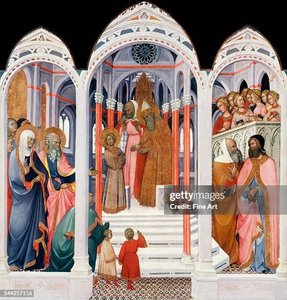
Works to know · Their 100 best-known works · Πάολο Ντι Τζιοβάννι Φέι αναπαραστάσεις
 The Coronation of the Virgin, and Saints
 The Camarlingo Niccolò di Leonardo della Gazaia, His Scrivener and Three Taxpayers (Sienese account book cover)
 Madonna and Child Enthroned with Saint John the Evangelist, Saint Peter, Saint Agnes, Saint Catherine of Alexandria, Saint Lucy, an Unidentified Female Saint, Saint Paul, and Saint John the Baptist, with Eve and the Serpent; the Annunciation
28of 38
Italian From Milan Gothic Illuminations

Giovannino de’ Grassi remains one of the most captivating enigmas of the late medieval period, a figure whose brushstrokes breathed life into the prestigious Visconti court of Milan. He operated in an era where the transition from the rigid structures of the Middle Ages to the burgeoning naturalism of the early Renaissance was beginning to stir, and de’ Grassim stood at the very heart of this aesthetic evolution.
29of 38
Catalan From Girona International Gothic On Wikipedia in 8 of 32 languages

A pioneer who fundamentally reshaped the visual language of Catalonia, Borrassà emerged from the historic streets of Girona to become a master of the International Gothic style. The foundations of Borrassá’s mastery were laid in his youth, likely under the guidance of his father, Honorat Borrassà, a fellow painter.
30of 38
Italian From Venice International Gothic On Wikipedia in 10 of 32 languages

In the heart of fifteenth-century Venice, a city defined by its shimmering lagoons and unparalleled maritime wealth, the artistry of Michele Giambono emerged as a luminous bridge between the medieval past and the dawning Renaissance. As a follower of luminaries such as Jacobello del Fiore and Gentile da Fabriano, Giambono inherited a fascination with delicate line work and the use of precious materials to evoke the celestial realm.
31of 38
Ιταλικός From Φλωρεντία Ύστερος Γοτθικός/Επανάσταση On Wikipedia in 7 of 32 languages

32of 38
Τσεχική From Ιταλία Γοτθικό On Wikipedia in 16 of 32 languages

Master Theoderic, known in Latin as Magister Theodoricus, was a Czech painter who left a clear mark on the Gothic era. He was active between approximately 1360 and 1380, a period when his presence in the Bohemian court was well-documented. He served as the favourite court painter of Charles IV, the Holy Roman Emperor.
See them at This space holds the weight of his most significant decorative program.
33of 38
Ιταλός From Φλωρεντία Ύστερη Γοτθική περίοδος On Wikipedia in 6 of 32 languages

Carlino και το Τριπτύχο της Βάπτισης του Χριστού, που δημιουργήθηκε αρχικά για έναν βωμό στο μοναστήρι των Camaldolese του S.
34of 38
Ιταλός From Φλωρεντία Γοτική Τέχνη On Wikipedia in 4 of 32 languages

35of 38
German Late Gothic On Wikipedia in 11 of 32 languages

The earliest evidence of his workshop dates back to around 1463, with the completion of a series of eight panels for the Ursulakirche (Ursuline Church) in Cologne. These scenes – including the Annunciation, Visitation, Nativity, Presentation in the Temple, Flight into Egypt, and various episodes from Mary’s childhood and later life – quickly established his reputation.
36of 38
From Wesel Late Gothic On Wikipedia in 3 of 32 languages

By 1492, Jan Baegert was recognized as a master in Kalkar, a significant milestone that confirmed his ability to manage large-scale commissions independently. Following the death of his father in 1502, Jan Baegert took over the family business in Wesel.
See them at Tracing the physical remains of Jan Baegert’s output requires looking toward the Westphalian and Lower Rhine regions.
37of 38
Italian Late Gothic On Wikipedia in 8 of 32 languages

He was born around 1405 in Siena, likely into a family involved in the production of dyes—a profession reflected in his surname, “ di Pietro ” (of Peter).
38of 38
Austrian International Gothic On Wikipedia in 5 of 32 languages

The earliest known works attributed to the Master are diptychs – two-panel paintings – discovered at the Cistercian Abbey of Heiligenkreuz in southeastern Austria. The left panel depicts the Annunciation, showcasing the Virgin Mary receiving the news of her divine conception, while the reverse portrays the Madonna and Child – a tender scene brimming with serenity.
Pictures worth knowing
When it happened
Fun figures
| Ιταλία | 19 |
|---|---|
| Ολλανδία | 4 |
| Ισπανία | 4 |
| Γερμανία | 3 |
| Italy | 2 |
| Germany | 2 |
| Η Γερμανία | 1 |
| Spain | 1 |
| 12thος thếχνου | 1 |
|---|---|
| 13thος thếχνου | 6 |
| 14thος thếχνου | 22 |
| 15thος thếχνου | 5 |
| Μετροπολιτικό Μουσείο Τέχνης | 8 |
|---|---|
| Galleria degli Uffizi | 4 |
| Μουσείο Isabella Stewart Gardner | 3 |
| Εθνική Πινακοθήκη Λονδίνου | 3 |
| Μουσείο της Όπερας του Δουόμο | 2 |
| Μουσείο Wallraf-Richartz | 2 |
| Μουσεία Τέχνης του Χάρβαρντ | 2 |
| Εθνική Πινακοθήκη Τέχνης | 2 |
Just the names
Ντούτσιο ντι ΜπουονινσένιαΙταλιάνος · 1255–1319Σιμόνε ΜαρτίνιΙταλός · 1284–1344Τζεντίλε ντα ΦαμπριάνοΙταλία · 1370–1427ΠιζανέλλοΙταλία · 1395–1455Στέφαν ΛόχνερΓερμανός · 1410–1451Ταντέο ΓκάντιΙταλός · 1300–1366Λορέντσο ΜόνακοItalian · 1370–1425Αδελφοί ΛίμπουρχΟλλανδική · 1385–1416Άνιολο ΓκάντιItalian · 1350–1396Παόλο ΒενετσιάνοΙταλός · 1333–1358 Λίππο Μέμμι1291–1356Μπερνάρντο ΝτάντιΙταλός · 1290–1348Σπινέλο ΑρετίνοΙταλιάνος · 1350–1410
 Ανδρέας ΠισάνοΙταλός · 1290–1348Ανδρέας Ντι Τσιόνε Ντι Αρκάντζελλο (Ορνάγκνα)Italian · 1308–1368Μάστερ ΜατέοΙσπανός · 1161–1217Μπέρνατ ΜαρτορέλΙταλός · 1390–1452Ζαν ΜαλουέλΟλλανδική (Νε덜λανδική) · 1370–1415Τίλμαν ΡιμενσχενάιντερΓερμανός · 1460–1531Μάστερ ΦράνκεΟλλανδός · 1380–1435
 Κλάους ΣλούτερΟλλανδός · 1355–1406Ιακώβος Ο Ντί ΤσιόνεItalian · 1325–1399Χαуμε ΧουγκέτCatalan · 1445–1492Λούκας ΜόσερΓερμανός · 1390–1443Μάστερ ΜπέρτραμΓερμανός · 1345–1415Περε ΣέραSpanish · 1357–1406Πάολο Ντι Τζιοβάννι ΦέιΙταλός · 1345–1411Giovannino De' GrassiItalian · 1350–1398Lluís BorrassàCatalan · 1360–1425Michele GiambonoItalian · 1400–1462Ιωάννης Δαλ ΠόντηςΙταλικός · 1385–1438Θεοδώριχος Της ΠράγαςΤσεχική · Νικολό Ντι Πιέτρο ΤζερίνιΙταλός · 1368–1415Πάτσινο Ντι ΜποναγκουίνταΙταλός · 1280–1340Master Of The Life Of The VirginGerman · Jan Baegert1465–1535Master Of The OsservanzaItalian · Master of Heiligenkreuz AbbeyAustrian ·
Good questions
Ντούτσιο ντι Μπουονινσένια (#1) βρίσκεται στην πρώτη θέση σε αυτή την κατάταξη, ακολουθούμενος από τον Σιμόνε Μαρτίνι (#2) και τον Τζεντίλε ντα Φαμπριάνο (#3).
Ντούτσιο ντι Μπουονινσένια (#1), Σιμόνε Μαρτίνι (#2), Τζεντίλε ντα Φαμπριάνο (#3), Πιζανέλλο (#4) και Στέφαν Λόχνερ (#5).
Ιταλία: 19 από τα 38 καλλιτέχνες σε αυτή τη λίστα γεννήθηκαν εκεί, ενώ τα Ολλανδία (4) και Ισπανία (4) γεννήθηκαν αλλού.
Οι καλλιτέχνες με την υψηλότερη κατάταξη που γεννήθηκαν στο Ιταλία είναι οι Ντούτσιο ντι Μπουονινσένια (#1), Σιμόνε Μαρτίνι (#2), Τζεντίλε ντα Φαμπριάνο (#3), Πιζανέλλο (#4) και Ταντέο Γκάντι (#6).
Ο παλαιότερος καλλιτέχνης σε αυτή τη λίστα είναι ο Μάστερ Ματέο (#16), γεννημένος το 1161.
Τα μουσεία που διαθέτουν τα περισσότερα σημαντικά έργα από αυτή τη λίστα είναι τα Μετροπολιτικό Μουσείο Τέχνης (8), Galleria degli Uffizi (4) και Μουσείο Isabella Stewart Gardner (3).
Φλωρεντία: 8 από τα καλλιτέχνες σε αυτή τη λίστα γεννήθηκαν εκεί.
“In his early years, he worked within the bustling workshops of Florence, contributing to monumental works such as frescoes in the church of the Carmine and Santa Maria Novella.” — από τη βιογραφία του Σπινέλο Αρετίνο (#13).
Οι περισσότεροι καλλιτέχνες σε αυτή τη λίστα γεννήθηκαν κατά την περίοδο 14thος thếχνου (22 από 38), μεταξύ 1161 και 1465 συνολικά.
Ο κατάλογός μας περιλαμβάνει 1,687 έργα από αυτούς τους καλλιτέχνες. Κάθε έργο είναι διαθέσιμο είτε ως χειροποίητη αναπαραγωγή σε λάδι είτε ως εκτύπωση.
Read more
Other styles
 Σημαντοί καλλιτέχνες BaroqueRembrandt van Rijn · Ρέμπραντ
 Σημαντοί καλλιτέχνες Contemporary RealistΟι Συλλέκτριες · Ζαν Φρανσουά Μιγέ
 Σημαντοί καλλιτέχνες ImpressionistΗ Νύχτα Πλούσια Στα Άστρα (Νέα Υόρκη, MoMA) · Βίνσεντ Βαν Γκογκ
 Σημαντοί καλλιτέχνες RomanticistΚρόνος να καταβροχθίζει τον Γιο του · Φρανθίσκο Γκόγια
 Σημαντοί καλλιτέχνες NeoclassicistΟ Θάνατος του Μαράτ · Ζακ-Λουί Νταβίντ
 Σημαντοί καλλιτέχνες RealistΗ Αρχή του Κόσμου · Γκυστάβ Κουρμπέ
 Σημαντοί καλλιτέχνες Dutch Golden AgeΤο Κορίτσι με το Μαργαριτάρι · Γιοχάνες Βερμέερ
 Σημαντοί καλλιτέχνες RenaissanceΜόνα Λίζα (La Gioconda) · Λεονάρντο Ντα Βίντσι
 Σημαντοί καλλιτέχνες ExpressionistΣύνθεση Ζ · Βασίλι Καντίνσκι
 Σημαντοί καλλιτέχνες RococoΗ Πρώτη Επίσκεψη στην Κύθηρα · Αντουάν Βαττώ
Other eras
 Σημαντοί καλλιτέχνες Early MedievalSnowy River · Wáng Wéi
 Σημαντοί καλλιτέχνες High MedievalΜάδονα σε Μαέστα (Μάδονα Ογνιαντίνι) · Τζόττο
 Σημαντοί καλλιτέχνες Late MedievalΆγια Τριάδα · Αντρέι Ρουμπλιόβ
 Σημαντοί καλλιτέχνες RenaissanceΗ Δημιουργία του Αδάμ · Μιχαήλ Άγγελος
 Σημαντοί καλλιτέχνες Early ModernΗ Κλήση του Ματθαίου · Καραβάτζο
 Σημαντοί καλλιτέχνες 19th CenturyΝυφάδες του Νερού (ή Λιλιές του Νερού) · Κλόντ Μονέ
 Σημαντοί καλλιτέχνες ModernΓκουέρνικα · Πάμπλο Πικάσο
 Σημαντοί καλλιτέχνες ContemporaryWind Sculpture III (one in a series of nine) · Yinka Shonibare
Keep exploring


