


1



Ενημερωμένο Οκτώβριος 2026 · κατάταξη βάσει του σκορ δημοφιλίας μας (αναζητήσεις, επισκέψεις και παραγγελίες για κάθε έργο) · 83 έργα του Frederick Morgan στον κατάλογό μας
Με σύντομη περιγραφή
Το πιο γνωστό έργο του Frederick Morgan είναι το Bob Apple. Αμέσως μετά ακολουθούν οι Charity και Yuletide. Από τα 83 έργα του Frederick Morgan στον κατάλογό μας, αυτά τα 83 είναι τα πιο γνωστά. Κάθε ένα συνοδεύεται από το έτος δημιουργίας του, το μουσείο στο οποίο βρίσκεται και μια σύντομη σημείωση για το τι το κάνει να ξεχωρίζει.


 Skipping1896
12
 See Saw1898
13
 Sunny Hours1902
14
 the apple gatherers
15
 On the Beach
16
 Love Me, Love My Dog
17
 Dainty Fares1905
18
 The Little Strangers1899
19
 Picking Tulips
20
 The Ferry
21
 untitled
22
 Not Far to Go
23
 sweethearts
24
 Off to the Fair
25
 untitled (4526)
26
 Helping Grandpa
27
 Motherly Love
28
 untitled (9424)
29
 The Proposal
30
 his first birthday
31
 Motherly Love
32
 Good Friends
33
 The Gleaners
34
 A Welcome For Daddy
35
 An Applegathering
36
 Childhood Sweethearts
37
 Sisters
38
 The Toy Parade
39
 Not Far To Go
40
 Midday Rest
41
 The School Belles
42
 The Garland
43
 The Emigrants' Departure
44
 His First Birthday
45
 the dancing bear
46
 Picking wild flowers
47
 Merry as the day is long
48
 His Turn Next
49
 Dinner Time
50
 A Fathers Return
51
 Steady
52
 On the Beach
53
 Milk For The Calves
54
 Grandfathers Birthday
55
 Gentle Reminder
56A Jovial Fisherman
57
 The Flower Gatherer
58
 Which One Do You Love Best
59
 marguerites
60
 the garland
61
 mothers darling
62
 after school
63
 the orange seller
64
 Feeding the Rabbits
65
 the danty chair
66
 Happy as the Days are Long
67
 untitled (7433)
68
 the emigrants departure
69
 the coming nelson
70
 nevermind
71
 the haymakers
72
 untitled (1192)
73
 untitled (6979)
74
 bob apple
75
 nutting
76
 Ring of Roses
77
 Over the Garden Wall
78
 sea horses
79
 Going to the Fair
80
 a day on the river
81
 Hold Tight
82
 A Heavy Load
83
 Grandfather's Birthday (also known as Grandpapa's Birthday)
Τα τέσσερα θέματα που εμφανίζονται πιο συχνά σε αυτά τα έργα, το καθένα με το πιο γνωστό του παράδειγμα.
Τα 2 μουσεία που φιλοξενούν το μεγαλύτερο μέρος των έργων σε αυτήν τη σελίδα.
| Μουσεία | Πόλη | Έργα του Frederick Morgan | Πάτρια από αυτή τη λίστα |
|---|---|---|---|
 Mcmanus: Dundee's Art Galleries And Museums |
Dundee | 1 | A Modern Eve |
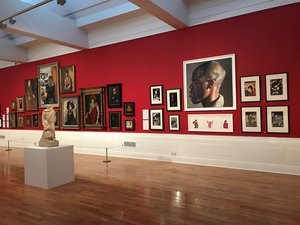 Sheffield City Art Galleries |
Sheffied | 1 | Gleaners |
Επιλέξτε μια δεκαετία για να δείτε το κορυφαίο της έργο.

Στην κορυφή της λίστας βρίσκεται το Bob Apple. Ακολουθούν το Charity και το Yuletide.
Bob Apple, Charity, Yuletide, a flood, Under a changeful sky, A Modern Eve, Not of the fold, Playmates, Gleaners και Garden of Eden. Θα βρείτε το έτος και το μουσείο για κάθε ένα στη λίστα παραπάνω.
Στο κατάλογό μας υπάρχουν 83 έργα του Frederick Morgan, με ημερομηνίες από 1878 έως 1905.
Θα τα βρείτε τα περισσότερα σε Mcmanus: Dundee's Art Galleries And Museums (Dundee) και Sheffield City Art Galleries (Sheffied). Η λίστα μουσείων παραπάνω περιλαμβάνει την πλήρη καταγραφή.
Στην 1880s, περισσότερο από οποιαδήποτε άλλη εποχή: 4 από τα 83 έργα σε αυτήν τη σελίδα χρονολογούνται τότε, με A Modern Eve από αυτά να ξεχωρίζουν.
Το παλαιότερο έργο εδώ είναι το Under a changeful sky (1878), ενώ το πιο πρόσφατο είναι το Dainty Fares (1905).
Victorian era (10), Pastoral scene (7) και Rural life (5), από τα 83 έργα σε αυτήν τη σελίδα.
Contemporary realism και Romanticism, όπως μπορείτε να δείτε στα έργα σε αυτήν τη σελίδα.
Ναι. Κάθε έργο σε αυτήν τη σελίδα είναι διαθέσιμο ως χειροποίητη αναπαραγωγή σε λάδι ή ως εκτύπωση, στο μέγεθος που σας εξυπηρετεί. Απλώς επισκεφθείτε τη σελίδα του έργου για να πραγματοποιήσετε την παραγγελία σας.
Frederick Morgan (1847 – 3 April 1927) wasn't merely a painter; he was a weaver of idyllic scenes, a chronicler of childhood innocence captured with an almost heartbreaking tenderness. Born in London amidst the bustle of Victorian England, his artistic journey began not through formal training but through the tutelage of his father, John Morgan – a genre artist himself – who instilled within him a profound appreciation for observing and depicting everyday life. This formative influence shaped Morgan’s distinctive style: a delicate balance between realism and romanticism, where the mundane transformed into moments of quiet beauty.
Morgan's early years were marked by a shift from his father’s guidance to a period of self-discovery. Following a brief stint in various London trades after his father’s advice, he returned to art, honing his skills through portrait commissions that unexpectedly provided invaluable experience. These portraits demanded meticulous attention to detail and an understanding of human expression – skills that would later inform his genre paintings. It was during this time that Morgan developed a keen eye for capturing the nuances of emotion and the subtle gestures that defined character, elements he skillfully translated into his celebrated depictions of children.
A pivotal period in Morgan’s career unfolded in the village of Shere, nestled near Guildford in Surrey. This picturesque location became a sanctuary—a place where he could dedicate himself entirely to painting scenes of rural life and, most notably, children at play. The light in Shere was particularly conducive to his artistic vision; it bathed the landscapes in a soft, golden glow that perfectly complemented his palette of muted colors and delicate brushstrokes. He established a studio there, creating a space where he could immerse himself in the rhythms of rural life, observing families, children, and animals with an almost reverent gaze.
During this period, Morgan’s output flourished, producing some of his most beloved works – *The Doll’s Tea Party*, *Emigrants' Departure*, and *School Belles* among them. These paintings weren’t simply representations of scenes; they were imbued with a palpable sense of warmth, nostalgia, and quiet joy. He captured the fleeting moments of childhood—a shared game, a stolen glance, a simple pleasure—with an extraordinary sensitivity that resonated deeply with audiences. The patronage of Thomas Agnew & Sons further solidified his success, ensuring that his paintings reached a wide audience through widespread reproduction.
Morgan’s artistic style was profoundly influenced by the prevailing trends of Victorian England, particularly the popularity of genre painting. However, he possessed a unique sensibility that set him apart from his contemporaries. He drew inspiration from artists like Arthur John Elsley, whose own depictions of children shared a similar emphasis on sentimentality and idyllic beauty. Yet, Morgan’s work retained its own distinct character—a subtle melancholy beneath the surface of happiness, a quiet awareness of the transience of childhood.
His technique was characterized by meticulous detail, soft brushstrokes, and a masterful use of light and shadow. He employed a limited palette of muted colors – browns, greens, blues, and yellows—to create a sense of atmosphere and to evoke the feeling of a bygone era. Notably, Morgan often sought assistance from artists like Arthur John Elsley or Allen Sealey when depicting challenging subjects such as animals or pets, recognizing the importance of accurate representation in capturing the essence of his scenes.
Frederick Morgan’s paintings achieved remarkable popularity during his lifetime, enjoying widespread publication and exhibition. His works are now housed in prestigious collections around the world, including the Walker Art Gallery in Liverpool and the Russell-Cotes Museum in Bournemouth. His legacy as one of the most celebrated genre painters of the Victorian era endures, not only for his technical skill but also for his ability to capture the enduring beauty and innocence of childhood—a timeless theme that continues to resonate with viewers today.
Morgan’s impact extends beyond his artistic achievements. He represents a significant chapter in the history of British art, demonstrating how artists can find inspiration in everyday life and transform it into works of lasting value. His paintings serve as a poignant reminder of a simpler time—a time when childhood was viewed with such reverence and wonder.