Μενού

Αλέξανδρος Άκσυνιν

1949 - 1985

Βασικά Στοιχεία

  • Color intensity:
    • μονόχρωμο
    • ισορροπημένο
  • Typical colors: λευκό
  • Works on APS: 353
  • Corpus themes:
    • dürer-inspired etching
    • geometric abstraction
    • dürer-inspired precision
    • ukrainian winter scenes
    • soviet realism influence
  • Nationality: Ουκρανία
  • Room fit: γραφείο
  • Creative periods: mature period
  • Top-ranked work: Cup
  • Top 3 works:
    • Cup
    • Dostoevsky
    • M XII
  • Περισσότερα…
  • Died: 1985
  • Lifespan: 36 years
  • Copyright status: Under copyright
  • Also known as:
    • Ολεξάνδρ Ακσίνιν
    • Άλεκσανδρ Άκσυνιν
  • Art period: Μοντέρνα εποχή
  • Born: 1949, Λεβίβα, Ουκρανία
  • Movements: surrealism
  • Topics explored:
    • geometric patterns
    • geometric design
    • surrealism
    • symbolic imagery
    • symbolism

Oleksandr Aksinin: A Master of Soviet Printmaking

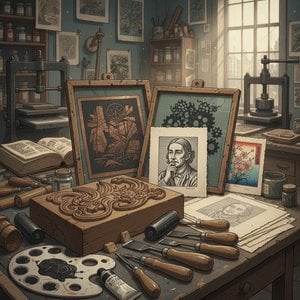
Oleksandr Aksinin emerged as a prominent figure within the Soviet art scene, born in Lviv, Ukraine, in 1949. Details concerning his formative years remain somewhat elusive, yet his unwavering devotion to artistic pursuits was evident from an early age—a dedication that would ultimately define his extraordinary legacy. He swiftly embraced etching, a printmaking technique that transcended mere craftsmanship and became inextricably linked with his artistic identity, securing him the moniker ‘Dürer of Lviv,’ a recognition of unparalleled technical prowess and visionary artistry.

Artistic Development and Style

Aksinin’s distinctive style is characterized by an astonishing level of precision and meticulous detail—a hallmark that distinguishes his oeuvre from many contemporaries. This exacting approach earned him the revered title ‘Dürer of Lviv,’ reflecting not only his mastery of etching but also a profound understanding of artistic principles rooted in the traditions of German Renaissance art. His canvases frequently depict scenes from Ukrainian life, particularly serene winter landscapes and picturesque rural settings—images rendered with breathtaking realism and imbued with palpable atmospheric depth. He skillfully manipulated light and shadow within his etchings, creating compositions that captivated viewers’ imaginations and conveying complex narratives through subtle tonal variations.

Notable Works and Contributions

“The End of Winter” stands as one of Aksinin's most celebrated masterpieces—a testament to his ability to distill the very essence of Ukrainian winter into a single, unforgettable image. Similarly, “Haymaking,” part of his acclaimed series, captures the rhythmic beauty of rural labor and offers a poignant glimpse into Ukraine’s cultural heritage. Beyond these iconic pieces, Aksinin produced a remarkably diverse body of work encompassing portraits, landscapes, and abstract compositions—all united by his unwavering commitment to etching as his primary medium. His prints are imbued with an intellectual curiosity that mirrors the spirit of thinkers like Albert Einstein and Mikhail Bakhtin, reflecting a worldview shaped by philosophical inquiry and artistic experimentation.

Influences and Artistic Context

Although specific artistic influences remain sparsely documented, Aksinin’s work undeniably draws inspiration from masters such as Albrecht Dürer—a connection that underscores his deep engagement with European artistic heritage. His oeuvre navigates the complexities of socialist realism while simultaneously asserting a singular artistic voice—a delicate balance achieved through meticulous observation and profound emotional resonance. The cultural landscape of Ukraine profoundly impacted Aksinin’s subject matter and aesthetic sensibilities, fostering an appreciation for tradition alongside a willingness to challenge conventions.

Legacy and Historical Significance

Despite his tragically premature demise in 1985, Oleksandr Aksinin cemented his place as a pivotal figure in Soviet printmaking—a legacy secured through the enduring presence of his artworks in prominent museum collections across Europe. Art critics universally acknowledge him as a 20th-century master of etching, recognizing not only his technical brilliance but also his artistic vision’s capacity to convey profound philosophical ideas and emotional truths. Aksinin's art serves as an invaluable conduit for understanding Ukrainian culture during the Soviet era—a testament to his enduring contribution to both artistic history and cultural heritage.

ΚВИΖ Τέχνης

Για κάθε ερώτηση υπάρχει μόνο μία σωστή απάντηση.

Ερώτηση 1:
Ποιο χαρακτηριστικό του στυλ του Αξίνη τον έκανε γνωστό ως τον «Λευκόπετρα του Λειβών»;
Ερώτηση 2:
Ποια κατηγορία τέχνης αποτελεί κυρίως το έργο του Αξίνη;
Ερώτηση 3:
Ποια θεματική σκηνή συχνά εμφανίζεται στα έργα του Αξίνη;
Ερώτηση 4:
Σε ποια ιστορική εποχή ζούσε και εργαζόταν ο Αλέξανδρος Αξινής;
Ερώτηση 5:
Πώς χαρακτηρίζεται η τεχνική του Αξίνη;