Πορτρέτο του Gustaf Söderberg

Ο οδηγός σας για τα 5 πιο διάσημα έργα του Gustaf Söderberg

Ενημερωμένο Νοέμβριος 2026 · κατάταξη βάσει του σκορ δημοφιλίας μας (αναζητήσεις, επισκέψεις και παραγγελίες για κάθε έργο) · 5 έργα του Gustaf Söderberg στον κατάλογό μας

Με σύντομη περιγραφή

Το πιο γνωστό έργο του Gustaf Söderberg είναι το The Grotto of Posillipo, Naples (1820). Θα το βρείτε στο Μετροπολιτικό Μουσείο Τέχνης στην Νέα Υόρκη. Επόμενοι στη λίστα είναι οι View over the Tiber to the Aventine, Rome (1820) και A Temple in Agrigento, Sicily. Στο κατάλογό μας υπάρχουν 5 έργα του Gustaf Söderberg· αυτός ο οδηγός επιλέγει τα 5 πιο γνωστά, μαζί με την χρονολογία, το μουσείο και την ιστορία κάθε κομμάτι.

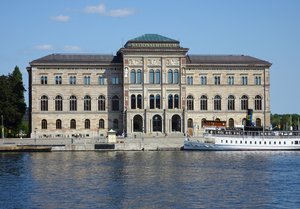
1799 – 1875, Norrköping Περισσότερα έργα: Nationalmuseum

Τα 10 έργα του Gustaf Söderberg που πρέπει να γνωρίζετε πρώτα

1
The Grotto of Posillipo, Naples (1820) του Gustaf Söderberg

The Grotto of Posillipo, Naples

1820 · Oil On Paper · Μετροπολιτικό Μουσείο Τέχνης, Νέα Υόρκη

The Grotto of Posillipo, Naples is an oil study by the Swedish artist Gustaf Söderberg, executed in 1820. This work captures a specific geological and historical site located in southern Italy. The subject is a nearly half-mile-long tunnel carved through the rocky promontory that separates the city of Naples from the town of Posillipo. This passage dates back to the first century.

Χειροποίητη ελαιογραφική αναπαραγωγή από $183 25 × 39 cm
Αποκτήστε το χειροποίητο Διαβάστε την ιστορία του

Όπου μπορείτε να δείτε τα έργα του Gustaf Söderberg

Τα 2 μουσεία που φιλοξενούν το μεγαλύτερο μέρος των έργων σε αυτήν τη σελίδα.

Μουσείο Πόλη Έργα του Gustaf Söderberg Πάτρια από αυτή τη λίστα
Nationalmuseum, ΣτοκχόλμηNationalmuseum Στοκχόλμη 4 View over the Tiber to the Aventine, Rome, A Temple in Agrigento, Sicily, Vesuvius Seen from St January Bridge, Naples
Μετροπολιτικό Μουσείο Τέχνης, Νέα ΥόρκηΜετροπολιτικό Μουσείο Τέχνης Νέα Υόρκη 1 The Grotto of Posillipo, Naples

Χάρη σε κάθε χρόνο: τα πιο γνωστά έργα του Gustaf Söderberg

Τα έργα του Gustaf Söderberg από το 1820 που εμφανίζονται σε αυτήν τη σελίδα είναι όλα από εκείνη την εποχή. Ακολουθούν, με σειρά δημοφιλίας.

Έργα ανά έτος

Επιλέξτε μια χρονιά για να δείτε τα έργα της.

Gustaf Söderberg: γρήγορες απαντήσεις για τα έργα

Ποιο είναι το πιο γνωστό έργο του Gustaf Söderberg;Δείτε την απάντηση

Στην κορυφή της λίστας βρίσκεται το The Grotto of Posillipo, Naples (1820), στο Μετροπολιτικό Μουσείο Τέχνης, Νέα Υόρκη. Ακολουθούν το View over the Tiber to the Aventine, Rome (1820) και το A Temple in Agrigento, Sicily.

Πόσο ηλικία είχε ο/η Gustaf Söderberg όταν δημιούργησε το The Grotto of Posillipo, Naples;Δείτε την απάντηση

21 ετών. Ο/Η Gustaf Söderberg γεννήθηκε το 1799, και το έργο The Grotto of Posillipo, Naples χρονολογείται από το 1820.

Πόσα έργα του Gustaf Söderberg υπάρχουν στον κατάλογό μας;Δείτε την απάντηση

Στο κατάλογό μας έχουμε 5 έργα του Gustaf Söderberg.

Σε ποια μουσεία μπορείτε να δείτε τα διάσημα έργα του Gustaf Söderberg;Δείτε την απάντηση

Θα τα βρείτε τα περισσότερα σε Nationalmuseum (Στοκχόλμη) και Μετροπολιτικό Μουσείο Τέχνης (Νέα Υόρκη). Η λίστα μουσείων παραπάνω περιλαμβάνει την πλήρη καταγραφή.

Πότε δημιούργησε ο/η Gustaf Söderberg τα πιο διάσημα έργα του/της;Δείτε την απάντηση

Στην 1820, περισσότερο από οποιαδήποτε άλλη εποχή: 2 από τα 5 έργα σε αυτήν τη σελίδα χρονολογούνται τότε, με The Grotto of Posillipo, Naples από αυτά να ξεχωρίζουν.

Ποια διάσημα έργα του Gustaf Söderberg βρίσκονται στο Nationalmuseum;Δείτε την απάντηση

Μπορείτε να δείτε 4 από τα έργα σε αυτήν τη σελίδα στο Nationalmuseum, Στοκχόλμη, συμπεριλαμβανομένων των View over the Tiber to the Aventine, Rome, A Temple in Agrigento, Sicily και Vesuvius Seen from St January Bridge, Naples.

Πού μπορώ να παραγγείλω μια αναπαραγωγή του Gustaf Söderberg;Δείτε την απάντηση

Ναι. Κάθε έργο σε αυτήν τη σελίδα είναι διαθέσιμο ως χειροποίητη αναπαραγωγή σε λάδι ή ως εκτύπωση, στο μέγεθος που σας εξυπηρετεί. Απλώς επισκεφθείτε τη σελίδα του έργου για να πραγματοποιήσετε την παραγγελία σας.

Η ιστορία του Gustaf Söderberg

A Life of Service and Sketching

Gustaf Söderberg lived a life defined by the dualities of Swedish military discipline and the quiet observation of the natural world. Born in Norrköping, Östergötland, he was the son of a clothing manufacturer, Johan Söderberg, and Agnes Arosenius. While his career path led him through the ranks of the military, his eyes remained fixed on the landscapes of Europe. He trained as a military draftsman, a skill that provided a precise foundation for his later explorations in light and atmosphere.

His professional trajectory was marked by steady advancement. He served as an Adjutant at the Expeditionary General for the Army in Stockholm and eventually attained the rank of Colonel. In 1827, he held the position of ordination officer to the Crown Prince, and by 1833, he had become Adjutant to the Crown Prince himself. Even amidst these official duties, his artistic inclinations found expression through lithographic work, specifically in creating posters for Swedish and Norwegian military uniforms completed in 1828.

The Pursuit of Light

Söderberg holds a specific place in Swedish art history as the first painter from his nation to embrace plein-air painting. This shift toward painting outdoors was not an isolated impulse but a learned technique. He studied under the French landscapist Achille-Etna Michallon, whose influence helped him move beyond the rigid confines of studio work. His travels provided the necessary canvas for this new approach.

In 1819, he traveled to Italy, and by 1820, his sketches began to capture the specific geometries of foreign locales. During a journey through southern Italy and Sicily, he produced studies such as The Grotto of Posillipo, Naples. His time in Rome also yielded works like Houses, Rome, where he utilized an extraordinary disparity of scale to depict architectural fragments against the sky. These early excursions were followed by time spent in Paris in 1821 and a painting tour through Norway in 1824.

Final Years and Quiet Observations

The later decades of Söderberg's life saw him moving through the various stages of European travel while maintaining his military obligations. He participated regularly in the Academy of Fine Arts exhibitions from 1822 onwards, bringing his observations to a wider audience. After retiring from military service in 1864, he spent his remaining years traveling across the continent.

He passed away in Stockholm in 1875. His legacy is found not in grand historical narratives, but in the meticulous oil studies on paper that remain in collections such as The Metropolitan Museum of Art. These works preserve a specific moment of transition in Swedish art, capturing the light of Naples and the structures of Rome through the lens of a man who understood both the precision of a soldier and the sensitivity of a draftsman.