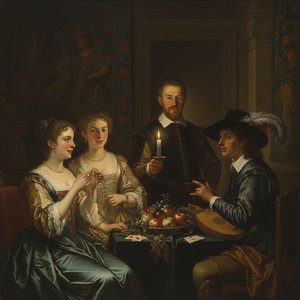
Πρώιμη Ζωή, Οικογένεια και Εκπαίδευση
Ο Δεκέμβριος του 1617 σηματοδοτεί την αρχή της ζωής του Γεράρτ Τερ Μπορχ στο Zwolle, στην επαρχία Overijssel της Ολλανδικής Δημοκρατίας. Η καλλιτεχνική φύση κυκλοφορεί στα αίμα του. Ο πατέρας του, ο Γεράρτ Τερ Μπορχ ο Παλαιότερος, του παρέχει την αρχική καθοδήγηση, διαμορφώνοντας την πρώιμη κατανόηση του παιδιού για την τέχνη. Αυτή η οικογενειακή τάση εκτείνεται και στην αδελφή του, τη Gesina ter Borch, η οποία επίσης ακολουθεί την καριέρα στη ζωγραφική.
Η εκπαίδευση μεταφέρεται από τον οικιακό τομέα στα αστικά κέντρα της Ολλανδικής Δημοκρατίας. Μέχρι το 1632, ο Γεράρτ Τερ Μπορχ βρίσκεται στο Άμστερνταμ. Πιθανότατα μελετά υπό την καθοδήγηση του Willem Cornelisz Duyster ή του Pieter Codde, απορροφώντας τις τεχνικές βάσεις που απαιτούνται για μια επαγγελματική καριέρα. Η δυναμική συνεχίζεται το 1634, όταν μετακομίζει στο Χάαρλεμ για να μελετήσει με τον Pieter de Molijn. Αυτή η περίοδος έντονης διδασκαλίας κορυφώνεται το 1635, όταν ο δεκαοχίλιαρος Γεράρτ Τερ Μπορχ γίνεται δεκτός στη Έταιρωση St. Lukas στο Χάαρλεμ, μια επίσημη αναγνώριση της αναπτυσσόμενης δεξιότητάς του.
Ταξίδια και Διεθνής Δραστηριότητα
Η ζωή του Τερ Μπορχ διασχίζει τα σύνορα. Μέχρι το 1635, βρίσκεται στο Λονδίνο, απορροφώντας την ατμόσφαιρα της αγγλικής αυλής. Αυτή η περίοδος κίνησης συνεχίζεται μέσα από τη Γερμανία και τη Γαλλία, οδηγώντας τον τελικά στο Μεσογειακό. Το 1641, φτάνει στη Ρώμη. Η ιταλική επιρροή είναι άμεση και συγκεκριμένη· εργάζεται πάνω σε χαλκό, δημιουργώντας κομψά πορτρέτα όπως το Jan Six και το A Young Lady. Αυτές οι μικρές, λεπτομερείς επιφάνειες αντικατοπτρίζουν μια αλλαγή στην τεχνική του εστίαση κατά τη διάρκεια της παραμονής του στην Ιταλία.
Η ορμή τον οδηγεί προς την Ιβηρική Χειμώνα. Στο Μαδρίτη, η φήμη του φτάνει στην ισπανική αυλή. Ο Φίλιππος IV του χαρίζει τον τίτλο του ιππότη, μια σπάνια τιμή για έναν Ολλανδό ζωγράφο. Αυτή η περίοδος υψηλού επιπέδου προσήμεισης και διεθνούς έκθεσης σηματοδοτεί μια κορύφωση στην κοινωνική και επαγγελματική του θέση. Μετά από αυτές τις περιπλανήσεις, επιστρέφει στις Ολλανδίες, βρίσκοντας κατοικία στο Χάαρλεμ και αργότερα εγκαθίστηται στο Deventer, όπου τελικά γίνεται μέλος του δημοτικού συμβουλίου.
Σημαντικά Έργα και Επιτεύγματα
Η δεκαετία του 1640 φέρνει μια στροφή προς την σημαντική ιστορική παρατήρηση. Το 1648, εκείνος αιώνιαζει τη σοβαρότητα ενός μεγάλου πολιτικού σημείου καμπής στο The Ratification of the Treaty of Münster, 15 May 1648. Αυτή η περίοδος βλέπει επίσης τον να τελειοποιεί τις οικιακές σκηνές που καθορίζουν τη φήμη του. Το The Knifegrinder's Family αναδύεται από τις δεκαετίες 1630 έως 1650, μια περίοδος όπου εστίασε έντονα στη ζωή των κοινογενών ανθρώπων και των καλλιτεχνών.
Η υφή γίνεται η κύρια γλώσσα στο μεταγενέστερο έργο του. Στο The Letter, το φως και η αισθητή ποιότητα του υφάσματος παίρνουν πρωήγεια ρόλο. Μεταβαίνει από αυτές τις οικιακές, ήσυχες στιγμές σε πιο δομημένα κοινωνικά περιβάλλοντα. Μέχρι το 1655, έργα όπως το The Glass of Lemonade επιδεικνύουν τη συνεχιζόμενη μαίστερη στο φως μέσα σε οικιακά εσωτερικά δωμάτια. Η εστίαση παραμένει στις λεπτές αποχρώσεις της ανθρώπινης αλληλεπίδρασης και στην υλική πραγματικότητα των αντικειμένων που τους περιβάλλουν.
Η τελευταία φάση της καριέρας του συνεχίζει αυτή την ακρίβεια. Το The Concert, που χρονολογείται στο 1675, δείχνει έναν ώριμο καλλιτέχνη ακόμα και preoccupied με το παιχνίδι του φωτός και της σκιάς σε ένα μουσικό σκηνικό. Η ικανότητά του να αποδίδει τη λάμψη των γυαλιστερών επιφανειών και το λεπτό υφαστό των δριδακτών παραμένει σταθερή καθ' suốt τις δεκαετίες της πρακτικής του.
- The Ratification of the Treaty of Münster, 15 Μαΐου 1648
- The Glass of Lemonade (1655)
- The Concert (1675)
Ερωτήσεις και Απαντήσεις
Πώς μπορώ να βρω έργα του/της Γεράρτ Τερ Μπορχ με ένα συγκεκριμένο θέμα;
Για να βρείτε έργα του Γεράρτ Τερ Μπορχ με συγκεκριμένο θέμα, επισκεφθείτε τη σελίδα Με Λέξεις-Κλειδιά του καλλιτέχνη, η οποία ομαδοποιεί τα έργα ανά λέξη-κλειδί.
Με τι άλλα ονόματα είναι γνωστός/η ο/η Γεράρτ Τερ Μπορχ;
Ο/Η Γεράρτ Τερ Μπορχ είναι γνωστός/η επίσης ως Γεράρτ Τέρμπουρχ, Γεράρτ Τερ Μπορχ Ο Νεότερος, Γεράρτ Τέρμπουρχ Ο Νεότερος, Γεράρτ Τερ Μπορχ Ο Γονιός, Γεράρτ Τέρμπουρχ Ο Γονιός.
Πού μπορώ να βρω τα έργα του Γεράρτ Τερ Μπορχ ταξινομημένα ανά χρώμα;
Η σελίδα Δείκτης Χρώματος οργανώνει τα έργα του/της Γεράρτ Τερ Μπορχ ανά χρώμα.