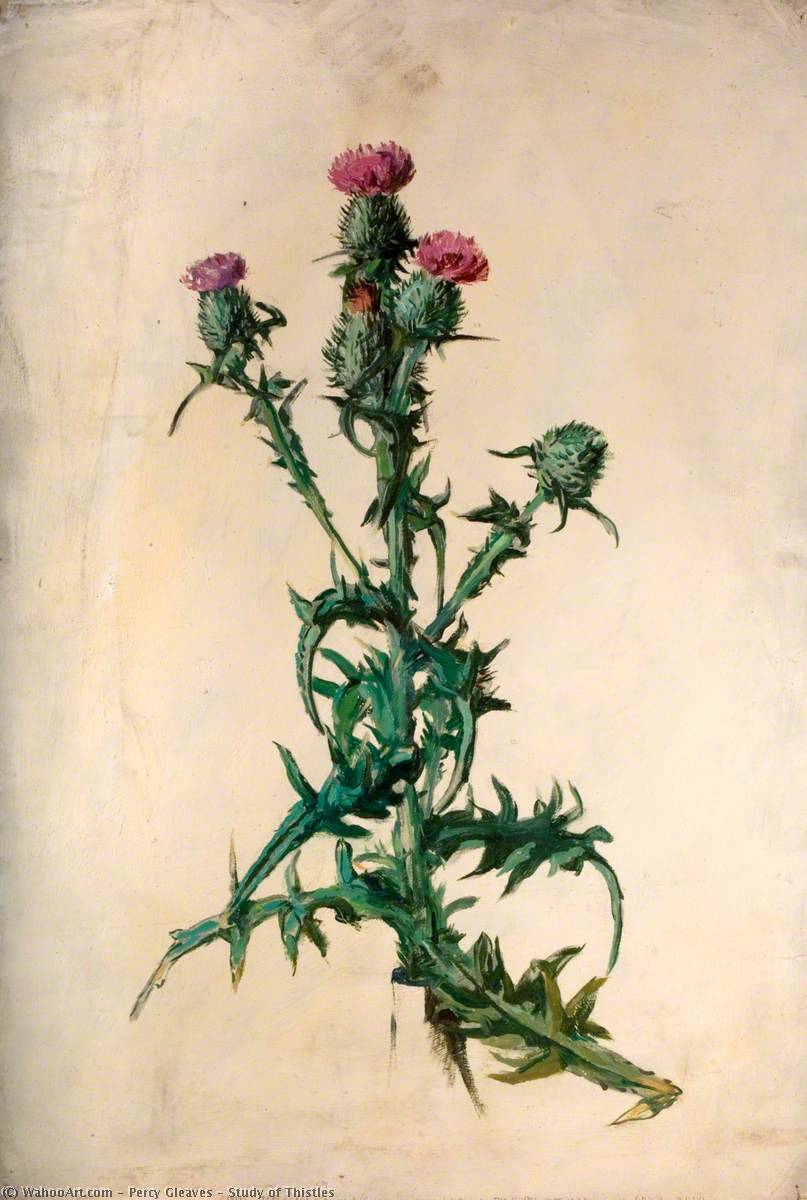
Percy Gleaves (1882–1944): A Coastal Visionary
Percy Gleaves, born in 1882 in Worcestershire, England, emerged as a significant figure in British
landscape painting during the
early 20th century. His artistic journey was marked by an unwavering dedication to capturing the dramatic beauty of the coastline – particularly the rugged cliffs and turbulent seas of Cornwall – and he achieved renown for his meticulous depictions of these environments. While biographical details remain somewhat sparse, Gleaves’s work speaks volumes about his artistic sensibilities and reflects a broader trend toward Impressionistic influences within
British art at the time.
- Early Life & Training: Little is known definitively about Gleaves's formative years beyond records indicating he was educated at Worcester Royal Grammar School. He pursued formal artistic training initially at Birmingham City Art College, honing his skills in watercolour and oil painting under instructors who championed a naturalistic approach to representation.
- Cornish Inspiration & Technique: Gleaves’s artistic breakthrough occurred when he relocated to Cornwall around 1908. The Cornish landscape profoundly impacted his style, fostering an obsession with capturing fleeting moments of light and atmosphere. He favored watercolour as his primary medium, skillfully blending pigments to achieve luminous tonal gradations that conveyed the dynamism of coastal weather conditions. His brushstrokes were deliberate yet fluid, prioritizing texture and color harmony over precise detail.
- Notable Works & Influences: Gleaves’s oeuvre includes numerous paintings depicting Cornish cliffs, beaches, and seascapes—many bearing titles like ‘Lloyd George,’ referencing the Prime Minister of Britain during his lifetime. His compositions often incorporated elements of Romanticism, drawing inspiration from artists such as Turner and Constable, albeit tempered by Impressionistic principles championed by Monet and Sisley. Gleaves’s meticulous observation of nature combined with a masterful command of color and texture solidified his reputation as one of Cornwall's foremost landscape painters.
- Recognition & Legacy: Gleaves gained considerable acclaim during his lifetime for his evocative depictions of the Cornish coast, securing commissions from prominent patrons and exhibiting extensively throughout Britain. Although he died in 1944, his paintings continue to resonate with viewers today, serving as enduring reminders of a period when British art embraced both grandeur and subtlety—a testament to Percy Gleaves’s artistic vision.
Exploring Themes of Light & Atmosphere
Gleaves's artistic approach centered on conveying the emotional impact of natural landscapes. He meticulously studied how sunlight interacted with the contours of cliffs and the movement of waves, striving to capture not merely what he saw but also *how* it felt. This pursuit of atmospheric illusion—a hallmark of
Impressionism—is evident in his use of color palettes that prioritized tonal harmonies over literal representation. The subtle shifts in hue and luminosity created a sense of immediacy and dynamism, transporting the viewer into the heart of the Cornish seascape.