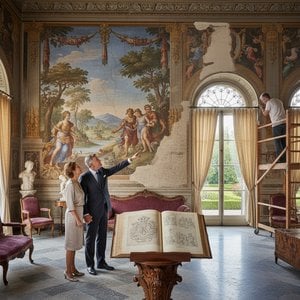
Bernardino di Betto Pinturicchio: A Renaissance Voice of Umbria
Bernardino di Betto, universally recognized as Pinturicchio – a moniker affectionately bestowed upon him due to his diminutive stature – emerged from Perugia’s artistic crucible in 1454. His life unfolded during the zenith of the High Renaissance, a period characterized by breathtaking innovation and intellectual fervor across Italy; yet Pinturicchio distinguished himself through an approach rooted in refined grace, intricate detail, and a vibrant decorative sensibility—a testament to his exceptional skill in transforming established artistic conventions into something profoundly captivating. Unlike titans like Leonardo da Vinci and Michelangelo who relentlessly pursued anatomical precision and dramatic theatricality, Pinturicchio cultivated a style imbued with subtlety and elegance – a singular achievement that secured him a place among the most revered artists of his time.Early Training and Umbrian Roots
Pinturicchio’s formative years were spent honing his craft under the tutelage of local Perugian masters like Bonfigli and Fiorenzo di Lorenzo, figures who instilled in him the foundational principles of Umbrian painting—a tradition deeply attuned to Gothic influences yet simultaneously embracing emerging Renaissance ideals. This early exposure undoubtedly shaped his artistic sensibilities, fostering a preoccupation with luminous color palettes and delicately rendered drapery – characteristics that would become hallmarks of his distinctive oeuvre. The influence of Perugino, arguably Pinturicchio’s most prominent mentor, is palpable throughout his work, particularly in the Sistine Chapel frescoes where he collaborated alongside luminaries like Botticelli, Ghirlandaio, and Signorelli—a partnership that cemented Umbria's reputation as a cradle of artistic excellence.The Sistine Chapel Collaboration: A Momentous Encounter
Pinturicchio’s involvement in the Sistine Chapel project represents arguably his most celebrated achievement – an undertaking undertaken during the early 16th century under the patronage of Pope Julius II. Alongside Michelangelo, Raphael, and Giulio Romano, Pinturicchio contributed to this monumental endeavor, tasked with adorning a section of the chapel dedicated to Saint Catherine of Alexandria and Saint Jerome—a commission that demanded unparalleled technical virtuosity and artistic imagination. The frescoes themselves are remarkable for their harmonious composition, luminous color harmonies, and masterful depiction of drapery – demonstrating Pinturicchio’s unwavering commitment to upholding Umbrian artistic traditions while simultaneously engaging with the stylistic currents sweeping across Europe.The Borgia Apartments: A Triumph of Decorative Art
Between 1492 and 1494, Pinturicchio achieved another pinnacle of artistic accomplishment by undertaking the decoration of Pope Alexander VI’s Borgia Apartments within the Vatican Palace—a project that showcased his unparalleled ability to synthesize classical motifs with his own distinctive aesthetic vision. Employing innovative techniques like illusionistic painting – a hallmark of Renaissance decorative art – Pinturicchio transformed the opulent spaces into immersive narratives depicting mythological scenes, portraits, and allegorical representations—reflecting the papal court’s ambition and grandeur. The lavish use of gold leaf, vibrant pigments, and meticulous attention to detail solidified Pinturicchio's reputation as one of the foremost artists of his era, securing him a place among the most revered figures in Renaissance art history.Legacy and Enduring Influence
Pinturicchio’s artistic legacy transcends mere stylistic innovation; it embodies an ethos of refined elegance and meticulous craftsmanship—a singular achievement that resonated deeply with subsequent generations of painters who appreciated subtlety and textural richness. His distinctive style – characterized by luminous color palettes, delicately rendered drapery, and masterful illusionistic techniques – continues to inspire artists today, serving as a poignant reminder of Umbria’s contribution to the artistic flowering of the Renaissance. The Piccolomini Library in Siena—completed shortly before his passing in 1513—stands as an enduring testament to Pinturicchio's unwavering dedication to upholding Umbrian artistic traditions – a masterpiece that encapsulates the essence of his artistic genius and secures him a place among the most revered artists of all time.Fragen & Antworten
Wo sind die Kunstwerke von Pinturicchio nach Technik gruppiert zu finden?
Um alle Werke von Pinturicchio in einem bestimmten Medium zu finden, nutzen Sie die Alle Medien-Seite des Künstlers.
Unter welchen Pseudonymen oder Alternativnamen ist Pinturicchio bekannt?
Pinturicchio erscheint unter den Alternativnamen Bernardino Di Betto Di Biagio, Benetto Di Biagio, Sordicchio.
Wo finde ich Statistiken zu den Werken von Pinturicchio?
Für Pinturicchio existiert eine Statistiken-Seite, die Statistiken zu den Kunstwerken des Künstlers auf diese Website präsentiert.