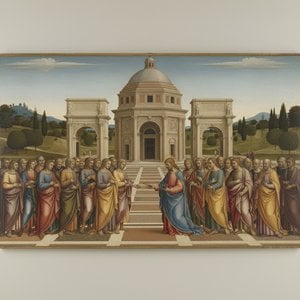
Der Bildhauer, der die venezianische Renaissance formte
Pietro Lombardo (1435–1515) gilt als eine Schlüsselfigur in der künstlerischen Landschaft der italienischen Renaissance, insbesondere innerhalb des pulsierenden kulturellen Milieus von Venedig. Geboren in Carona, Schweiz – einer Region, die tief in mittelalterlichen Traditionen verwurzelt war und dennoch die aufkeimenden humanistischen Ideale willkommen hieß – fiel Lombardos Leben mit einer Ära beispielloser kreativer Dynamik zusammen. Er trat nicht bloß als Handwerker hervor, sondern als einer der angesehensten Architekten und Bildhauer seiner Zeit, der das künstlerische Empfinden seiner Epoche tiefgreifend beeinflusste und Venedigs Position als Leuchtturm internationaler Innovation festigte.
Über Lombardos prägende Jahre ist wenig mit Gewissheit bekannt, doch biografische Berichte deuten auf eine Ausbildung hin, die sowohl im Schweizer Handwerk als auch in der humanistischen Gelehrsamkeit wurzelte. Sein Vater, Giovanni Lombardo, war selbst Steinmetz und Architekt – ein Erbe, das Pietro ein tiefes, haptisches Verständnis für Material und Form vermittelte. Dieses Fundament erwies sich als unschätzbar wertvoll, als er seine Fähigkeiten unter der Anleitung von Cristoforo Solari verfeinerte, einem bedeutenden venezianischen Bildhauer, der klassische Ideale vertrat. Durch dieses Mentoring übernahm Lombardo eine Ästhetik, die auf Gleichgewicht, Proportion und akribischer Detailtreue basierte – Eigenschaften, die zum Markenzeichen seines bleibenden Vermächtnisses werden sollten.
Architektonische Meisterschaft und der venezianische Geist
Lombardos architektonisches Können erreichte seinen Höhepunkt mit dem ehrgeizigen Unterfangen von Santa Maria dei Miracoli (1481–14ွယ်9). In Auftrag gegeben von Doge Pasquale Malipiero und finanziert von Pietro Mocenigo, stellt dieses monumentale Bauwerk eine außergewöhnliche Verschmelzung von gotischen und Renaissance-Stilen dar. Das emporstrebende Kirchenschiff, geschmückt mit prachtvollen Marmorsäulen und komplizierten Schnitzereien, verkörpert eine meisterhafte Assimilation verschiedener künstlerischer Traditionen. In diesem Werk bewies Lombardo seine Fähigkeit, die Erhabenheit der klassischen Antike in den einzigartigen, wassergebundenen Kontext Venedigs zu übertragen und einen Raum zu schaffen, der sich zugleich ätherisch und strukturell fundiert anfühlt.
Über die Architektur hinaus definierten seine bildhauerischen Beiträge die Grabmalkultur der Republik Venedig neu. Seine Werke dienten oft als weit mehr als bloße Gedenkstätten; sie waren tiefgreifende Ausdrucksformen von Status, Frömmigkeit und der Wiedergeburt der Klassik. Zu seinen herausragenden Leistungen zählen:
- Das Monument für Jacopo Marcello: Ein exquisites Renaissance-Relief, das einen klassischen Akt vor einer zarten Landschaft darstellt und seine Fähigkeit zeigt, menschliche Anatomie mit naturalistischer Schönheit zu verbinden.
- Das Monument von Pietro Mocenigo: Um 1476 entstanden, nutzt dieses beeindruckende Marmorrelief dramatisches Licht und Grandiosität, um den Verstorbenen durch das Prisma klassischer Details zu ehren.
Ein in Marmor gemeißeltes Vermächtnis
Die historische Bedeutung Pietro Lombardos liegt in seiner Rolle als Brücke zwischen der mittelalterlichen Vergangenheit und der humanistischen Zukunft. Seine Fähigkeit, die komplizierten, dekorativen Impulse der Gotik mit der strukturierten, rationalen Schönheit der Renaissance zu verweben, ermöglichte es Venedig, eine eigene visuelle Sprache zu entwickeln – eine, die weder rein römisch noch streng nördlich war. Sein Einfluss ist in der Art und Weise spürbar, wie nachfolgende Generationen venezianischer Künstler das Zusammenspiel von Licht, Schatten und Stein angegangen sind.
Selbst Jahrhunderte später fesselt sein Werk weiterhin die Fantasie. Die filigranen Details seiner Reliefs und die strukturelle Eleganz seiner Kirchen bleiben ein Zeugnis eines Mannes, der verstand, dass wahre Kunst in der Harmonie der Gegensätze zu finden ist: Stärke und Zartheit, Tradition und Innovation, das irdische Gewicht des Marmors und die spirituelle Leichtigkeit des Göttlichen. Durch seine Hände wurde der Stein der venezianischen Landschaft in einen dauerhaften Dialog mit der klassischen Antike verwandelt.
Fragen & Antworten
Woher kommt Pietro Lombardo?
Pietro Lombardo wurde in Schweiz geboren.
Kann ich die Werke von Pietro Lombardo nach Kunstrichtung durchsuchen?
Auf der Seite Alle Stilrichtungen werden die Kunstwerke von Pietro Lombardo nach Kunstströmungen gruppiert.
Wie finde ich Werke von Pietro Lombardo nach einer bestimmten Farbpalette sortiert?
Auf der Nach Farbpaletten-Seite von Pietro Lombardo können die Werke nach Farbpaletten durchsucht werden.