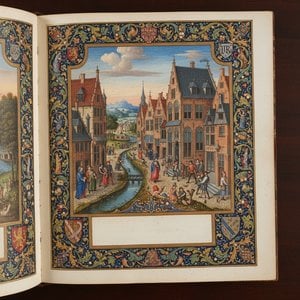
The Master of the Échevinage de Rouen: A Beacon of Late Medieval French Illuminatory Art
The Master of the Échevinage de Rouen, a name synonymous with understated brilliance and meticulous craftsmanship, stands as one of the most significant figures in the artistic landscape of 15th-century France. Though shrouded in relative obscurity compared to contemporaries like Limbourg or Mariotto Alfano, his contribution to illuminated manuscripts—particularly those produced in Rouen—is undeniable, shaping the aesthetic sensibilities of an era defined by piety and burgeoning humanist thought. Born around 1460 in Rouen, France – precise biographical details remain elusive, adding to the mystique surrounding this prolific artist who commanded a workshop that flourished throughout the decade of his prime.
Early Life & Training
Information regarding his formative years is sparse, suggesting he honed his skills within Rouen’s established artistic milieu. Evidence strongly indicates connections with Flemish influences—most notably the Ghent Altarpiece—a testament to the artistic dynamism circulating across Europe during this period. This convergence mirrored a broader trend toward stylistic homogenization, reflecting the influence of Northern European masters on French artists eager to embrace innovation and elevate their craft. The workshop environment itself fostered experimentation and collaboration, nurturing talent within Rouen’s vibrant cultural landscape.
The Rouen Workshop & Artistic Style
Following the expulsion of the English from Rouen in 1449, the city experienced an unprecedented surge in manuscript production—a pivotal moment that propelled the Master to prominence as the dominant illuminator. Capitalizing on this favorable circumstance and establishing a workshop equipped with considerable resources, he oversaw the creation of breathtaking books – secular chronicles alongside devotional psalters – distinguished by remarkable realism and masterful color palettes. These weren’t merely decorative embellishments; they were meticulously crafted narratives intended to inspire contemplation and convey profound spiritual truths. The workshop's success underscored Rouen’s position as a burgeoning center for artistic excellence, attracting skilled artisans from across France.
Notable Works: “Nativity of Christ from the Book of Hours”
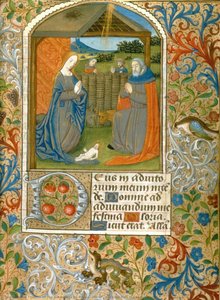
Among his most celebrated achievements is “Nativity of Christ from the Book of Hours,” a masterpiece embodying his signature style and representing a decisive departure from earlier artistic conventions. The intricate depiction of Mary, Joseph, and the infant Jesus exemplifies the humanist ideals prevalent at the time—emphasizing anatomical accuracy and emotional depth – a conscious effort to move beyond stylized representations toward portraying human figures with unprecedented realism. His meticulous attention to detail extended far beyond mere visual fidelity; he skillfully employed techniques like glazing and burnishing to achieve luminous surfaces that captivated viewers centuries later, demonstrating an unparalleled understanding of artistic materiality. The painting’s serene composition and vibrant colors continue to resonate with audiences today, securing its place as a cornerstone of Rouen manuscript illumination.
Influences & Techniques
The Master's artistic vision was undoubtedly shaped by Flemish art, particularly the expressive realism championed by Jan van Eyck. He embraced innovative pigment preparation methods—incorporating ultramarine blue derived from lapis lazuli – a costly material that signaled prestige and sophistication. Furthermore, his subtle mastery of perspective subtly enhanced spatial depth within his compositions, reflecting an awareness of emerging scientific theories about optics and demonstrating a commitment to pushing the boundaries of artistic representation. These influences underscored the interconnectedness of European artistic traditions during this transformative period.
Legacy & Historical Significance
The Master’s output cemented Rouen's reputation as a center for artistic excellence and profoundly impacted the trajectory of French illuminatory art. His work serves as an invaluable window into the intellectual and cultural currents of the late medieval period—demonstrating the enduring power of visual storytelling to convey religious devotion and humanist values. Today, reproductions of his illuminated manuscripts continue to inspire admiration for their beauty and technical prowess, securing his place among the titans of European art history – a testament to his unwavering dedication to craftmanship and artistic innovation.