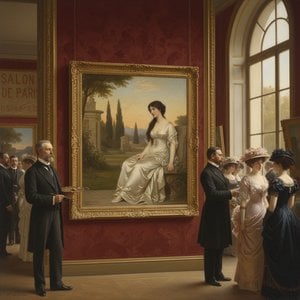
Der Poet der französischen Landschaft
Jules Breton (1827–1906) gilt als ein Eckpfeiler des französischen Realismus – einer Kunstbewegung, die sich der Aufgabe verschrieben hat, das Leben präzise und wahrheitsgetreu, ohne jegliche Beschönigung darzustellen. Eine Mission, die er auf seinen Leinwänden mit vollstem Engagement annahm. Geboren im kleinen Dorf Courrières in der Region Pas-de-Calais im Norden Frankreichs, war Bretons frühes Leben von bescheidenen Verhältnissen geprägt, doch getragen von einer unerschütterlichen Leidenschaft für Beobachtung und Darstellung. Seine Erziehung, tief verwurzelt in der landwirtschaftlich reichen Landschaft des Artois, pflanzte in ihm einen tiefen Respekt vor der Tradition und eine Liebe zum Land ein, die während seiner gesamten langen Karriere das Zentrum seines Schaffens bleiben sollte. Der Verlust seiner Mutter in jungen Jahren und die Erziehung durch seinen Vater, der Ländereien für einen wohlhabenden Grundbesitzer verwaltete, schenkten ihm eine intime Verbindung zu den Rhythmen des ländlichen Daseins.
Während viele seiner Zeitgenossen nach der Grandiosität mythologischer oder historischer Sujets strebten, richtete Breton seinen Blick auf die Würde des einfachen Arbeiters. Er besaß die seltene Fähigkeit, das Alltägliche – die Äckerinnen, die Erntehelfer und die Hirten – zu erhöhen und sie mit einer akademischen Anmut darzustellen, die traditionell klassischen Figuren vorbehalten war. Diese einzigartige Synthese ermöglichte es ihm, zu einem der wichtigsten Vermittler einer idyllischen Vision des Landlebens zu werden, indem er die Schönheit der französischen Provinz durch eine Linse einfing, die zugleich tief naturalistisch und zutiefst poetisch war.
Künstlerische Entwicklung und der Geist des Realismus
Bretons künstlerischer Weg wurde durch eine strenge Hingabe an die Prinzipien des Realismus und Naturalismus geformt. Seine frühe Ausbildung, die Studien am Collège St. Bertin einschloss, führte ihn schließlich zu einer tieferen Auseinandersetzung mit den Meistern seiner Ära. Er absorbierte die kompromisslosen Techniken der Bewegung und suchte danach, Kunst zu schaffen, die als Spiegel fungierte, um die Gesellschaft in all ihrer Komplexität widerzuspiegeln. Diese Entwicklungsphase war geprägt von dem Wunsch, das zu erreichen, was er den grand style nannte – eine Methode, um dem rustikalen Genre ein Gefühl von monumentaler Bedeutung und Zeitlosigkeit einzuhauchen.
Seine Technik zeichnete sich durch akribische Detailgenauigkeit und eine leuchtende Farbpalette aus, die er meisterhaft einsetzte, um die Texturen der natürlichen Welt spürbar zu machen. Ob er das sanfte Licht der Morgendämmerung über einer Wiese oder die schwere, sonnendurchflutete Atmosphäre eines Sommerfeldes einfing – Breton nutzte Öl auf Leinwand, um eine bemerkenswerte Tiefe zu erzielen. Seine Kompositionen beschwören oft ein Gefühl pastoraler Ruhe herauf, indem sie Szenen wie diese zeigen:
- Frauen, die am Flussufer Wäsche waschen, wobei das Spiel des Lichts auf dem Wasser die Gelassenheit der Landschaft widerspiegelt.
- Kinder, die auf Wiesen spielen, wodurch die Unschuld und Vitalität der Jugend in der natürlichen Umgebung festgehalten wird.
- Die rhythmische Mühsal der Erntehelfer, welche die Stärke und Nobless darstellt, die in der körperlichen Arbeit liegt.
Durch diese Sujets dekorierte Breton nicht bloß eine Leinwand; er schuf Meditationen über die beständige Beziehung zwischen der Menschheit und der Erde.
Vermächtnis und historische Bedeutung
Die historische Bedeutung von Jules Breton liegt in seiner Fähigkeit, die Kluft zwischen den akademischen Traditionen der Vergangenheit und dem modernen Realismus des 19. Jahrhunderts zu überbrücken. Indem er anspruchsvolle, klassische Methoden auf die Darstellung des Bauernlebens anwandte, verlieh er einer Bevölkerungsschicht, die von der Hochkunst oft übersehen wurde, ein Gefühl von Beständigkeit und Würde. Sein Werk fand tiefen Anklang beim Publikum seiner Zeit, brachte ihm bedeutende Anerkennung auf dem Pariser Salon ein und etablierte ihn als eine führende Figur der französischen Kunst.
Über seine einzelnen Leinwände hinaus erstreckte sich Bretons Einfluss durch seine Familie und seine Rolle in der breiteren künstlerischen Gemeinschaft. Seine Tochter, Virginie Demont-Breton, sollte ebenfalls eine gefeierte Malerin werden und das Erbe der tiefgründigen Beobachtung und technischen Meisterschaft fortführen. Heute werden die Werke von Jules Breton für ihre nostalgische Kraft und ihre Fähigkeit geschätzt, den Betrachter in eine verschwundene Ära des französischen Landlebens zu versetzen. Seine Gemälde dienen als zeitloses Fenster zur Seele des 19. Jahrhunderts und erinnern uns an die stille Schönheit, die in den einfachsten Momenten der Existenz zu finden ist.
Fragen & Antworten
Kann ich die Werke von Jules Breton nach Schlagworten durchsuchen?
Um Werke von Jules Breton zu einem bestimmten Thema zu finden, nutzen Sie die Nach Schlagworten-Seite des Künstlers, auf der die Kunstwerke nach Schlagworten gruppiert sind.
In welcher Stadt und in welchem Land wurde Jules Breton geboren?
Jules Breton wurde in Courrières, Frankreich, geboren.
Wie viele Kunstwerke von Jules Breton können durchstöbert werden?
Sie können 141 Kunstwerke Werke von Jules Breton auf der Seite Alle Kunstwerke durchstöbern.