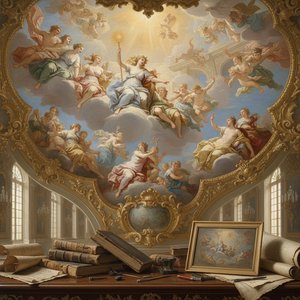
Giambattista Tiepolo: Der Architekt des venezianischen Lichts
Giovanni Battista Tiepolo (1696 – 1770) steht als ein Titan unter den Malern seiner Ära, als unbestrittener Meister des Rokoko und wohl als der einflussreichste Freskenmaler des achtzehnten Jahrhunderts. Geboren in Venedig, Italien – einer Stadt, die tief in künstlerischen Traditionen verwurzelt ist – erlangte Tiepolo durch seine atemberaubenden Leinwände und monumentalen Wandgemälde unvergleichlichen Ruhm. Seine Werke verwandelten Kirchen und Paläste in immersive Erlebnisse aus Farbe, Drama und illusionistischer Pracht. Sein Vermächtnis inspiriert bis heute Künstler und festigt seinen Platz als eine der bedeutendsten Figuren der venezianischen Kunstgeschichte.
- Frühes Leben & Ausbildung: Tiepolos künstlerische Reise begann unter der Anleitung von Giovanni Antonio Pellegrini, einem angesehenen venezianischen Maler, der ihm ein grundlegendes Verständnis des disegno vermittelte – dem italienischen Begriff für Zeichnung und Entwurf, einem Eckpfeiler der barocken Ästhetik. Da Pellegrini sein prodigiöses Talent erkannte, ermutigte er Tiepolo zu Studien an den Bologneser Akademien. Dort verfeinerte er seine Fähigkeiten an der Seite von Künstlern wie Francesco Bartolomeo Rastrelli und Antonio Canaletto und sog Einflüsse sowohl aus der barocken Grandezza als auch aus der aufkommenden Eleganz des Rokoko in sich auf.
<\\li>Die venezianische Werkstatt & der künstlerische Durchbruch: Nach seiner Rückkehr nach Venedig im Jahr 1726 etablierte Tiepolo eine produktive Werkstatt, die schnell ein Synonym für künstlerische Exzellenz wurde. Er nahm die stilistischen Leitsätze des Rokoko an – geprägt durch zarte Ornamentik, Pastelltöne und asymmetrische Kompositionen – bewahrte jedoch eine tiefe Verpflichtung gegenüber den klassischen Prinzipien von Proportion und Perspektive. Diese harmonische Verbindung führte zu Werken, die das Publikum fesselten und große kritische Anerkennung fanden, insbesondere seine Fresken, die den Palazzo Labia und den Ca’ Rezystonico schmücken.
- Königliche Schirmherrschaft & große Aufträge: Tiepolos künstlerischer Ruf zog schnell die Aufmerksamkeit europäischer Monarchen auf sich, was ihm lukrative Aufträge von Königen und Fürsten in ganz Italien, Spanien und Preußen sicherte. Seine monumentalen Fresken im Schloss Schönbrunn bei Wien und im Schloss Sanssouci in Potsdam sind Paradebeispiele für seine Meisterschaft in Bezug auf Maßstab und theatralische Präsentation – er verwandelte Räume in opulente Spektakel, die königliche Macht und künstlerische Innovation feierten.
- Technik & Innovation: Tiepolos unverwechselbare Technik beinhaltete eine akribische Vorbereitung, bei der er Grisaille-Unterzeichnungen nutzte, um präzise räumliche Beziehungen zu etablieren, bevor er Schichten aus leuchtenden Farben auftrug. Er war ein Pionier innovativer Methoden der Pigmentmischung und Lasurtechnik – wodurch er leuchtende Oberflächen schuf, die selbst zu strahlen schienen, ein Markenzeichen seiner beispiellosen künstlerischen Vision. Seine Fresken sind berühmt für ihren meisterhaften Einsatz des Chiaroscuro – des Zusammenspiels von Licht und Schatten –, das ein spürbares Gefühl von Tiefe und Dynamik erzeugt.
- Vermächtnis & Einfluss: Tiepolos Einfluss reichte weit über sein Leben hinaus und prägte die ästhetische Sensibilität nachfolgender Künstlergenerationen. Seine Betonung der illusionistischen Malerei beeinflusste den Barock- und Rokokostil tiefgreifend und etablierte ihn als unbestrittenen Champion theatralischer Pracht und visueller Herrlichkeit. Heute rufen Tiepolos Werke weiterhin Ehrfurcht und Bewunderung hervor und dienen als dauerhafte Monumente des venezianischen Genie.
Bedeutende Werke & künstlerische Errungenschaften
- Mariä Himmelfahrt in San Giorgio Maggiore: Dieses monumentale Fresko gilt als Tiepolos Meisterwerk und verdeutlicht seine unvergleichliche Fähigkeit, immersive Umgebungen zu schaffen und tiefe spirituelle Emotionen zu vermitteln. Die emporstrebende Decke zeigt die Jungfrau Maria, wie sie inmitten einer himmlischen Prozession in den Himmel aufsteigt – ein atemberlauendes Spektakel aus Farbe und Bewegung, das bis heute unübertroffen bleibt.
- Der Triumph des Heiligen Petrus: Dieses Fresko in der Petersbasilika in Rom erinnert an die Zeremonie der päpstlichen Krönung – eine prachtvolle Feier der päpstlichen Autorität, dargestellt mit akribischer Detailtreue und leuchtender Lebendigkeit.
- Fresken des Palazzo Labia: Die Fresken Tiepolos im Palazzo Labia zeigen seine Meisterschaft in der illusionistischen Malerei – sie erschaffen ein fesselndes Panorama des venezianischen Lebens, das den Betrachter zurück in das achtzehnte Jahrhundert versetzt.
Verbindungen & künstlerische Einflüsse
Tiepolos künstlerische Entwicklung wurde maßgeblich von den vorherrschenden Stilströmungen seiner Zeit geprägt. Er absorbierte Einflüsse aus Caravaggios dramatischem Chiaroscuro und Berninis skulpturaler Virtuosität – er umarmte die barocke Grandezza und erkundete gleichzeitig die zarten ästhetischen Prinzipien des Rokoko. Darüber hinaus arbeitete er eng mit Antonio Canaletto zusammen, dessen akribische Stadtansichten als Inspiration für Tiepolos eigene Darstellungen der venezianischen Stadtlandschaften dienten.