Ein Vermächtnis des Lichts: Das Leben und die Kunst von Georges D’Espagnat
Im lebendigen Geflecht der französischen Kunst des späten 19. und frühen 20. Jahrhunderts verkörpern nur wenige Persönlichkeiten den Übergang von der Tradition zur Moderne so anmutig wie Georges D’Espagnat. Geboren 1870 in Melun, war D’Espagnat einem Leben bestimmt, das tief in der Ästhetik der Schönheit verwurzelt war. Die Gründung der legendären Durand-Ruel Galerie durch seinen Vater bot ihm ein unvergleichliches Fenster zur Entwicklung der Moderne und platzierte ihn direkt im Herzen der Pariser Kunstwelt. Diese frühe Prägung erlaubte es ihm, die wechselnden Gezeiten der Kunstgeschichte aus erster Hand zu erleben, was eine einzigartige Perspektive förderte, die ihn später dazu befähigen sollte, die Kluft zwischen dem rauen Realismus der Barbizon-Schule und den leuchtenden, flüchtigen Empfindungen des Impressionismus zu überbrücken.
D’Espagnats künstlerische Reise war eine der tiefgreifenden Synthese. Während seine prägenden Jahre von den schweren, ehrlichen Darstellungen des Landlebens geprägt waren, wie sie von Meistern wie Gustave Courbet und Jean-François Millet vertreten wurden, neigte sein Herz einer lyrischeren und atmosphärischeren Ausdrucksform zu. Er zog 1888 nach Paris, wo er einen autonomen Ausbildungsprozess begann, gelegentlich geleitet von Malern wie Gustave-Claude-Etienne Courtois. Sein Stil entfaltete sich schließlich zu einer anspruchsvollen postimpressionistischen Sprache, die stark vom sanften, gesprenkelten Licht Pierre-Auguste Renoirs und den zarten Texturen Alfred Sisleys beeinflusst war. Diese stilistische Dualität – die strukturelle Integrität des Realismus gepaart mit der emotionalen Kraft der Farbe – wurde zum Markenzeichen seines Werkes.
Meisterschaft von Motiv und Geist
Die Breite von D’Espagnats Sujets spiegelt eine tiefe, beständige Verehrung sowohl für die menschliche Gestalt als auch für die natürliche Welt wider. Seine Landschaften sind nicht bloß topografische Aufzeichnungen, sondern emotionale Beschwörungen der französischen Landschaft. In Werken wie seinem Meisterwerk aus dem Jahr 1 000, "Landschaft", lässt sich beobachten, wie lockere, tanzende Pinselstriche eine Illusion von Bewegung erzeugen und die reine Essenz einer vorbeiziehenden Brise oder des wechselnden Sonnenlichts einfangen. Seine Fähigkeit, Ruhe durch lebendige Farbtöne und strukturierte Farbaufträge zu vermitteln, erlaubt es dem Betrachter, direkt in einen friedvollen, natürlichen Moment einzutauchen.
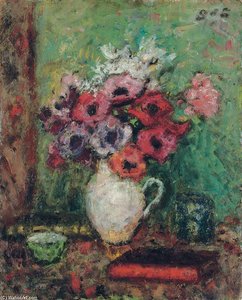
Jenseits des Horizonts der Natur erkundete D’Espagnat die Intimität menschlicher Erfahrung durch seine Aktdarstellungen und häuslichen Szenen. Seine Darstellungen des menschlichen Körpers werden für ihre anatomische Präzision gefeiert, wirken dabei jedoch niemals klinisch; stattdessen besitzen sie eine anmutige, poetische Qualität, die durch subtile Schattierungen und sanftes Licht erreicht wird. Diese Zärtlichkeit erstreckt sich auch auf seine Genremalerei, wie etwa "Femmes et enfants dans la terrace du moulin de Beaulieu à Villennes sur Seine," in der er den stillen Zauber des Familienlebens inmitten üppiger, grüner Gärten einfängt. Ob er ein Stillleben wie die lebhafte Komposition "Rote Blumen und Früchte" oder einen zärtlichen mütterlichen Moment in "Frau und Kind" malt – sein Werk bleibt stets durch ein spürbares Gefühl von Atmosphäre und Emotion verankert.
Historische Bedeutung und bleibender Einfluss
D’Espagnat war weit mehr als nur ein Maler; er war ein wesentlicher Teilnehmer am kulturellen Gefüge seiner Ära. Seine Karriere führte ihn zur Ausstellung im prestigeträchtigen Salon des Refusés und später zu einem Beitrag zur eigentlichen Gründung des Salon d’Automne, in dem er schließlich als Vizepräsident fungierte. Seine intellektuelle Reichweite erstreckte sich bis in die Literatur und Szenografie, da er Werke renommierter Autoren wie Alphonse Daudet und Rémy de Gourmont illustrierte, was beweist, dass seine künstlerische Vision tief mit den breiteren literarischen Bewegungen Frankreichs verwoben war.
Heute wird die historische Bedeutung von Georges D’Espagnat durch die Präsenz seiner Werke in den angesehensten Institutionen der Welt gefestigt. Sein Vermächtnis lebt in Sammlungen weiter, wie etwa:
- Das Musée d’Orsay in Paris, das seine Beiträge zur französischen impressionistischen Tradition bewahrt.
- Das Metropolitan Museum of Art in New York, das seine internationale Reichweite zeigt.
- Das Art Institute of Chicago, wo seine Meisterschaft in Licht und Form weiterhin inspiriert.
- Das Museo Thyssen-Bornemisza, das seinen Platz unter den bedeutenden Vertretern des Postimpressionismus hervorhebt.
Wenn wir auf ein Leben zurückblicken, das vom Höhepunkt des Einflusses der Barbizon-Schule bis zum Anbruch der modernen Abstraktion reichte, bleibt D’Espagnat eine leuchtende Gestalt. Er hat uns gelehrt, dass die Kunst das Gewicht der Tradition ehren kann, während sie gleichzeitig die vergängliche Schönheit des gegenwärtigen Augenblicks umarmt – und hinterlässt ein Werk, das weiterhin mit Licht und Leben atmet.
Fragen & Antworten
Wo finde ich Statistiken zu den Werken von Georges D'Espagnat?
Für Georges D'Espagnat existiert eine Statistiken-Seite, die Statistiken zu den Kunstwerken des Künstlers auf diese Website präsentiert.
In welcher historischen Epoche war Georges D'Espagnat tätig?
Georges D'Espagnat war in der Epoche der Moderne tätig. Diese Periode ordnet das künstlerische Schaffen historisch ein.
Woher kommt Georges D'Espagnat?
Georges D'Espagnat wurde in Frankreich geboren.