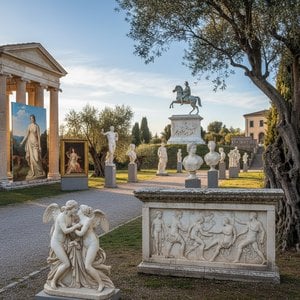
Pierre-Jean David d’Angers: Der Bildhauer des heroischen Idealismus
Pierre-Jean David d’Angers (1788 – 1856) gilt als eine zentrale Figur in der neoklassizistischen Kunstlandschaft Frankreichs, die den Geist des republikanischen Idealismus und monumentaler bildhauerischer Errungenschaften verköriente. Geboren in Angers, Loiret, war sein frühes Leben von familiären Bindungen zur republikanischen Armee geprägt – sein Vater, selbst ein Holzschnitzer und Bildhauer, nahm tapfer am Kampf gegen die Chouan-Rebellion teil – eine prägende Erfahrung, die in ihm eine tiefe Wertschätzung für die bürgerliche Pflicht und den künstlerischen Ausdruck als Instrumente des nationalen Stolzes verankerte. Dieses Erbe formte seinen künstlerischen Werdegang maßgeblich und trieb ihn zu einer glanzvollen Karriere in der Bildhauerei und Modellierung, insbesondere während der einflussreichen Ära im Atelier von Jacques-Louis David.
- Frühe Ausbildung & Einflüsse: Davids prägende Jahre verbrachte er damit, sein Handwerk unter Jean-Jacques Delusse und Philippe-Laurent Roland in Paris zu perfektionieren, wobei er die stilistischen Lehren der Romantik neben dem bleibenden Erbe der klassischen Bildhauerei aufnahm. Bemerkenswerterweise begegnete er Antonio Canova – einem Bildhauer, dessen akribische Aufmerksamkeit für anatomische Details und emotionale Darstellung Davids Fantasie gefesselte – was eine entscheidende Verbindung zu den künstlerischen Traditionen Roms herstellte, die sein gesamtes Werk definieren sollte.
- Die École des Beaux-Arts & der Prix de Rome: Da sein Talent erkannt wurde, erhielt David 1808 die Aufnahme an die École des Beaux-Arts, wo er herausragende Leistungen erbrachte, die in einem Sieg beim Wettbewerb der Schule für tête d'expression gipfelten und ihm schließlich 1811 den prestigeträchtigen Prix de Rome einbrachten. Dieses Stipendium ermöglichte ihm einen unvergleichlichen Zugang zu römischen künstlerischen Idealen und erlaubte es ihm, seine bildhauerische Technik – gekennzeichnet durch eine meisterhafte Beherrschung von Marmor und Bronze – weiterzuentwickeln und seine Fähigkeit zu verfeinern, menschliche Emotionen und heroische Erhabenheit einzufangen.
- Römische Periode & künstlerische Evolution: Davids fünfjähriger Aufenthalt in Rom erwies sich als transformativ; er förderte die Zusammenarbeit mit befreundeten Künstlern und tauchte tief in den künstlerischen Eifer der Epoche ein. Er studierte akribisch die Werke von Michelangelo Buonarroti und Bernini und absorbierte deren Techniken sowie stilistische Sensibilitäten – Einflüsse, die seine späteren Skulpturen und Radierungen durchdringen sollten. Während dieser Zeit unternahm er Expeditionen nach Venedig, Neapel und Florenz, was seinen künstlerischen Horizont erweiterte und sein Verständnis der klassischen Kunstgeschichte bereicherte.
- <Monumentalskulptur & bedeutende Aufträge: Davids Ruf als Bildhauer stieg während der Restauration rasant an, als er Aufträge für monumentale Werke erhielt, die seinen Platz in der französischen Kulturgeschichte festigten. Zu seinen berühmtesten Errungenschaften gehören der Pantheon-Fries – eine atemberaubende Darstellung der römischen Mythologie, in Auftrag gegeben zur Erinnerung an den Triumph Napoleon Bonapartes – das Reiterstandbild des Marschalls Jacques-Nicolas Gobert auf dem Friedhof Père Lachaise – sowie die monumentale Skulptur zum Gedenken an den griechischen Befreier Markos Botsaris, ein Zeugnis für Davids Bestreben, heroische Figuren mit unerschütterlicher Überzeugung darzustellen.
- Vermächtnis & Anerkennung: Davids schöpferisches Werk umfasste über 500 Medaillons und Büsten, in denen er Porträts von Lichtgestalten aus ganz Europa festhielt – darunter Voltaire, Rousseau, Goethe, Napoleon Bonaparte und Friedrich Schiller. Dies demonstrierte seine Vielseitigkeit als Künstler und festigte seinen dauerhaften Einfluss auf nachfolgende Generationen von Bildhauern. Seine unerschütterliche Hingabe an klassische Ideale und seine Fähigkeit, tiefe Emotionen durch die skulpturale Form zu vermitteln, stellten sicher, dass David d’Angers als verehrte Figur in den Annalen der französischen Kunstgeschichte bestehen blieb und seinen Platz unter den bedeutendsten Bildhauern seiner Zeit sicherte.
Hauptwerke & Künstlerischer Stil
Davids künstlerischer Stil ist durch eine unerschütterliche Verpflichtung gegenüber neoklassizistischen Prinzipien gekennzeichnet – insbesondere anatomische Genauigkeit, idealisierte Schönheit und dramatische Komposition –, was den Einfluss von Michelangelo Buonarroti und Bernini widerspiegelt. Er setzte Marmor und Bronze geschickt ein, um Emotionen und Erhabenheit zu vermitteln, wobei er Klarheit der Form und ausdrucksstarke Gestik über bloße dekorative Verzierung stellte. Seine Skulpturen sind von einem spürbaren Pathos und einer edlen Aura durchdrungen, die Momente tiefgreifender menschlicher Erfahrung mit akribischem Detail und unerschütterlicher Überzeugung einfangen. Der Pantheon-Fries beispielhaft seine Meisterschaft in der Monumentalskulptur und präsentiert ein ehrgeiziges Unterfangen, das die römische Mythologie feiert und den Sieg Napoleon Bonapartes ehrt – ein Zeugnis für Davids Ambition und künstlerische Vision. Ebenso steht das Reiterstandbild des Marschalls Gobert als Symbol französischer militärischer Stärke und bürgerlicher Tugend und demonstriert Davids Fähigkeit, die skulpturale Form in ein Medium zur Vermittlung komplexer Narrative und emotionaler Resonanz zu verwandeln.