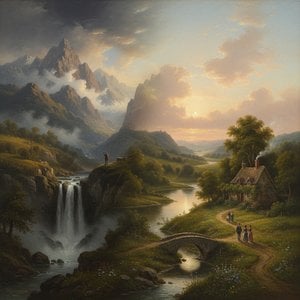
Die Seele der deutschen Landschaft: Das Leben von August Albert Zimmermann
August Albert Zimmermann steht als tiefgreifendes Zeugnis für den beständigen Geist der deutschen Romantik – einer Ära, in der die Leinwand durch das Medium der Natur zu einem Fenster zur menschlichen Seele wurde. Geboren 1808 in Zittau, Schlesien – einer Region, die heute zu Polen gehört –, entfaltete sich Zimmermanns künstlerische Reise vor dem Hintergrund kultureller Umbrüche, die rohe Emotion und grenzenlose Fantasie über die starren akademischen Konventionen der Vergangenheit stellten. Sein frühes Leben war tief mit einem reichen familiären Geflecht aus Talent verwoben; er war der Bruder der begabten Maler Max, Richard und Robert Zimmermann. Diese gemeinsame Abstammung verlieh ihm ein grundlegendes Verständnis künstlerischer Prinzipien, doch es war seine einzigartige Sensibilität für das Erhabene, die seine Handschrift letztlich von der seiner Verwandten unterscheiden sollte.
Obwohl seine formale Ausbildung prestigeträchtige Studien an der Dresdner Akademie der Bildenden Künste und der Münchner Akademie der Bildenden Künste umfasste, entfaltete sich Zimmermanns wahre Brillanz durch selbstgesteuerte Erkundung. Er besaß einen rastlosen, wissbegierigen Geist, der Inspiration weit jenseits etablierte Grenzen suchte, was es ihm ermöglichte, einen unverwechselbaren Stil zu kultivieren, der durch atmosphärischen Realismus geprägt war. Diese Entwicklungsphase war gekennzeichnet durch ein intensives Studium von Licht und Schatten, während er lernte, die flüchtigen Qualitäten der natürlichen Welt in dauerhafte, evokative Ölgemälde und zarte Aquarelle zu übersetzen. Seine Fähigkeit, technische Präzision mit einer tiefen, spirituellen Verbindung zu seinen Motiven zu verschmelzen, erlaubte es ihm, über die bloße Darstellung hinauszugehen und Landschaften in tiefgreifende emotionale Erlebnisse zu verwandeln.
Meisterschaft des Lichts und das romantische Erhabene
Das Œuvre Zimmermanns wird primär für seine Fähigkeit gefeiert, sowohl die Erhabenheit als auch die stille Ruhe der deutschen Landschaft einzufangen, mit einem besonderen Fokus auf die atemberaubende Szenerie Bayerns. Seine Leinwände sind nicht bloß statische Bilder, sondern pulsierende Umgebungen, in denen lebendige Farben und meisterhafte Pinselführung zusammenfließen, um eine Geschichte der Macht der Natur zu erzählen. Er war ein Meister des Chiaroscuro, wobei er das dramatische Zusammenspiel von Licht und Schatten nutzte, um die atmosphärische Tiefe zu verstärken und Gefühle von Ehrfurcht, Kontemplation und sogar einen Hauch von Melancholie hervorzurufen. Durch seine Augen konnte eine einfache Bergansicht zu einer monumentalen Begegnung mit dem Unendlichen werden.
Wiederkehrende Motive in seinem Werk dienen als Fenster zur romantischen Beschäftigung mit dem Erhabenen. Ein Betrachter könnte sich verlieren in:
- Schneebedeckten Gipfeln, die die stille, schaurige Majestät der Hochalpen heraufbeschwören;
- Stürzenden Flüssen und Wasserfällen, welche die ungezähmte Energie der Wildnis einfangen;
- Weiten Ausblicken, die in das Zwielicht getaucht sind, wo das sanfte Glühen der untergehenden Sonne ein Gefühl von flüchtiger Schönheit und Nostalgie erzeugt;
- Intimen naturalistischen Studien, wie etwa seine detaillierten Darstellungen von Vögeln wie dem Goldvorderkopf-Specht, die sein scharfes Beobachtungsgabe demonstrieren.
Diese Dualität – die Fähigkeit, zwischen der epischen Dimension eines Bergmassivs und dem feinen Detail eines einzelnen Zweiges zu wechseln – definiert sein technisches Vermächtnis. Ob er die ferne Silhouette des Ätna oder die stille Ruhe einer Winterszene mit Holzsammler malte, Zimmermann bewahrte eine unerschütterliche Hingabe an die atmosphärische Wahrheit.
Vermächtnis und historische Bedeutung
Im Laufe des neunzehnten Jahrhunderts wurde Zimmermanns Werk zu einem Eckpfeiler der romantischen Landschaftstradition. Sein Einfluss erstreckte sich durch seine Rolle als Lehrer – insbesondere als Mentor für seinen Bruder Max – und durch seine Fähigkeit, das sich wandelnde Gesicht Europas einzufangen, von den rauen Terrains Deutschlands bis hin zu den pastoralen Rhythmen des ländlichen Lebens. Seine Gemälde dokumentieren mehr als nur Geografie; sie dokumentieren eine Ära tiefgreifender philosophischer Fragen nach der Beziehung zwischen Mensch und Naturwelt.
Heute finden die Werke von August Albert Zimmermann bei Sammlern und Kunsthistorikern gleichermaßen Anklang. Seine Fähigkeit, das Erhabene heraufzubeschwören – jene spezifische Mischung aus Schönheit und Schrecken, die in der Größe der Natur zu finden ist – sichert ihm seinen Platz im Kanon der großen deutschen Meister. Durch seine Meisterschaft des Lichts, seine emotionale Tiefe und seine unerschütterliche Hingabe an die Landschaft hinterließ Zimmermann ein visuelles Erbe, das uns weiterhin dazu einlädt, innezuhalten, durchzuatmen und die prächtige, oft überwältigende Schönheit der Welt um uns herum zu betrachten.
Fragen & Antworten
Welche Farben hat August Albert Zimmermann am häufigsten verwendet?
Die Verwendung von Farbe in den Werken von August Albert Zimmermann, die auf diese Website aufgeführt sind, kann auf der Farbgenom der Palette-Seite des Künstlers untersucht werden.
Wie kann ich das Werk von August Albert Zimmermann Jahr für Jahr verfolgen?
Die Zeitstrahl der Kunstwerke-Seite des Künstlers präsentiert die Werke von August Albert Zimmermann, chronologisch nach Jahren geordnet.
Wo sind die Kunstwerke von August Albert Zimmermann nach Technik gruppiert zu finden?
Die Seite Alle Medien gruppiert die Kunstwerke von August Albert Zimmermann nach Technik.