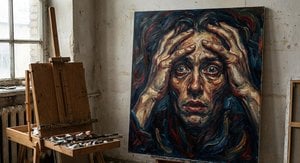
The Reactionary Impulse: Breaking the Minimalist Silence
The late 1970s arrived at a moment of profound aesthetic exhaustion. For years, the art world had been dominated by the intellectual rigor of Minimalism and the detached, often sterile logic of Conceptual Art. These movements sought to strip the canvas of narrative, focusing instead on the purity of form, the geometry of the object, and the idea over the execution. However, this period of austerity created a vacuum of feeling. As the decade progressed, a new generation of artists felt the weight of this silence. They sought to breach the cool, clinical corridors of the avant-garde, replacing the cerebral with the visceral. This impulse to return to the sensory was not a sudden rupture but a redirection of energy. Much like the early 20th-century movements that sought to escape the constraints of academic realism, Neo-Expressionism functioned as a rebellion against the perceived coldness of the era. It was a movement that demanded engagement rather than mere observation. Where Minimalism asked the viewer to contemplate the object, Neo-Expressionism asked the viewer to feel the artist. This shift marked the beginning of a significant transition in the history of modernism, moving the needle from the objective toward the intensely subjective.The Figurative Resurgence: Reclaiming the Human Form
 Max Beckmann
A key figure in German Expressionism, Max Beckmann created the iconic The Night. Discover his powerful and symbolic artworks today.
The Tactile Surface: Materiality and the Weight of Paint
 Emil Nolde
Emile Nolde was a key figure in German Expressionism known for The Mocking of Christ. Discover his vibrant and emotive masterpieces today.
Psychological Landscapes: The Unfiltered Subconscious
 Mountain of humanity with the sun of Zarathustra
, Edvard Munch
Regional Manifestations: Transavanguardia and Neue Wilde
While the movement was an international phenomenon, it manifested through distinct cultural lenses. In Italy, it was known as Transavanguardia, a term used to describe a return to traditional painting and the reclamation of cultural history. In Germany, the movement was identified as Neue Wilde or "The New Wild Ones," characterized by a certain aggressive, spontaneous energy. These regional identities allowed the movement to absorb local folklore and historical tensions, making it a truly global dialogue. This regional diversity mirrors the way art movements have historically shifted between centers of power. Just as the focus of the art world moved from Europe to America in the mid-twentieth century, Neo-Expressionism represented a significant revival of European self-expression. From the artistic squats of the "Paris Commune" in Ukraine to the vibrant, political canvases of Bedri Baykam in Turkey, the movement proved that the impulse to express the self is not bound by a single geography, but is a universal response to the shifting tides of history.The Market Paradox: Authenticity and the Art Market
The rise of Neo-Expressionism was not without its critics. Because the movement achieved massive commercial success during the 1980s, some scholars and critics, such as Robert Hughes, viewed it with skepticism. There were concerns that the movement’s popularity was a symptom of a market-driven culture, where the "newness" of the style was prioritized over radical intellectual depth. This tension between the raw, authentic impulse of the artist and the polished machinery of the gallery system remains a central theme in the study of postmodern art. Despite these debates, the movement’s impact on the art market and the collector's landscape was undeniable. It proved that there was a profound hunger for the painterly and the personal in an increasingly conceptual age. For the modern collector, navigating this history requires an understanding of that tension—the balance between the visceral power of the work and its place within the broader economic narrative of art. It is this very tension that gives the movement its enduring complexity and its continued relevance in the contemporary market.At ArtsDot.com, we understand the profound impact of such expressive works on a space. Whether you are looking to acquire a hand-painted oil reproduction that captures this intense materiality or seeking a custom commission that reflects your own psychological landscape, our experts are here to guide you. From professional digital mockups to bespoke "Period Shifts," we help you bring the weight and soul of art history into your home.