


 Druck bestellen Bild kaufen
 Versenden
 Teilen
 Details anzeigen
 Zu Favoriten hinzufügen

 Herunterladen
 Ähnliche Objekte
 Röntgenaufnahme
 Diashow anzeigen
Calm
 Oil On Canvas
- WallArt
- Dutch Golden Age
 1650
1650 47.0 x 59.0 cm
 Wallraf-Richartz-Museum
 Weiterlesen
Handgefertigte Öl-Reproduktion
Handgemaltes Ölgemälde auf Leinwand in Ihrer Wunschgröße und mit Rahmen, auf Bestellung von unseren Künstlern angefertigt.




P118B $10

P118H $10

P118W $10

P438Z $10

P508JH $12

P508YH $12

P805H $10

P805Z $10

P919BZ $10

P919G $10

P919XJ $10

P959ZH $10

P968JZ $12

W106C $8

W218G $10

W218JH $8

W218Y $10

W307PJ $10

W316G $10

W316PJ $8

W316Y $10

W398PJ $8

W4111J $10

W500HY $15

W500JH $15

W692G $12

W849H $8

W940BG $15

W953PJ $8




Wählen Sie aus unseren vordefinierten Größen, die den ursprünglichen Proportionen des Kunstwerks entsprechen.

Sie können Ihre eigenen Maße eingeben, um einen bestimmten Rahmen oder Platz auszufüllen. Wenn die gewählte Größe nicht den Proportionen des Originalbildes entspricht, werden wir das Kunstwerk entweder beschneiden oder das Gemälde durch zusätzliche, handgemalte Elemente erweitern. Ein digitales Mockup wird Ihnen zur Genehmigung zugesandt, bevor die Produktion beginnt.
Bitte beachten Sie, dass die Bildschirmvorschau nicht die tatsächliche Beschneidung oder Erweiterung widerspiegelt. Nur das Mockup zeigt die endgültige Komposition exakt an.
Obwohl Sondermaße verfügbar sind, empfehlen wir, eine Größe aus der vordefinierten Liste zu wählen, um die ursprünglichen Proportionen beizubehalten.
Nach der Bestellung wird das ArtsDot.com-Team dem Kunden Anweisungen per E-Mail zusenden und eine Mockup-Vorschau bereitstellen.
Weltweiter Versand () in nur 3 bis 4 Wochen statt der üblichen 5 Wochen. (22 Juli). Keine Kompromisse bei der Qualität.

Kostenloser weltweiter Expressversand

Hochwertige Leinenleinwand

Umfassender Versicherungsschutz beim Versand

Zollsteuer-Rückerstattungsgarantie

Garantie für echte Farbtreue

60-Tage-Rückgaberecht (nur bei Mängeln)

100% Geld-zurück-Garantie

Mengenrabatt verfügbar
 Die Glasoption ist nur in Größen unter 110 cm verfügbar.

Calm
Art der Reproduktion
Größe der Reproduktion
-


Endpreis aller Optionen
-
Beschreibung des Kunstwerks
A Stillness Captured: Jan van de Cappelle’s “Calm”
Jan van de Cappelle's "Calm," painted in 1650, isn’t merely a depiction of a coastal scene; it’s an invitation to a profound moment of tranquility. Often overlooked amidst the dramatic seascapes favored by his contemporaries, this work reveals a quieter, more introspective side to the artist’s remarkable talent. It's a painting that speaks not just of the visual beauty of a Dutch waterway but also of a carefully cultivated state of mind – a stillness reflected in every brushstroke and subtle hue.
The scene unfolds along a broad, gently curving river, its surface rendered with an almost unsettling smoothness. The water is devoid of visible waves or currents, mirroring the overcast sky above with remarkable fidelity. This isn’t the turbulent drama of a storm; it's a deliberate choice by van de Cappelle to evoke a sense of profound peace and contemplation. The composition is remarkably balanced, drawing the eye across the canvas towards a solitary fisherman wading into the shallow water on the right side of the frame. He stands as a small, almost insignificant figure against the vastness of the landscape, yet his presence anchors the scene and invites us to share in this quiet moment.
The Language of Light and Shadow
Van de Cappelle’s mastery lies not just in capturing the visual appearance of the water but also in conveying its atmosphere through a masterful use of light and shadow. The painting is bathed in a diffused, almost ethereal light – neither bright nor dark, but rather a soft, muted glow that seems to emanate from within the canvas itself. This subtle illumination creates an incredible sense of depth and volume, as if we could step directly into the scene and feel the cool dampness of the air. The artist employs a technique known as *chiaroscuro*, skillfully contrasting areas of light with deep shadows to heighten the drama and create a three-dimensional effect.
Notice how the distant boats are rendered in paler, almost ghostly tones – a deliberate device by van de Cappelle to suggest their distance and the atmospheric haze that softens their outlines. The foreground elements, particularly the fisherman and the boats closest to the viewer, are painted with greater detail and richness of color, drawing our attention and anchoring us within the scene. The brushwork itself is remarkably smooth and blended, contributing to the overall sense of serenity and stillness.
A Window into 17th-Century Dutch Life
"Calm" offers a fascinating glimpse into the daily life of 17th-century Holland – a society deeply connected to its waterways. The presence of fishing boats, the solitary figure of the fisherman, and the overall atmosphere of quiet industry all speak to this reality. However, van de Cappelle doesn’t simply depict a snapshot of everyday life; he elevates it into something more profound. He captures not just *what* is happening but also *how* it feels – the sense of peace, contentment, and connection with nature that characterized so many Dutch lives during that era.
Interestingly, van de Cappelle’s background as a textile merchant profoundly influenced his artistic vision. His intimate knowledge of color, texture, and pattern—skills honed in the demanding world of dyeing fabrics—translated seamlessly into his paintings. He sought to create works that were not just visually appealing but also emotionally resonant, evoking feelings of tranquility and contemplation.
Symbolism and Emotional Resonance
Beyond its technical brilliance, “Calm” is imbued with a subtle sense of symbolism. The stillness of the water can be interpreted as a metaphor for inner peace – a state of mind free from turmoil and anxiety. The solitary fisherman represents humanity’s connection to nature, reminding us of our place within the larger world. And the overcast sky, rather than suggesting gloom, evokes a feeling of quiet contemplation and introspection.
Ultimately, “Calm” is a painting that invites us to slow down, breathe deeply, and appreciate the beauty of stillness. It’s a testament to van de Cappelle's extraordinary talent and his ability to capture not just the visual appearance of the world but also its profound emotional essence. A reproduction of this work offers a chance to bring this sense of serenity into any space, serving as a constant reminder of the importance of finding moments of peace in our own lives.
Ähnliche Kunstwerke


Biografie des Künstlers
Jan van de Cappelle: The Mirror of Tranquility
Jan van de Cappelle (1626-1679) stands as a singular figure within the Dutch Golden Age, an artist whose output—a mere handful compared to his contemporaries—commands remarkable distinction. He wasn’t merely a painter; he was an industrial titan and astute collector, inextricably linked to the economic powerhouse of Amsterdam and its burgeoning textile industry. This duality profoundly shaped his artistic vision, resulting in seascapes and winter landscapes imbued with an unparalleled serenity – a stillness that reflects not just the surface waters but also the very heavens above. He is rightfully hailed as “Holland’s outstanding marine painter of 17th century,” a testament to his mastery of capturing atmospheric nuance and conveying profound emotional depth within deceptively simple compositions.Early Life & Training
Born in Amsterdam in 1624, Jan van de Cappelle possessed an uncommon path to artistic recognition. Unlike many artists of his era who honed their skills through formal guild training, he was largely self-taught—though likely influenced by the stylistic sensibilities of Simon de Vlieger, whose work closely resembles Cappelle’s formative paintings. His father, Franchoy van de Cappelle, operated a substantial dyeworks specializing in crimson dye production, a profession that demanded considerable technical expertise and provided Jan with invaluable practical experience alongside his artistic pursuits. This upbringing instilled in him not only a keen understanding of color and texture but also the discipline required for sustained creative endeavor.Influences & Style
Cappelle's style is characterized by its meticulous attention to detail and its masterful use of atmospheric perspective—particularly the technique of mirroring sky formations onto calm water surfaces. This distinctive approach echoes the influence of Willem van de Velde the Elder, a celebrated marine painter whose compositions prioritized realism and emotional resonance. However, Cappelle’s artistic voice transcends mere imitation; he developed a unique visual language that speaks to the contemplative spirit of his time. He achieved this remarkable feat by meticulously observing natural phenomena—the subtle shifts in light and color—and translating these observations onto canvas with breathtaking accuracy. The resulting paintings possess an ethereal quality, capturing not just the visual appearance of the scene but also its underlying mood – a profound sense of tranquility that lingers long after viewing.Career & Patronage
Despite lacking official guild affiliation—a notable omission for artists of his stature—Cappelle achieved considerable success as an artist and businessman. He skillfully navigated the complexities of Amsterdam’s economic landscape, securing commissions from wealthy patrons and managing his family's dyeworks with unwavering dedication. Records indicate he purchased significant quantities of Rembrandt’s paintings during insolvency sales in 1656 and 1658, demonstrating a discerning eye for artistic merit and bolstering his own collection. This shrewd investment underscored Cappelle’s understanding of both art and finance—a rare combination that propelled him to prominence within the cultural elite of Amsterdam.Notable Works & Achievements
Cappelle’s oeuvre comprises fewer than 150 paintings—a remarkably small number considering the prolific output of many artists during the Golden Age. Yet, these works stand apart for their luminous quality and evocative depiction of maritime scenes and winter landscapes. Pieces like “Ships at Anchor on a Quiet Sea” exemplify his signature technique: placid waters reflecting ethereal cloudscapes, creating an illusion of boundless space and conveying a sense of profound peace. The meticulous layering of paint—a hallmark of Cappelle’s style—captures the subtle interplay of light and shadow, imbuing each canvas with an extraordinary depth of feeling. His paintings are housed in museums across Europe, including the Rijksmuseum in Amsterdam and the National Gallery in London, ensuring that his artistic legacy continues to inspire admiration for generations to come.Legacy & Historical Significance
Jan van de Cappelle’s contribution to Dutch art history extends beyond his individual paintings. He embodies the spirit of the era—a fusion of artistic creativity and entrepreneurial acumen—and represents a crucial link between Rembrandt's legacy and the subsequent development of marine painting. His serene landscapes continue to resonate with viewers today, reflecting a desire for stillness and contemplation amidst the turbulence of daily life. As Abraham Bredius noted, Cappelle’s work stands as “Holland’s outstanding marine painter of 17th century,” securing his place among the most celebrated artists of his time—a testament to his enduring artistic vision and unparalleled mastery of technique.
Jan van de Cappelle
1624 - 1679 , Niederlande
Kurzinfos
- Artistic Movement Or Style: Goldenes Zeitalter
- Artists Or Movements Influenced By This Artist: ['Rembrandt']
- Artists Who Influenced This Artist:
- Simon de Vlieger
- Willem van de Velde der Ältere
- Date Of Birth: Amsterdam, Niederlande (1624)
- Date Of Death: 1679
- Full Name: Jan van de Cappelle
- Nationality: Niederländisch
- Notable Artworks:
- Schiffe vor Anker auf ruhigem Meer
- Schiffe Vor Anker Auf Ruhigem Meer
- Place Of Birth: Amsterdam
Ähnliche Artikel

Die 10 Meisterwerke des Goldenen Zeitalters der niederländischen Malerei |
Entdecken Sie die 10 Meisterwerke des Niederländischen Goldenen Zeitalters! Von Rembrandt bis Vermeer – erleben Sie Kunstgeschichte, Techniken & Emotionen. Hochwertige Gemäldereproduktionen für Ihr Zuhause auf .
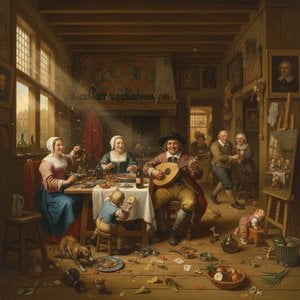
Jan Steen: Meister der niederländischen Genremalerei und Spiegelbild des Goldenen Zeitalters
Entdecken Sie Jan Steen, den Meister der niederländischen Genremalerei! Erfahren Sie mehr über sein Leben, seine Werke und den historischen Kontext des Goldenen Zeitalters. Kunstexperten-Analyse & hochwertige Reproduktionen.

Pieter de Hooch: Meister der Stille und des holländischen Lebens im Goldenen Zeitalter
Entdecken Sie das Werk von Pieter de Hooch, Meister des holländischen Goldenen Zeitalters! Analysen, Hintergrundinformationen und hochwertige Reproduktionen seiner berühmten Genremalerei finden Sie bei ArtsDot.

Golden Age Reflections: Dutch Baroque Painting & Cultural Innovation
Explore the Dutch Golden Age of painting! Discover key artists like Vermeer & ter Borch, their innovative techniques, and the rich cultural context behind these Baroque masterpieces. Learn about collecting & appreciating this iconic art period.

Navigating the Depths of Representation: A Historical Exploration of Marine Painting
Explore the rich history of marine painting with ArtsDot. Discover Dutch Masters, Romantic seascapes & renowned artists like Wyllie and Harris. Expert guidance for collectors & custom reproductions.

