
- Startseite

- Ölgemälde-Reproduktion
- Georges Braque
- Still life with flowers

 Druck bestellen Bild kaufen
 Versenden
 Teilen
 Details anzeigen
 Zu Favoriten hinzufügen

 Herunterladen
 Ähnliche Objekte
 Röntgenaufnahme
 Diashow anzeigen
Still life with flowers


 Weiterlesen
Handgefertigte Öl-Reproduktion
Handgemaltes Ölgemälde auf Leinwand in Ihrer Wunschgröße und mit Rahmen, auf Bestellung von unseren Künstlern angefertigt.




P118B $10

P118H $10

P118W $10

P438Z $10

P508JH $12

P508YH $12

P805H $10

P805Z $10

P919BZ $10

P919G $10

P919XJ $10

P959ZH $10

P968JZ $12

W106C $8

W218G $10

W218JH $8

W218Y $10

W307PJ $10

W316G $10

W316PJ $8

W316Y $10

W398PJ $8

W4111J $10

W500HY $15

W500JH $15

W692G $12

W849H $8

W940BG $15

W953PJ $8




Wählen Sie aus unseren vordefinierten Größen, die den ursprünglichen Proportionen des Kunstwerks entsprechen.

Sie können Ihre eigenen Maße eingeben, um einen bestimmten Rahmen oder Platz auszufüllen. Wenn die gewählte Größe nicht den Proportionen des Originalbildes entspricht, werden wir das Kunstwerk entweder beschneiden oder das Gemälde durch zusätzliche, handgemalte Elemente erweitern. Ein digitales Mockup wird Ihnen zur Genehmigung zugesandt, bevor die Produktion beginnt.
Bitte beachten Sie, dass die Bildschirmvorschau nicht die tatsächliche Beschneidung oder Erweiterung widerspiegelt. Nur das Mockup zeigt die endgültige Komposition exakt an.
Obwohl Sondermaße verfügbar sind, empfehlen wir, eine Größe aus der vordefinierten Liste zu wählen, um die ursprünglichen Proportionen beizubehalten.
Nach der Bestellung wird das ArtsDot.com-Team dem Kunden Anweisungen per E-Mail zusenden und eine Mockup-Vorschau bereitstellen.
Weltweiter Versand () in nur 3 bis 4 Wochen statt der üblichen 5 Wochen. (18 Juli). Keine Kompromisse bei der Qualität.

Kostenloser weltweiter Expressversand

Hochwertige Leinenleinwand

Umfassender Versicherungsschutz beim Versand

Zollsteuer-Rückerstattungsgarantie

Garantie für echte Farbtreue

60-Tage-Rückgaberecht (nur bei Mängeln)

100% Geld-zurück-Garantie

Mengenrabatt verfügbar
 Die Glasoption ist nur in Größen unter 110 cm verfügbar.

Still life with flowers
Art der Reproduktion
Größe der Reproduktion
-


Endpreis aller Optionen
-
Beschreibung des Kunstwerks
Still Life with Flowers – A Testament to Cubist Innovation
Georges Braque’s “Still life with flowers,” painted in 1945, stands as a quintessential example of Analytical Cubism—a movement that fundamentally challenged the conventions of representational art and ushered in a new era of artistic exploration. This deceptively simple composition belies a complex intellectual framework rooted in the groundbreaking theories championed by Picasso and Braque themselves.
- Subject Matter: The painting depicts a vase brimming with blossoms—roses, lilies, chrysanthemums—a commonplace subject elevated to extraordinary significance through Braque’s masterful manipulation of form and color. It's not merely an observation of nature; it’s an interrogation of how we perceive it.
- Style: Analytical Cubism distinguishes itself from its predecessor, Synthetic Cubism, by prioritizing fragmentation and geometric abstraction over illusionistic representation. The vase and flowers are dissected into interlocking planes—a technique that simultaneously dismantles and reconstitutes the visual world.
- Technique: Braque employed a muted palette dominated by earthy tones – browns, ochres, and greys – reflecting the influence of Cézanne’s exploration of sculptural form. However, these subdued hues are punctuated by vibrant splashes of color—primarily reds and yellows—that serve to emphasize specific planes and create visual tension. The artist utilized oil paint on canvas with meticulous attention to detail, capturing subtle variations in texture and shading that contribute to the painting's overall depth.
Historical Context – Challenging Perspective
Created during World War II, “Still life with flowers” embodies the spirit of artistic resilience amidst turbulent times. Cubism emerged in Paris in 1907 as a reaction against Impressionism’s fleeting impressions of light and color. Artists like Picasso and Braque sought to depict objects from multiple viewpoints simultaneously, rejecting traditional perspective—a cornerstone of Western art since antiquity—and embracing instead the concept of simultaneity.
- Influence: The painting owes considerable debt to Cézanne’s pioneering work in simplifying forms and exploring underlying geometric structures. Braque's approach aligns with Cézanne’s belief that “the artist must see the world as it is, not as he imagines it.”
- Philosophical Significance: Cubism wasn’t simply a stylistic innovation; it represented a profound shift in artistic thought—a rejection of illusion and an embrace of intellectual abstraction. It questioned the very notion of visual representation itself, paving the way for subsequent developments in abstract art.
Symbolism – Beyond Decoration
While seemingly decorative, “Still life with flowers” carries symbolic weight that transcends its surface beauty. Flowers have long been associated with themes of purity, fertility, and remembrance—concepts particularly resonant during a period marked by global conflict. The vase itself symbolizes containment and stability amidst chaos.
- Color Palette: The deliberate use of red and yellow hues evokes associations with passion and vitality, countering the prevailing gloom of wartime Europe.
- Compositional Arrangement: Braque’s careful positioning of the vase and flowers contributes to a sense of balance and harmony—a visual antidote to the anxieties of the era.
Emotional Impact – A Quiet Revelation
"Still life with flowers" offers more than just aesthetic pleasure; it invites contemplation. Despite its geometric rigor, the painting possesses an undeniable warmth and intimacy—likely stemming from Braque’s desire to capture a moment of serene beauty amidst the pressures of artistic endeavor. It reminds us that even in times of darkness, art can illuminate the human spirit with enduring grace.
Ähnliche Kunstwerke


Biografie des Künstlers
**frühes Leben und Ausbildung**
Georges Braque, ein prominenter französischer Maler, Kollagist, Bleistrichzeichner, Grafiker und Bildhauer, wurde am 13. Mai 1882 in Argenteuil, Val-d'oise, geboren. Er wuchs in Le Havre auf und erhielt zunächst eine Ausbildung als Hausmaler und Dekorateur wie sein Vater und Großvater. Braques künstlerische Neigungen führten ihn jedoch dazu, von 1897 bis 1899 an der École des Beaux-Arts in Le Havre Malerei zu studieren.**Künstlerische Entwicklung und Fauvisme**
Im Jahr 1902, nachdem er seine Lehre bei einem Dekorateur in Paris abgeschlossen hatte, besuchte Braque bis 1904 die Académie Humbert. Dieser Zeitraum markierte seine Einführung ins Fauvismus, einen Stil, der durch lebendige Farben und emotionale Reaktionen gekennzeichnet ist. Beeinflusst von den Werken von Henri Matisse und André Derain, übernahm Braque einen fauvistischen Ansatz, wie in seinem Gemälde The Patience (Fauvismus, Öl auf Leinwand).**Beitrag zum Kubismus**
Braques Zusammenarbeit mit Pablo Picasso von 1908 bis 1912 führte zur Entwicklung des Kubismus. Ihre analytischen kubistischen Werke, wie z.B. Georges Braque: The Patience und Pablo Picasso: Clarinet(analytischer Kubismus, Öl auf Leinwand), gelten heute als Meilensteine der Kunstgeschichte.**Erbe und bemerkenswerte Werke**
* Houses at L'Estaques: Ein Zeugnis für Braques innovatives Einsatz von Geometrie und simultaner Perspektive. * The Patience(Fauvismus, Öl auf Leinwand): Demonstriert Braques fauvistischen Stil. * Clarinet(analytischer Kubismus, Öl auf Leinwand): Eine kollaborative kubistische Arbeit mit Picasso.**Museen und Sammlungen**
* Musée d'Orsay: Bietet eine umfangreiche Sammlung impressionistischer und postimpressionistischer Kunst, darunter Werke von Braque. * Musée de l'Orangerie: Zeigt eine breite Palette von Kunstwerken, darunter Werke von Braque und anderen bedeutenden Künstlern.- Erfahren Sie mehr über Georges Braques Leben und Werk auf ArtsDot.com
- Entdecken Sie die Sammlung des Musée d'Orsay, die Werke von Braque und anderen Künstlern umfasst, unter Musée d'Orsay - Wikipedia
- Erfahren Sie mehr über den Fauvismus und seinen Einfluss auf die Entwicklung des Kubismus mit Fauvismus Kunstbewegung auf ArtsDot.com

Georges Braque
1882 - 1963 , Frankreich
Kurzinfos
- Beeinflusste Künstler: ['Pablo Picasso']
- Bemerkenswerte Werke:
- Häuser in L'Estaque
- Die Geduld (Fauvismus)
- Stillleben mit Pfeife
- Mandola
- Einflussreiche Künstler:
- Henri Matisse
- André Derain
- Paul Cézanne
- Geburtsdatum: 13. Mai 1882
- Geburtsort: Argenteuil, Frankreich
- Künstlerischer Stil: Kubismus, Fauvismus
- Nationalität: Französisch
- Sterbedatum: 1963
- Vollständiger Name: Georges Braque
Ähnliche Artikel
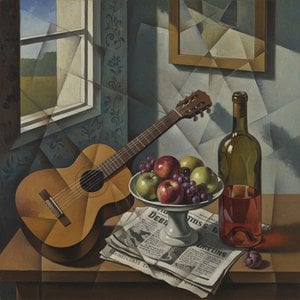
Deconstructing Reality: A Comprehensive Exploration of Cubist Still Life
Explore the revolutionary world of Cubist Still Life with ArtsDot. Discover Picasso & Braque's groundbreaking techniques, its philosophical roots, and lasting impact on modern art. Expert insights for collectors.

Silent Narratives: Exploring the Enduring Appeal of Still Life Painting Across Centuries
Explore the rich history of still life painting with ArtsDot. Discover Dutch Masters, decode vanitas symbolism & learn about collecting timeless art. Expert insights and museum-quality reproductions.

Georges Braque: Die 25 Meisterwerke des Kubismus für Ihr Zuhause | ArtsDot
Entdecken Sie die 25 bedeutendsten Kunstwerke von Georges Braque – vom Kubismus bis zum Fauvismus. Erfahren Sie die Geschichten hinter den Meisterwerken und finden Sie hochwertige Reproduktionen für Ihr Zuhause auf ArtsDot.com.

Jenseits des Porträts: Ihre Küche als Kunstwerk – Ein Stillleben für Ihr Restaurant.
Verleihen Sie Ihrem Restaurant einen einzigartigen Charakter! ArtsDot kreiert handgemalte Stillleben, die Ihre kulinarische Leidenschaft widerspiegeln. Exklusive Kunst für höchste Ansprüche – entdecken Sie Ihr persönliches Meisterwerk.

Echoes of Time: Exploring the Enduring Appeal & Historical Context of Vintage Art Prints
Explore the captivating world of vintage art prints! Discover their history, collecting tips & enduring appeal. Expert insights on chromolithography and building a legacy collection with ArtsDot.



