
- Startseite

- Auf Leinwand drucken
- Adriaen Brouwer
- Brawling Peasants

 Gemälde kaufen Bild kaufen
 Versenden
 Teilen
 Details anzeigen
 Zu Favoriten hinzufügen

 Herunterladen
 Ähnliche Objekte
 Röntgenaufnahme
 Diashow anzeigen
Brawling Peasants
 Oil On Canvas
- WallArt
- Romanticism
 26.0 x 34.0 cm
 Gemäldegalerie Alte Meister
 Weiterlesen
Giclée / Kunstdruck
Giclée- oder Leinwanddruck in Museumsqualität mit schneller Produktion und flexiblen Veredelungsoptionen.




P118B $10

P118H $10

P118W $10

P438Z $10

P508JH $12

P508YH $12

P805H $10

P805Z $10

P919BZ $10

P919G $10

P919XJ $10

P959ZH $10

P968JZ $12

W106C $8

W218G $10

W218JH $8

W218Y $10

W307PJ $10

W316G $10

W316PJ $8

W316Y $10

W398PJ $8

W4111J $10

W500HY $15

W500JH $15

W692G $12

W849H $8

W940BG $15

W953PJ $8




Wählen Sie aus unseren vordefinierten Größen, die den ursprünglichen Proportionen des Kunstwerks entsprechen.

Sie können Ihre eigenen Maße eingeben, um ein bestimmtes Format oder einen speziellen Platz einzupassen. Wenn das von Ihnen gewählte Format nicht den Proportionen des Originalbildes entspricht, werden wir das Kunstwerk entweder beschneiden oder das Bild mit einem gespiegelten oder einfarbigen Rand erweitern. Ein digitaler Entwurf wird Ihnen zur Genehmigung zugesandt, bevor die Produktion beginnt.
Bitte beachten Sie, dass die Vorschau auf dem Bildschirm nicht den tatsächlichen Zuschnitt oder die Erweiterung widerspiegelt. Nur der Entwurf zeigt die endgültige Komposition präzise an.
Obwohl Sondermaße verfügbar sind, empfehlen wir die Auswahl eines Maßes aus der vordefinierten Liste, um die ursprünglichen Proportionen zu bewahren.
Weltweiter Versand () innerhalb von 2 Wochen statt der üblichen 4/5 Wochen. (20 Juli)

Kostenloser weltweiter Expressversand

Hochwertige Leinenleinwand

Umfassender Versicherungsschutz beim Versand

Zollsteuer-Rückerstattungsgarantie

Garantie für echte Farbtreue

60-Tage-Rückgaberecht (nur bei Mängeln)

100% Geld-zurück-Garantie

Mengenrabatt verfügbar
 Die Glasoption ist nur in Größen unter 110 cm verfügbar.

Brawling Peasants
Giclée / Kunstdruck
Größe der Reproduktion
-


Endpreis aller Optionen
-
Beschreibung des Sammlerstücks
A Chaotic Tableau of Human Nature: Adriaen Brouwer’s “Brawling Peasants”
Adriaen Brouwer's "Brawling Peasants" isn’t merely a depiction of a brawl; it’s a visceral snapshot of 17th-century life, a raw and unflinching portrayal of the everyday struggles and simmering tensions that underpinned rural existence. Painted around 1630 – a period marked by social unrest and economic hardship in the Netherlands – this work transcends simple violence to offer a profound commentary on human nature itself. Brouwer, a master of genre painting, eschews idealized representations, instead presenting a scene of brutal honesty, capturing the messy reality of peasant life with remarkable immediacy. The composition is deliberately crowded, almost claustrophobic, drawing the viewer into the heart of the conflict and forcing them to confront the physicality of the struggle.
The scene unfolds within what appears to be a dimly lit workshop or storage area – a space that immediately suggests confinement and perhaps even a degree of desperation. A single man lies prone on the floor, subjected to a vicious beating with a club; his face contorted in agony, his body a testament to the violence inflicted upon him. Around him, other men engage in a chaotic dance of aggression, their movements frenzied and uncontrolled. The figures are rendered with a remarkable lack of sentimentality – no heroic gestures, no noble motivations, simply the brutal act of physical confrontation. Brouwer’s skill lies not in glorifying conflict but in exposing its ugly core.
A Masterclass in Technique: Impasto and Gesture
Brouwer's technique is a crucial element in conveying the painting’s emotional intensity. He employs a thick, impastoed application of oil paint, building up layers of color to create a remarkably tactile surface. This heavy use of paint isn’t merely decorative; it adds weight and physicality to the scene, mirroring the violence depicted within. The brushstrokes are loose and gestural, capturing the energy and movement of the figures with remarkable dynamism. Lines are rough and expressive, conveying a sense of urgency and unrestrained emotion – a deliberate departure from the smoother, more polished styles prevalent at the time.
Notice particularly the rendering of skin and clothing. The impasto technique creates a shimmering effect, highlighting the textures of fabric and flesh with remarkable realism. Shadows are deep and dramatic, contributing to the painting’s overall sense of darkness and foreboding. The uneven lighting further emphasizes the chaos of the scene, drawing attention to key moments of action while obscuring details and creating an atmosphere of suspense.
Historical Context: Peasant Life and Social Unrest
To fully appreciate “Brawling Peasants,” it’s essential to understand the historical context in which it was created. The 17th century was a period of significant social upheaval in the Netherlands, marked by economic hardship, religious tensions, and widespread poverty among the peasantry. Brouwer's paintings often depicted scenes from this marginalized segment of society – their drinking habits, their disputes, their struggles for survival. The painting reflects a broader trend within Dutch art to move away from idealized depictions of aristocratic life and towards a more realistic portrayal of everyday people.
Brouwer’s work aligns with the burgeoning genre of “tronies” – small, intimate portraits that focused on capturing fleeting expressions of emotion. “Brawling Peasants,” however, transcends the conventions of the tronie by presenting a full-scale drama, exploring themes of violence, power, and social inequality. The painting serves as a powerful reminder of the precariousness of life for those living on the margins of society.
Symbolism and Emotional Resonance
Beyond its immediate depiction of violence, “Brawling Peasants” is rich in symbolic meaning. The prone figure represents vulnerability and helplessness, while the aggressors embody the forces of power and control. The chaotic scene can be interpreted as a metaphor for the broader social unrest that plagued the Netherlands during Brouwer’s time – a reflection of simmering tensions beneath the surface of everyday life. The painting's raw emotional intensity continues to resonate with viewers today, prompting questions about human nature, social justice, and the enduring cycle of violence.
Reproductions of this powerful work offer an opportunity to experience Brouwer’s masterful technique and insightful commentary on the human condition. Its dramatic composition and visceral depiction of conflict make it a compelling addition to any collection, while its historical context provides valuable insight into the social and economic realities of 17th-century Europe.
Ähnliche Kunstwerke


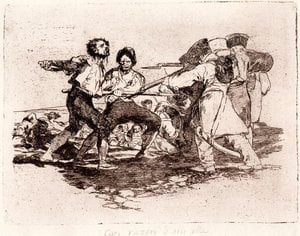


Biografie des Künstlers
Frühes Leben und Hintergrund
- Geboren: Oudenaarde, Belgien (1605/1635)
- Gestorben: 1638
- Sein Vater war ein Wandteppichdesigner.
- Adriaen Brouwer erlebte früh im Leben Härten; der Tod seines Vaters im Alter von 15 Jahren zwang ihn, das Elternhaus zu verlassen.
Künstlerische Entwicklung und Genremalerei
- Brouwer wurde bekannt für seine lebendigen Darstellungen des Alltagslebens, insbesondere Szenen mit Bauern, Soldaten und einfachen Leuten.
- Er war ein wichtiger Innovator in der Genremalerei – Kunst, die Szenen aus dem gewöhnlichen Leben darstellt.
- Seine Gemälde zeigten oft Trinken, Rauchen, Kartenspielen und andere Aktivitäten der unteren Schichten.
- Bemerkenswerte Werke sind "Arme Leute beim Trinken in einer Taverne", "Kleinbauern beim Kartenspiel", "Der Raucher", "Das Schlachtfest", "Die Schlägerei", "Mondlichtlandschaft", "Betrunkener Bauer in einer Taverne", "Bauern beim Kartenspielen" und "Trinker im Hof".
Einflüsse und künstlerischer Stil
- Flandrische Primitive: Brouwers Werk wurde vom detaillierten Realismus der flämischen Primitiven beeinflusst.
- Barockkunst: Seine Gemälde enthielten oft dramatische Beleuchtung und intensive Emotionen, die für die Barockkunst typisch sind.
- Sein Stil verband Realismus mit einem Sinn für Humor und lebendiger Beobachtung.
Vermächtnis und Einfluss
- Brouwers Werk beeinflusste nachfolgende Generationen flämischer und niederländischer Maler maßgeblich.
- Er trug dazu bei, die Genremalerei als eine wichtige Kraft in der Kunst des 17. Jahrhunderts zu etablieren.
- David Teniers der Jüngere war einer der Künstler, der sich von Brouwers innovativem Ansatz zur Darstellung des Alltagslebens inspirieren ließ.
Historische Bedeutung
- Brouwers Gemälde bieten wertvolle Einblicke in die sozialen Bräuche und täglichen Routinen Flanderns und der Niederländischen Republik im 17. Jahrhundert.
- Sein Fokus auf gewöhnliche Menschen hob die Genremalerei hervor und trug zu ihrer wachsenden Popularität und Bedeutung in der Kunstwelt bei.
- Seine Werke befinden sich in Museen wie dem Koninklijk Museum voor Schone Kunsten in Antwerpen, Belgien.

Adriaen Brouwer
1635 - 1638 , Belgien
Kurzinfos
- Beeinflusste Künstler: ['David Teniers der Jüngere']
- Bemerkenswerte Werke:
- Arme Leute im Gasthaus
- Bauern beim Kartenspiel
- Der Raucher
- Die Schlachtfestivität
- Schlägerei
- Mondlichtlandschaft
- Betrunkener Bauer
- Bauern beim Kartenspiel
- Trinker im Hof
- Geburtsdatum: 1605/1635 (ungefähr)
- Geburtsort: Oudenarde, Belgien
- Künstlerische Einflüsse: ['Flandrische Primitive']
- Künstlerische Richtung: Barock, Genremalerei
- Nationalität: Flämisch
- Todestag: 1638
- Vollständiger Name: Adriaen Brouwer
Ähnliche Artikel

Die 25 Meisterwerke des Metropolitan Museum of Art: Kunst für Ihr Zuhause | ArtsDot
Entdecken Sie die 25 berühmtesten Kunstwerke des Metropolitan Museum of Art, New York! Von Van Gogh bis Monet – erleben Sie Geschichten hinter Meisterwerken. Hochwertige Reproduktionen & Inspiration für Ihr Zuhause auf ArtsDot.com.

Adriaen Brouwer: Capturing Dutch Life & Social Commentary Through Genre Painting
Explore the captivating world of Adriaen Brouwer, a master of Dutch Golden Age genre painting. Discover his vivid depictions of peasant life, social commentary, and lasting influence on art history. Learn more at ArtsDot.

James Abbott McNeill Whistler: Die 25 Meisterwerke für Ihr Zuhause | ArtsDot
Entdecken Sie die 25 Meisterwerke von James Abbott McNeill Whistler! Von den berühmten Nocturnes bis zu ikonischen Porträts – erleben Sie Ästhetizismus, Impressionismus & Tonalismus. Hochwertige Reproduktionen auf ArtsDot.com.

Henri Matisse: Die 25 Meisterwerke des Farbgenies – Kunst für Ihr Zuhause | ArtsDot
Entdecken Sie die 25 Meisterwerke von Henri Matisse! Tauchen Sie ein in die Welt des Fauvismus, der leuchtenden Farben und ikonischen Formen. Kunstreproduktionen & Inspiration für Ihr Zuhause – exklusiv auf ArtsDot.com.
Die 25 Meisterwerke der National Gallery Washington: Kunst für Ihr Zuhause | ArtsDot
Entdecken Sie die 25 ikonischsten Meisterwerke der National Gallery Washington! Von Cézanne bis Picasso – erfahren Sie die Geschichten hinter berühmten Gemälden, Kunststilen & Farbpaletten. Hochwertige Kunstdrucke online bei ArtsDot.com.


