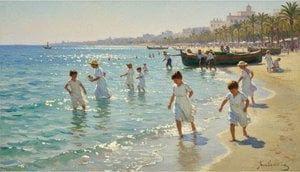
Ignacio Pinazo Camarlench: Život a odkaz
Raný život a první překážky
- Narození: Narodil se v roce 1849 ve Valencii v chudé rodině.
- Pinazo čelil již od raného věku těžkým životním zkouškám, když byl nucen pomáhat s příjmy rodiny.
- Než získal formální umělecké vzdělání, pracoval jako stříbrník, malíř dlaždic a dekorátor vějířů.
- Smrt jeho matky na choleru a následné úmrtí otce ho přivedly do péče prarodičů.
- V roce 1864 se zapsal na Akademii krásných umění San Carlos ve Valencii, zatímco si musel sám vydělávat jako kloboučník.
Umělecký rozvoj a vlivy
- Pinazova umělecká dráha začala kolem 21. roku života a první úspěch zaznamenal tři roky později v Barceloně.
- Jeho raná díla se zaměřovala na konvenční historická témata, ale po zásadní cestě do Říma v roce 1873 došlo k dramatickému posunu.
- Cestováním byl inspirován k malování rodinných témat, aktů a scén z každodenního života, čímž předznamenal styl umělců jako Joaquín Sorolla y Bastida a Francisco Domingo.
- Druhá delší pobyta v Římě (1876–1881), financovaný stipendiem, dále zdokonalil jeho impresionistický přístup.
- Vyvinul si styl charakteristický tmavými barvami – černou, hnědou a zemitémi tóny – v kombinaci se zářivou paletou impresionismu, často využívaje rychlé tahy štětcem.
Hlavní úspěchy a uznání
- Pinazo získával zakázky od valencijské aristokracie, včetně markýzy z Benicarló.
- Na uměleckých výstavách získal stříbrné medaile v letech 1881 a 1885, následované zlatými medailemi v letech 1887 a 1899.
- Za svůj umělecký přínos mu byla udělena královská medaile.
- V roce 1912 mu město Valencie vzdalo čest tím, že pojmenovalo po něm jednu ze svých ulic.
- Významná díla: Las hijas del Cid, Los últimos momentos del rey Don Jaime el Conquistador, El guardavía a Barca en la playa.
Osobní život a rodina
- Pinazo se oženil s Teresou Martinez Montfort, se kterou měl dva syny, Ignacia a Jose, kteří se rovněž stali malíři.
- Během epidemie cholery ve Valencii v roce 1884 se dočasně přestěhoval do Bétery, kde bydlel ve vile „Maria“ patřící bankéru Jose Jaumandreu.
Historický význam a odkaz
- Pinazo je považován za jednoho z nejvýznamnějších valencijských umělců pozdního 19. století, který propojoval tradiční styly s rodícími se impresionistickými technikami.
- Jeho dílo poskytuje cenný pohled do španělské společnosti a každodenního života jeho éry.
- Největší sbírka jeho obrazů a kreseb je uložena v Institut Valencià d'Art Modern (IVAM), i když není vždy vystavena trvale. Jeho díla lze však nalézt také v Museu de Belles Arts de València a v Museo del Prado.
- Úmrtí: Zemřel v roce 1916 ve Godelli ve věku 67 let a zanechal po sobě významný umělecký odkaz.
Otázky a odpovědi
V jakých směrech působil/a Ignacio Pinazo Camarlench?
Díla umělce Ignacio Pinazo Camarlench si můžete prohlédnout podle jednotlivých směrů na stránce Všechna umělecká hnutí daného umělce.
Kolik děl umělce Ignacio Pinazo Camarlench je možné si prohlédnout?
V katalogu si můžete prohlédnout 178 děl děl autora Ignacio Pinazo Camarlench na stránce Všechna umělecká díla.
Kde najdu díla umělce Ignacio Pinazo Camarlench uspořádaná podle tématu?
Díla umělce Ignacio Pinazo Camarlench si můžete prohlédnout podle tématu na stránce Abeceda témat tohoto umělce.