
Stručně řečeno
Pokud znáte jedno dílo umělce Frederick Cuming, je to pravděpodobně Studio Interior (1950). Landscape (Allotments) (1950) a View of the Isle of Wight from Freshwater Bay, Looking South East (1990) doplňují trojici děl, která lidé okamžitě poznají. Náš katalog obsahuje 14 děl umělce Frederick Cuming. Níže je 14 nejznámějších děl, u každého z nich najdete rok vzniku, místo, kde je lze najít, a to, co je výjimečné.
Začněte zde: 10 nejlepších obrazů umělce Frederick Cuming
Více oblíbených děl umělce Frederick Cuming, od 11 do 14
Co nejčastěji maloval Frederick Cuming
Čtyři nejčastější motivy těchto děl, z nichž každý má svůj nejznámější příklad.
Quiet reflection 2 děl
Kde si můžete prohlédnout obrazy autora Frederick Cuming
8 muzea, v nichž je umístěno nejvíce obrazů z této stránky.
| Muzeum | Město | Díla autora Frederick Cuming | Obrazy z tohoto seznamu |
|---|---|---|---|
| Oxford | 2 | Fair Light Cove, The Patio | |
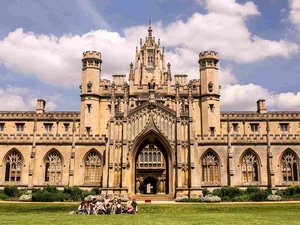
| Cambridge | 2 | Kent Landscape, July, Folkestone Harbour, Rainclouds, Evening | |
| Londýn | 1 | Landscape (Allotments) | |
| Rye | 1 | The Buoy – Rye Harbour | |
| Burnley | 1 | The Studio | |
| Greater Manchester | 1 | Studio | |
| Oxford | 1 | Promenade Arcachon II | |
| Maidstone | 1 | Hythe Beach (with Winding Gear) |
Frederick Cuming dekáda po dekádě: jeden vyjemtelný dílo v každém období
Díla podle dekád
Vyberte si desetiletí a prohlédněte si jeho nejvýraznější dílo.
View of the Isle of Wight from Freshwater Bay, Looking South East
Vaše dotazy k obrazům autora Frederick Cuming
Který obraz od Frederick Cuming je nejznámější?Zobrazit odpověď
Na vrcholu žebříčku je Studio Interior (1950). Hned za ním následují Landscape (Allotments) (1950) a View of the Isle of Wight from Freshwater Bay, Looking South East (1990).
Kolik let bylo Frederick Cuming, když bylo vytvořeno dílo Studio Interior?Zobrazit odpověď
20 let. Frederick Cuming se narodil(a) v 1930 a dílo Studio Interior pochází z roku 1950.
Kterých 10 nejznámějších obrazů má Frederick Cuming?Zobrazit odpověď
Studio Interior, Landscape (Allotments), View of the Isle of Wight from Freshwater Bay, Looking South East, The Buoy – Rye Harbour, Stephen William Hawking, Fair Light Cove, Veranda, Evening, The Studio, Studio a Kent Landscape, July. Rok vzniku a muzeum každého díla najdete v seznamu výše.
Kolik obrazů vytvořil/a Frederick Cuming?Zobrazit odpověď
V našem katalogu máme 14 děl umělce Frederick Cuming z let 1950 až 2005.
Kde můžete vidět slavná díla umělce Frederick Cuming?Zobrazit odpověď
Většinu z nich najdete v St John's College (Oxford), St John’s College (Cambridge) (Cambridge) a Royal College of Art (Londýn). Seznam muzeí výše obsahuje podrobný přehled.
Kdy Frederick Cuming namaloval svá nejznámější díla?Zobrazit odpověď
V období 1950s, více než v jakémkoli jiném čase: 2 z 14 děl na této stránce pochází z této doby, z nichž Studio Interior.
Která slavná obrazová díla umělce Frederick Cuming vznikla jako první a která jako poslední?Zobrazit odpověď
Nejstarší dílo je z Studio Interior (1950); nejnovější je z The Buoy – Rye Harbour (2005).
Jaká díla umělce Frederick Cuming můžete vidět v St John's College?Zobrazit odpověď
Na této stránce můžete uvidět 2 děl v St John's College, Oxford, včetně Fair Light Cove a The Patio.
Seznámit se s umělcem Frederick Cuming
A Life Immersed in Light and Landscape: The World of Frederick Cuming
Frederick Cuming (1930-2022) was a British painter whose work became synonymous with the serene beauty of the English countryside, particularly the coastal regions of East Sussex. Though he enjoyed a long and successful career, his path wasn’t one of immediate recognition but rather a gradual unfolding of talent nurtured by dedicated observation and a deep connection to the natural world. Born in 1930, Cuming initially pursued commercial art before dedicating himself fully to painting, a decision that would ultimately define his life's work. He eschewed formal artistic training, believing instead in learning directly from nature – a philosophy that permeated every brushstroke of his evocative canvases. His early years were spent honing his skills through meticulous study and practice, developing a distinctive style characterized by its delicate handling of light, atmospheric perspective, and subtle color palettes.The Influence of Place: Rye Harbour and the Sussex Coast
Cuming’s artistic identity became inextricably linked with the landscape surrounding Rye Harbour in East Sussex. He moved to this area in the 1960s, and it proved to be a transformative experience. The ever-changing light over the Romney Marsh, the dramatic skies reflected in the water channels, and the weathered textures of the coastal environment provided an endless source of inspiration. Unlike many landscape painters who sought grand vistas, Cuming focused on the intimate details – the shifting patterns of sunlight on reeds, the subtle gradations of color in the clouds, the quiet beauty of a solitary boat at anchor. His paintings weren’t simply representations of places; they were emotional responses to them, capturing not just what he saw but how it *felt* to be present in that moment. This sensitivity to atmosphere and mood became a hallmark of his work, drawing viewers into the tranquil world he so skillfully portrayed. He wasn't interested in dramatic narratives or imposing compositions; instead, he sought to convey a sense of peace and contemplation through understated elegance.Development of Style: Watercolor as a Medium for Atmosphere
While Cuming worked in oils occasionally, watercolor became his preferred medium. He masterfully exploited the fluidity and transparency of watercolor to create luminous effects that perfectly suited his subject matter. His technique was characterized by washes of color layered with delicate brushstrokes, building up depth and atmosphere gradually. He wasn’t afraid to leave areas of white paper untouched, allowing the light to shine through and contribute to the overall sense of airiness and space. This approach required a remarkable degree of control and precision, as well as an intuitive understanding of how colors interact with one another. Over time, his watercolor technique evolved from detailed representational studies to more impressionistic interpretations, where form was often suggested rather than explicitly defined. He embraced the inherent unpredictability of watercolor, allowing it to guide him in capturing the fleeting qualities of light and weather.Major Themes and Achievements: Capturing Ephemeral Beauty
Cuming’s oeuvre is characterized by a consistent focus on landscapes, seascapes, and coastal scenes. Recurring themes include the changing seasons, the interplay of light and shadow, and the quiet beauty of rural life. He often depicted scenes from Rye Harbour and the surrounding Romney Marsh, but also painted locations further afield, including France and Italy. His paintings are notable for their lack of human presence; instead, he focused on the natural world itself, allowing it to speak for itself.- Throughout his career, Cuming exhibited widely in galleries across Britain
- His work has been acquired by numerous private and public collections
- He became a highly respected figure within the British landscape painting community


