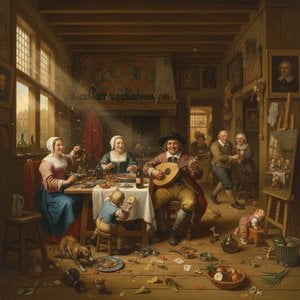
Život ponořený do detailu: Svět staršího Franse van Mierise
Frans van Mieris starší, jméno synonymické pro precizní detail a vyのことrefined umění, si v rámci nizozemského zlatého věku vybudoval významné postavení. Narodil se v Leidenu v roce 1635 a jeho životní cesta se odklonila od rodinného řemesla zlatnického – po vzoru svého otce, Jana Bastiaensze van Mierise – směrem k fascinujícímu světu malířství. Tato raná náklonnost ke kresbě připravila půdu pro kariéru, která definovala styl „fijnschilder“ a nabídla intimní pohled do nizozemské společnosti 17. století. Jeho počáteční výcvik u Abrahama Toorenvlieta, následovaný zásadnými lekcemi od váženého Gerreta Doue, položil pevné základy, na nichž vybudoval svůj vlastní, nezaměnitelný umělecký hlas. Tyto formativní roky v něm vštíply nejen technickou zdatnost, ale také schopnost vnímat narativní nuance a sílu jemného pozorování.Vzestup „fijnschildera“
Van Mieris se rychle stal oslavovaným mistrem stylu *fijnschilder* – nizozemského termínu označujícího „jemné malířství“. Tato technika byla charakteristická téměř posedlostou detailem, hladným a uhlazovaným tahem štětce a preferencí menších pláten. Nešlo však jen o pouhé napodobování reality; šlo o její pozvednutí prostřednictvím nesmírné přesnosti. Povrchy v jeho dílech se zdají být živé – lesk saténu, jemná textura sametu či záblesky kovu jsou vykresleny s ohromující přesností. On nemaloval pouze místnost; on znovu vytvářel samotnou atmosféru interiéru a pozýval diváka do scén každodennosti a bohatství. Jeho témata se často točila kolem života elit: elegantní shromáždění, bohaté interiéry a portréty, které zachycovaly nejen podobu, ale i charakter. Opakující se motivy, jako jsou svačiny s ústřicemi, lékařské prohlídky nebo ženy věnované běžným činnostem, sloužily jako okna do návyků a sociálních rituálů vyšších vrstev. Ačkoliv byl zpočátku silně ovlivněn stylem Gerreta Doue, Van Mieris postupně vyvinul svůj vlastní přístup. Od nadměrného množství detailů se odklonil směrem k větší důraznosti na interakci mezi postavami a příběhy odvíjející se uvnitř jeho kompozic. Pozdější díla někdy vykazují temnější tónové vlastnosti oproti světlejším paletám jeho raných prací, což odráží rostoucí zralost a umělecké hledání.Trvalý přínos nizozemskému umění
Frans van Mieris hrál klíčovou roli při formování hnutí *fijnschilder* v rámci malířství nizozemského zlatého věku. Jeho oddanost preciznímu detailu, realistické zobrazení každodenního života i vyšší společnosti a technická brilance významně přispěly k éře již nyní proslulé svou uměleckou inovací. Těšil se na ochranu významných osob, včetně arcipaduků Leopolda a Cosima III. de' Medici, což je důkazem mezinárodního uznání jeho talentu. I dnes jeho díla nadále fascinují publikum svou vynikající řemeslnou dokonalostí a hlubokým zobrazením kultury 17. století. Krádež autoportrétu z Art Gallery of New South Wales v Sydney slouží jako dojímavé připomínky trvalé hodnoty a přitažlivosti jeho umění – odkazu, který nadále inspiruje a fascinuje sběratele i milovníky umění. Jeho obrazy nejsou pouhými historickými artefakty; jsou to okna do dávno prošlých dob, pečlivě vytvořená a naplněná nadčasovou krásou.Otázky a odpovědi
Kde si mohu prohlédnout díla umělce Frans van Mieris uspořádaná podle atmosféry?
Stránka umělce Galerie nálad nabízí díla Frans van Mieris uspořádaná podle jejich atmosféry.
Mohu navštívit virtuální muzeum děl umělce Frans van Mieris?
Díla umělce Frans van Mieris si můžete prohlédnout v 3D galerii na jeho stránce 3D galerie.
Kolik děl umělce Frans van Mieris je možné si prohlédnout?
Na stránce Všechná umělecká díla si můžete prohlédnout 153 uměleckých děl děl autora Frans van Mieris.