Menu
BEZPLATNÉ UMĚLECKÉ PORADENSTVÍ

Stručné informace

  • Also known as:
    • David Teniers II
    • Teniers David
  • Movements: baroque
  • Copyright status: Public domain
  • Best occasions:
    • hlavní dílo
    • akcentující prvek
  • Mediums:
    • akryl na plátně
    • olej na plátně
  • Top 3 works:
    • Archduke Leopold Wilhelm in his Gallery
    • The Musette-Player
    • A Village Festival on St George’s Day
  • Art period: Raná modernita
  • Museums on APS:
    • English Heritage
    • English Heritage
    • English Heritage
    • English Heritage
    • English Heritage
  • Lifespan: 80 years
  • Gift suitability: other-none
  • Works on APS: 188
  • Více…
  • Room fit: obývací pokoj
  • Typical colors:
    • ořechový
    • dřevoplavina
  • Emotional tone: reflektivní
  • Died: 1690
  • Top-ranked work: Archduke Leopold Wilhelm in his Gallery
  • Creative periods: mature period
  • Born: 1610, Antverpy, Belgie
  • Vibe: klidné
  • Color intensity:
    • vyvážené
    • výrazné
  • Nationality: Belgie

Kvíz o umění

U každé otázky je pouze jedna správná odpověď.

Otázka 1:
Který žánr maloval David Teniers mladší nejvíce?
Otázka 2:
Jaký umělecký směr charakterizuje tvorba Davida Teniersa mladšího?
Otázka 3:
S kým se David Teniers mladší spřátelil a ovlivnil jeho umělecký vývoj?
Otázka 4:
Co charakterizují malby Teniersa mladšího z cyklu 'Flemish Kermess'?
Otázka 5:
Jakou významnou instituci založil David Teniers mladší v Antverpách?

David Teniers the Younger: A Master of Flemish Life

David Teniers the Younger, born in Antwerp on December 15, 1610, wasn’t simply a painter; he was a chronicler of his time, a vibrant observer of everyday life who captured the spirit and charm of Flanders during the Baroque era. His lineage was steeped in artistic tradition – his father, David Teniers the Elder, was himself a respected painter, and several siblings followed suit into the world of art. Early training under his father provided him with a solid foundation, but it was through his marriage to Anna Brueghel, daughter of the renowned Jan Brueghel the Elder, and his close association with Peter Paul Rubens that Teniers truly blossomed, absorbing influences from masters like Pieter Bruegel the Elder and benefiting from the direct guidance of one of history’s greatest artists. The family's financial circumstances were often precarious, a reality that led young David to supplement their income by meticulously copying older masterworks – a testament to his dedication and artistic skill.

The Rise of a Genre Painter

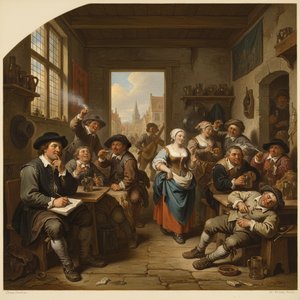
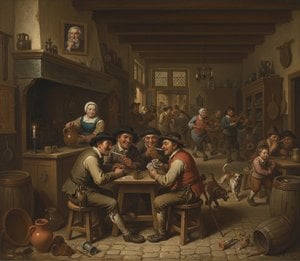
Teniers’ artistic journey took a defining turn as he specialized in genre painting, a style focused on depicting scenes from ordinary life. He wasn't interested in grand historical narratives or solemn religious subjects; instead, he chose to capture the lively bustle of peasant festivals – *kermesses* – overflowing taverns, and picturesque village landscapes. These weren’t idealized representations; they were brimming with authentic detail, showcasing the joys, struggles, and social interactions of the common people. His work is characterized by a remarkable ability to convey atmosphere and emotion, drawing viewers into the heart of these scenes. The influence of Rubens was particularly evident in his use of color and composition, while the Brueghels instilled within him a keen eye for detail and an appreciation for capturing the nuances of human behavior. He quickly gained recognition for his talent, becoming a sought-after artist commissioned by wealthy patrons throughout Flanders and beyond.

A Court Painter and Curator

Teniers’ career reached new heights when he entered the service of Archduke Leopold Wilhelm, the Governor General of the Spanish Netherlands. This appointment marked a significant shift in his artistic focus, leading him to work primarily for the court at Brussels. As curator of the Archduke's vast art collection – a collection that would later form the nucleus of the Vienna Kunsthistorisches Museum – Teniers was responsible for cataloging and managing an extraordinary array of paintings, sculptures, and antiquities. This role demanded not only artistic skill but also organizational abilities and a deep understanding of art history. He meticulously documented each piece, creating detailed inventories and establishing a system for preserving and displaying the collection. The Archduke’s patronage provided Teniers with financial stability and access to a wider audience, further solidifying his reputation as one of Flanders' leading artists.

The Antwerp Academy and Lasting Legacy

Recognizing the need to revitalize Flemish painting after the loss of Rubens and Van Dyck, David Teniers the Younger played a pivotal role in establishing the Antwerp Academy of Fine Arts in 1662. This institution served as a training ground for aspiring young artists, providing them with instruction in drawing and sculpture – disciplines that were often neglected in the pursuit of painting alone. Teniers’ vision was to foster a new generation of Flemish painters who would carry on the legacy of their predecessors. He dedicated himself to nurturing talent and promoting artistic excellence within his city. David Teniers the Younger died in Antwerp on April 25, 1690, leaving behind an impressive body of work that continues to captivate viewers with its vibrant colors, detailed compositions, and insightful portrayal of Flemish life. His legacy extends beyond his individual paintings; he is remembered as a key figure in the revival of Flemish art and a master of capturing the essence of a bygone era.