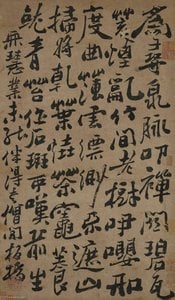
Portrét Čeng Sie

Váš průvodce 14 nejslavnějšími obrazy autora Čeng Sie

Aktualizováno listopad 2026 · seřazeno podle našeho skóre popularity (vyhledávání, návštěvy a objednávky u každého díla) · 15 děl umělce Čeng Sie v našem katalogu

Stručně řečeno

Nejslavnější dílo umělce Čeng Sie je Bamboo and Poem (1729). Najdete ho v muzeu Metropolitan Museum of Art ve městě New York. Další v pořadí jsou Bamboo and rock (1729) a 清 鄭燮 蘭竹圖 卷 Orchids and Bamboo (1742). V našem katalogu máme 15 děl umělce Čeng Sie; tento průvodce vybral 14 nejznámějších z nich včetně roku vzniku, muzea a příběhu každého díla.

1693 – 1766, Ťiang-su Nejvíce děl: Metropolitan Museum of Art

10 obrazů Čeng Sie, které je třeba znát jako první

1
Bamboo and Poem (1729) od Čeng Sie

Bamboo and Poem

1729 · Ink On Paper · Metropolitan Museum of Art, New York

A quiet tension fills the vertical space of this composition. Stalks of bamboo surge upward from the bottom of the frame, their forms defined by decisive, rhythmic brushstrokes that seem to pulse with a life of their own. The ink varies from a deep, saturated black at the nodes to a translucent, misty grey along the slender leaves. These leaves are rendered with quick, sharp movements, appearing as if they…

Ručně malovaná olejná reprodukce od $175 17 × 58 cm
Objednat tento dílo Více informací o tomto díle
2
Bamboo and rock (1729) od Čeng Sie

Bamboo and rock

1729 · Ink · Hong Kong Museum of Art, Hong Kong

A single, weathered rock anchors the composition, its surface mottled with dark ink washes that suggest a rugged, stony texture. Beside this heavy mass, bamboo stalks rise with a sudden, sharp vitality. The leaves are rendered in swift, blade-like strokes, capturing a sense of movement as if caught in a momentary gust. This is a study of contrast: the unyielding, static weight of the stone against the flexible, dancing energy…

Ručně malovaná olejná reprodukce od $175 22 × 45 cm Velikost jako originál $375 62 × 127 cm Objednat v originální velikosti →
Nechte si ji namalovat ručně Přečtěte si jeho příběh
3
清 鄭燮 蘭竹圖 卷 Orchids and Bamboo (1742) od Čeng Sie

清 鄭燮 蘭竹圖 卷 Orchids and Bamboo

1742 · Ink On Paper · Metropolitan Museum of Art, New York

In this ink on paper composition, bamboo stalks and delicate grasses emerge from a void, their forms defined by rhythmic, expressive brushwork. The arrangement creates a sense of depth through the varying sizes and overlapping positions of the plants. Intertwined among the bamboo, smaller grasses add a layer of intricate detail to the scene. The work reflects a seamless integration of calligraphy and painting, where the fluid energy of the…

Ručně malovaná olejná reprodukce od $175 44 × 23 cm
Pořiďte si ho pro sebe Zjistit více
4
Orchids (1754) od Čeng Sie

Orchids

1754 · Ink On Paper

A single, dark stroke of ink defines a leaf, slicing through the pale, aged silk like a sudden shadow. These orchids do not belong to a garden of manicured soil; they belong to the mist and the high, lonely places. The composition breathes through emptiness, using the vast, tan void of the scroll to mimic the quiet air of a mountain cleft. Two clusters of flowers emerge from the lower…

Ručně malovaná olejná reprodukce od $175 19 × 53 cm Velikost jako originál $463 51 × 211 cm Objednat v originální velikosti →
Pořiďte si ho pro sebe Zjistit více
5
清 鄭燮 遠山煙竹圖 軸 Misty Bamboo on a Distant Mountain (1753) od Čeng Sie

清 鄭燮 遠山煙竹圖 軸 Misty Bamboo on a Distant Mountain

1753 · Ink On Paper · Metropolitan Museum of Art, New York

A single bamboo stalk rises from the mist, its form defined by a stroke that carries the weight of a scholar's conviction. In this Qing dynasty work, the bamboo is not a mere plant but a silhouette of character. The ink flows in varying densities, from the deep, saturated black of the foreground stalks to the pale, ghostly grey of the leaves that dissolve into the air. It is a…

Ručně malovaná olejná reprodukce od $175 34 × 29 cm
Nechte si ji namalovat ručně Přečtěte si jeho příběh
6
Bamboo and Rock (1765) od Čeng Sie

Bamboo and Rock

1765 · Ink On Paper · Clevelandské muzeum umění, Cleveland

The artwork titled Bamboo and Rock is a work by the artist Zheng Xie. This piece was created in the mid-eighteenth century, dating to about 1760. The painting is executed in ink on paper, a medium that allows for the varied tonal shifts seen in the monochromatic palette of the composition.

Ručně malovaná olejná reprodukce od $175 24 × 42 cm
Pořiďte si ho pro sebe Zjistit více
7
Bamboo, Orchids, and Rocks (1765) od Čeng Sie

Bamboo, Orchids, and Rocks

1765 · Ink On Paper

This work, titled Bamboo, Orchids, and Rocks, was created by the Chinese artist Zheng Xie. Dating to 1765, the piece emerged during the final years of the artist's life. Zheng Xie, born in 1693, was a significant figure of the Qing dynasty, known for his distinct approach to ink and brushwork. He passed away in 1766.

Ručně malovaná olejná reprodukce od $175 23 × 43 cm Velikost jako originál $594 87 × 176 cm Objednat v originální velikosti →
Objednat tento dílo Více informací o tomto díle

Čísla 11 až 14: více obrazů od Čeng Sie

Co nejčastěji maloval Čeng Sie

Čtyři nejčastější motivy těchto děl, z nichž každý má svůj nejznámější příklad.

Kde si můžete prohlédnout obrazy autora Čeng Sie

4 muzea, v nichž je umístěno nejvíce obrazů z této stránky.

Muzeum Město Díla autora Čeng Sie Obrazy z tohoto seznamu
Metropolitan Museum of Art, New YorkMetropolitan Museum of Art New York 4 Bamboo and Poem, 清 鄭燮 蘭竹圖 卷 Orchids and Bamboo, 清 鄭燮 遠山煙竹圖 軸 Misty Bamboo on a Distant Mountain
Hong Kong Museum of Art, Hong KongHong Kong Museum of Art Hong Kong 1 Bamboo and rock
Clevelandské muzeum umění, ClevelandClevelandské muzeum umění Cleveland 1 Bamboo and Rock
Indianapolis Museum of Art, IndianapolisIndianapolis Museum of Art Indianapolis 1 Bamboo and Rocks

Dekáda po dekádě: nejznámější dílo každého Čeng Sie

Díla podle dekád

Vyberte si desetiletí a prohlédněte si jeho nejvýraznější dílo.

Čeng Sie: rychlé odpovědi o obrazech

Který obraz je nejznámější u Čeng Sie?Zobrazit odpověď

Na vrcholu žebříčku je Bamboo and Poem (1729), Metropolitan Museum of Art, New York. Hned za ním následují: Bamboo and rock (1729) a 清 鄭燮 蘭竹圖 卷 Orchids and Bamboo (1742).

Kdy byl/a Čeng Sie při tvorbě díla Bamboo and Poem?Zobrazit odpověď

36 let. Čeng Sie se narodil(a) v 1693 a dílo Bamboo and Poem pochází z roku 1729.

Jakých je 10 nejlepších obrazů umělce Čeng Sie?Zobrazit odpověď

Bamboo and Poem, Bamboo and rock, 清 鄭燮 蘭竹圖 卷 Orchids and Bamboo, Orchids, 清 鄭燮 遠山煙竹圖 軸 Misty Bamboo on a Distant Mountain, Bamboo and Rock, Bamboo, Orchids, and Rocks, Bamboo, Bamboo and Rocks a Bamboo. Rok vzniku a muzeum každého díla najdete v seznamu výše.

Kolik děl umělce Čeng Sie se nachází ve vašem katalogu?Zobrazit odpověď

V našem katalogu máme 15 děl umělce Čeng Sie z let 1729 až 1765.

Ve kterých muzeích můžete vidět slavná díla umělce Čeng Sie?Zobrazit odpověď

Většinu z nich najdete v Metropolitan Museum of Art (New York), Hong Kong Museum of Art (Hong Kong) a Clevelandské muzeum umění (Cleveland). Seznam muzeí výše obsahuje podrobný přehled.

Kdy vytvořil/a Čeng Sie svá nejznámější díla?Zobrazit odpověď

V období 1720s, více než v jakémkoli jiném čase: 2 z 14 děl na této stránce pochází z této doby, z nichž Bamboo and Poem.

Jaká jsou první a poslední slavná díla umělce Čeng Sie?Zobrazit odpověď

Nejstarší dílo je z Bamboo and Poem (1729); nejnovější je z Bamboo and Rock (1765).

Jaká témata maloval Čeng Sie nejčastěji?Zobrazit odpověď

Bamboo (6), Leaves (5) a Black ink (4) z celkových 14 kusů na této stránce.

Která technika se nejčastěji objevuje v obrazech autora Čeng Sie?Zobrazit odpověď

Ink On Paper, použito u 6 z 14 děl na této stránce.

Která slavná díla autora Čeng Sie se nacházejí v Metropolitan Museum of Art?Zobrazit odpověď

Na této stránce můžete uvidět 4 děl v Metropolitan Museum of Art, New York, včetně Bamboo and Poem, 清 鄭燮 蘭竹圖 卷 Orchids and Bamboo a 清 鄭燮 遠山煙竹圖 軸 Misty Bamboo on a Distant Mountain.

Kde si mohu objednat reprodukci Čeng Sie?Zobrazit odpověď

Ano. Každý obraz na této stránce je k dispozici jako ručně malovaná olejná reprodukce nebo jako tisk v rozměru, který vám vyhovuje. Pro objednání stačí otevřít stránku daného obrazu.

Příběh umělce Čeng Sie

Zheng Xie (1693–1766): The Poet Painter of Yangzhou

Zheng Xie (鄭燮, 1693-1765), commonly known as Zheng Banqiao (鄭板橋) or Banqiao Daoren (板橋道人), stands as a singular figure in Qing dynasty Chinese art—a painter who simultaneously embraced calligraphy and literature, forging an artistic vision deeply rooted in observation of the natural world and imbued with humanist sensibilities. Born in Xinghua County, Jiangsu Province, his early life was marked by hardship; orphaned at a young age after his father’s death, he endured considerable poverty before securing a position as a magistrate in Shandong—a testament to his determination and intellectual aptitude. This administrative role provided him with valuable experience but also exposed him to the compromises inherent in serving the imperial bureaucracy, fostering a disillusionment that would ultimately propel him toward artistic expression as a means of grappling with personal reflection and societal critique. His rejection of official dogma and subsequent resignation following criticism regarding his unwavering commitment to alleviating poverty—a stance that resonated deeply with Confucian ideals—represented a pivotal moment shaping Zheng Xie’s trajectory. This courageous defiance solidified his moral compass and fueled his desire for artistic autonomy, distancing him from the constraints imposed by institutional patronage. Recognizing the limitations of formal art academies, he deliberately pursued an independent path—one prioritizing genuine creative vision over adherence to prescribed conventions—a decision that cemented his place among the Eight Eccentrics of Yangzhou, a group of artists who challenged prevailing aesthetic norms and championed intellectual freedom. The Eight Eccentrics of Yangzhou (八怪) were a cohort of artists and intellectuals who defied artistic orthodoxy and celebrated individuality during the Qianlong reign (1735–1796). Unlike many contemporaries preoccupied with securing imperial favor, Zheng Xie actively shunned official institutions, prioritizing instead the pursuit of authentic artistic expression. This ethos—characterized by boldness, sincerity, and a profound engagement with nature—became synonymous with Yangzhou painting, particularly landscapes featuring bamboo and orchids. These subjects weren’t merely decorative; they carried symbolic weight – bamboo embodying resilience and virtue, while orchids symbolizing refinement and nobility—reflecting Zheng Xie's belief in art as a conduit for moral contemplation and spiritual enlightenment. Zheng Xie’s distinctive artistic style—characterized by bold brushstrokes and expressive rendering—became instantly recognizable and profoundly influential. His technique involved layering pigments with meticulous precision, capturing subtle nuances of light and shadow to convey an unparalleled sense of depth and atmosphere. He skillfully employed tonal variations – ranging from muted browns to vibrant greens – to depict the textures of bamboo stalks and orchid blossoms with breathtaking realism. Furthermore, Zheng Xie’s calligraphy style—developed organically from his fascination with orchid drawings—was equally innovative. He experimented with unconventional ink washes and brushstrokes, creating works that possessed both visual beauty and poetic resonance. His poems explored themes of everyday life with remarkable sensitivity and honesty—a stylistic hallmark that distinguished him from other artists of his time. A significant contribution to Zheng Xie’s artistic legacy lies in his pioneering exploration of the interplay between landscape painting and calligraphy. He believed that these disciplines should complement each other, fostering a holistic aesthetic experience that transcended mere visual representation. His paintings weren't simply depictions of natural scenery; they were invitations to contemplation—encouraging viewers to immerse themselves in the tranquility and grandeur of the mountains and forests while simultaneously engaging with the lyrical beauty of his poems. This approach—rooted in Confucian principles of harmony and balance—established Zheng Xie as a visionary artist who elevated Yangzhou painting to new heights of artistic sophistication. His enduring influence continues to inspire artists today, reminding us that true creativity resides not merely in technical skill but also in intellectual depth and moral conviction.