
- Domů

- Články
- Fleeting Moments & Evolving Light: A Comprehensive Exploration of Impressionism's Aesthetic Revolution
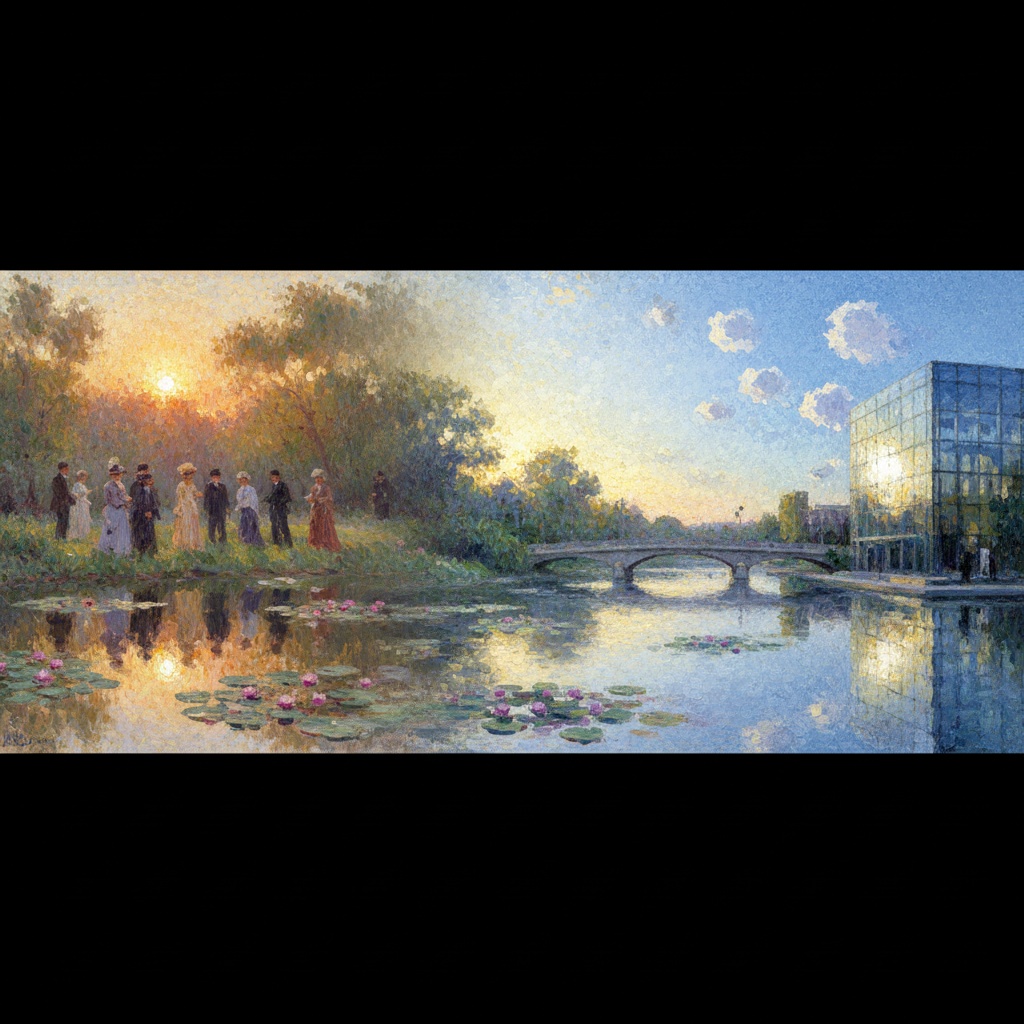
Fleeting Moments & Evolving Light: A Comprehensive Exploration of Impressionism's Aesthetic Revolution
Obsah textu
The Dawn of a New Vision: Challenging Academic Traditions
Impressionism was a 19th-century art movement characterized by visible brush strokes, open composition, emphasis on accurate depiction of light in its changing qualities (often accentuating the effects of the passage of time), ordinary subject matter...
For centuries, the art world adhered to strict conventions dictated by academies – grand historical narratives, meticulously rendered figures, and an emphasis on idealized beauty. But in mid-19th century France, a quiet rebellion began to brew amongst a group of artists who dared to look at the world differently. Dissatisfied with the constraints of academic painting, they sought to capture not just *what* they saw, but *how* they perceived it – the fleeting impressions of light, color, and atmosphere that defined their experience. This wasn’t merely a stylistic shift; it was a fundamental questioning of art's purpose itself. Artists like Claude Monet, Pierre-Auguste Renoir, and Edgar Degas found themselves increasingly at odds with the established Salon system, where paintings were judged on technical skill and adherence to tradition rather than originality or emotional resonance. The rejection of their work became commonplace, fueling a desire for independence and ultimately leading to the formation of independent exhibitions that would shock – and eventually revolutionize – the art world.
En Plein Air: Capturing the Ephemeral Effects of Light and Atmosphere
 Sailing Boats at Honfleur
Inspired by Eugène Boudin's encouragement to paint en plein air, Monet meticulously observed the changing light conditions at Honfleur, resulting in this iconic depiction. Its serene beauty continues to resonate with viewers today.
Central to this new vision was the practice of en plein air, painting outdoors directly from nature. Before this, artists typically sketched outdoors and completed their works in the studio, relying on memory and imagination. But the Impressionists recognized that capturing the subtle nuances of light – its shifting qualities throughout the day, its reflection on water, its impact on color – required immediate observation. Inspired by Eugène Boudin’s encouragement to Monet, they ventured into the countryside and urban landscapes, setting up easels and attempting to translate their sensory experiences onto canvas with unprecedented speed and spontaneity. Consider Monet's series of paintings depicting Sailing Boats at Honfleur, a testament to his meticulous study of light conditions in a single location over time. This wasn’t about creating a perfect representation; it was about capturing the *moment*, the elusive beauty that vanished as quickly as it appeared. The challenge lay not just in technical skill, but in perceiving and recording these fleeting effects before they were lost.
Brushstrokes & Broken Color: The Techniques That Defined Impressionism
 Capturing Ephemeral Light: A Comprehensive Exploration of Plein Air Painting's History & Enduring Legacy
Explore the rich history of plein air painting, from its origins to Impressionism & beyond. Discover key artists, techniques, and the enduring legacy of capturing light in landscape art. Find museum-quality reproductions at ArtsDot.
To achieve this sense of immediacy, the Impressionists abandoned traditional painting techniques. Smooth, blended brushstrokes gave way to visible marks – short, broken strokes of pure color applied directly to the canvas. This wasn’t a lack of skill; it was a deliberate choice designed to mimic the way light interacts with the eye. Rather than mixing colors on a palette, they allowed the viewer's eye to blend them optically, creating a shimmering, vibrant effect. This technique, known as broken color, resulted in paintings that appeared less finished and more alive – pulsating with energy and movement. The emphasis shifted from precise detail to overall visual impression. Paintings like Monet’s Vetheuil, Ice Floes exemplify this approach; the scene isn't rendered with photographic accuracy but rather evokes a feeling of coldness, light reflecting off the icy surface through a dynamic interplay of color and texture. The rejection of traditional perspective and shading further contributed to this sense of spontaneity and immediacy.
Key Masters of Impressionism: Monet, Renoir, Degas, and Beyond
 Capturing Fleeting Light: A Comprehensive Exploration of Impressionistic Landscape Painting
Explore the captivating world of Impressionistic landscape painting! Discover techniques, key artists like Monet & Renoir, and its lasting influence on art history. A comprehensive guide for enthusiasts.
While Claude Monet is often considered the quintessential Impressionist – his painting Impression, soleil levant famously giving the movement its name – the group was comprised of diverse talents with unique perspectives. Pierre-Auguste Renoir celebrated the joys of everyday life, capturing scenes of Parisian society with a warmth and intimacy that resonated deeply with viewers. Edgar Degas, though often associated with Impressionism, carved his own path, focusing on dancers, racehorses, and modern urban life with a keen eye for composition and movement. Beyond these iconic figures, artists like Camille Pissarro – a mentor to many – explored the landscapes of rural France, while Berthe Morisot and Mary Cassatt challenged societal norms by depicting domestic scenes and female subjects with sensitivity and grace. Joseph Delattre, bridging Barbizon and Impressionism, further enriched the movement with his plein air style and focus on the Rouen school landscape. Each artist brought their own sensibility to the core principles of Impressionism, contributing to its richness and complexity.
Impressionism's Lasting Legacy: Influence on Modern Art and Contemporary Perception
The initial reception to Impressionism was largely negative; critics derided their work as unfinished, amateurish, and lacking in substance. Yet, the artists persevered, organizing independent exhibitions that gradually gained public attention. By the late 19th century, Impressionism had become widely accepted – and profoundly influential. Its emphasis on capturing fleeting moments, its rejection of academic conventions, and its exploration of light and color paved the way for subsequent art movements like Post-Impressionism, Fauvism, and Cubism. More than just a stylistic shift, Impressionism fundamentally altered our perception of art itself. It encouraged artists to look inward, to trust their own senses, and to embrace subjectivity. Today, Impressionist paintings continue to captivate audiences with their beauty, vibrancy, and emotional resonance. They remind us to appreciate the ephemeral nature of life – the fleeting moments that make it so precious.
Collecting Impressionism: Building a Timeless Portfolio
For collectors, acquiring Impressionist art represents not just an investment but a connection to a pivotal moment in art history. While masterpieces by Monet and Renoir command high prices, opportunities exist to build a compelling portfolio at various price points. Focusing on lesser-known artists or works on paper can be a rewarding strategy. Consider the importance of provenance – the documented history of ownership – which adds value and authenticity. At ArtsDot.com, we offer museum-quality reproductions of Impressionist paintings, allowing you to experience the beauty and vibrancy of these iconic works in your own home. Whether you’re a seasoned collector or just beginning your art journey, exploring the world of Impressionism is an enriching and rewarding endeavor. Our team of experts can provide personalized guidance on style selection, size recommendations, and framing options, ensuring that your artwork perfectly complements your space and reflects your individual taste.
Související články

Capturing Fleeting Moments: A Comprehensive Exploration of Impressionism's Techniques & Enduring Legacy
Explore the captivating world of Impressionism! Discover its history, key artists, techniques & enduring legacy. Find museum-quality reproductions and expert art consultation at ArtsDot.


