


 Náhled
 Sdílet
 Sdílet
 Podrobnosti o díle

 Stáhnout
 Podobné položky
 Rentgenové snímky
 Slideshow
La prédication d'un apôtre dans les ruines d'architecture d'ordre dorique


 Zobrazit více
Ručně malovaná olejová reprodukce
Ručně malovaná olejná barva na plátně ve vašem zvoleném rozměru i s rámem, vyrobená našimi umělci na zakázku. ( Přepnout na tisk Přepnout na obrázek)




P118B $10

P118H $10

P118W $10

P438Z $10

P508JH $12

P508YH $12

P805H $10

P805Z $10

P919BZ $10

P919G $10

P919XJ $10

P959ZH $10

P968JZ $12

W106C $8

W218G $10

W218JH $8

W218Y $10

W307PJ $10

W316G $10

W316PJ $8

W316Y $10

W398PJ $8

W4111J $10

W500HY $15

W500JH $15

W692G $12

W849H $8

W940BG $15

W953PJ $8




Vyberte si z našich přednastavených velikostí, které odpovídají původním proporcím díla.

Můžete zadat vlastní rozměry pro konkrétní rám nebo prostor. Pokud se vámi vybraná velikost neshoduje s proporcemi původního obrazu, dílo buď ořízneme, nebo jej doplníme ručně malovanými prvky. Před zahájením výroby vám bude zaslán digitální náhled ke schválení.
Upozorňujeme, že náhled na obrazovce neodpovídá skutečnému ořezu ani rozšíření. Pouze digitální náhled přesně zobrazí finální kompozici.
Ačkoliv je možné zvolit vlastní velikost, pro zachování původních proporcí doporučujeme vybrat rozměr z předdefinovaného seznamu.
Po přijetí objednávky vám tým ArtsDot.com zašle e-mail s pokyny a poskytne náhledovou verzi.
Celosvětová doprava () za 3–4 týdny namísto standardních 5 týdnů. (8 srpen). Bez kompromisů v kvalitě.

Zdarma celosvětová expresní doprava

Vysoce kvalitní lněné plátno

Kompletní přepravní pojištění

Záruka vrácení celního poplatku

Záruka přesného barevného shodu

60denní lhůta pro vrácení zboží (pouze při vadách výroby)

100% garance vrácení peněz

Sleva při hromadné objednávce
 Skleněná varianta je dostupná pouze u rozměrů menších než 110 cm

La prédication d'un apôtre dans les ruines d'architecture d'ordre dorique
Technika reprodukce
Rozměry reprodukce
-


Celková cena za výběr
$ 613
Popis díla
Giovanni Paolo Panini – La prédication d'un apôtre dans les ruines d’architecture d’ordre dorique : Une Vision Baroque Romantique
La peinture de Giovanni Paolo Panini, intitulée « La prédication d’un apôtre dans les ruines d’architecture d’ordre dorique », représente une scène grandiose et détaillée où un évêque prononce son sermon au milieu des vestiges d'une architecture classique élégante. Cette œuvre monumentale témoigne du talent artistique de Panini et de sa maîtrise du vedutismo, un mouvement pictural italien qui privilégie la représentation fidèle et souvent embellie des villes et des bâtiments antiques. Elle est une véritable fenêtre ouverte sur le Rome baroque du XVIIIe siècle, une époque marquée par la richesse esthétique et une fascination pour l'histoire et la mythologie grecque et romaine.Composition et Perspective Dramatique
La composition complexe de cette peinture est remarquable pour sa profondeur et son souci de perspective. Panini utilise habilement les lignes horizontales pour définir les arcs et les niveaux des bâtiments ruinés, créant une illusion d’espace réaliste qui plonge le spectateur au cœur du paysage urbain disparu. Les personnages sont disposés avec précision dans la scène, guidés par une ligne de fuite dominante qui converge vers des points focaux invisibles, renforçant ainsi l'effet dramatique et émotionnel de l’œuvre. Cette maîtrise technique est caractéristique du baroque italien et témoigne d'une profonde connaissance des principes mathématiques et scientifiques utilisés pour représenter la réalité avec précision.Palette Chromatique Éarthyenne et Lumière Dramatique
La palette chromatique choisie par Panini est dominée par des tons terreux – ocres, bruns, gris et crèmes – reflétant la couleur naturelle du matériau utilisé : le marbre ancien et les pierres sculptées. Ces couleurs sont utilisées avec parcimonie pour mettre en valeur les détails architecturals et les vêtements des personnages, créant une atmosphère calme et contemplative. Cependant, quelques touches de bleu dans le ciel apportent une touche de fraîcheur et contraste à la scène globale. La lumière naturelle joue un rôle essentiel dans l’œuvre, illuminant certaines zones avec éclat tandis que d'autres restent dans l'ombre, accentuant ainsi les effets volumétriques et créant une véritable illusion de profondeur. Cette attention particulière à la lumière est une marque distinctive du baroque italien et contribue à renforcer l'impact émotionnel de la peinture.Symbolisme Religieux et Réflexion sur le Temps
Au-delà de sa beauté esthétique, « La prédication d’un apôtre dans les ruines d’architecture d’ordre dorique » porte une signification symbolique profonde. La juxtaposition du sermon religieux contre l'arrière-plan des vestiges antiques évoque la lutte entre la foi et la raison, entre le passé glorieux de Rome et la nouvelle puissance chrétienne qui émergent à cette époque. Les ruines représentent la fragilité de toute civilisation humaine face au temps et à la dégradation naturelle, tandis que le personnage du prédicateur incarne l'espoir et la résilience spirituelle. Cette œuvre invite à une réflexion sur les valeurs fondamentales de la culture occidentale et sur la manière dont elles sont exprimées dans l’art.Technique et Détail Obsessionnel
La peinture est réalisée avec une précision remarquable grâce à une technique raffinée qui utilise des glacis subtils pour obtenir des effets lumineux et atmosphériques complexes. Panini applique une attention extrême aux détails, reproduisant avec une grande fidélité les textures du marbre ancien, les plis des vêtements et les expressions faciales des personnages. Cette maîtrise de la peinture à l'huile est une véritable prouesse artistique qui témoigne de la richesse et de la diversité des pratiques artistiques italiennes au XVIIIe siècle. Elle permet d’apprécier pleinement la beauté et la puissance expressive de cette œuvre emblématique du baroque romantique.Podobná umělecká díla


Biografie umělce
Giovanni Paolo Panini (1691–1765): Master of Roman vedute & architectural fantasies
Giovanni Paolo Pannini, a name synonymous with the grandeur and romantic allure of 18th-century Rome, was more than just a painter; he was a visual architect of memory. Born in Piacenza in 1691, his artistic journey began under the tutelage of Giuseppe Natali and Andrea Galluzzi, but it was his exposure to the theatrical designs of Francesco Galli-Bibiena that truly ignited his imagination. This early immersion in stagecraft would profoundly influence his later work, imbuing it with a sense of dramatic composition and illusionistic space. In 1711, Panini relocated to Rome, a city already steeped in artistic history, where he honed his skills under the guidance of Benedetto Luti, mastering the art of drawing and laying the foundation for his future mastery of perspective.Early Training and Influences: Shaping a Vision
Panini’s formative years were marked by rigorous instruction in disegno—drawing—and quadratura—scenic perspective—techniques that would become central to his artistic style. He studied under Giuseppe Natali, a respected Bolognese painter known for his meticulous realism, and Andrea Galluzzi, who instilled in him an appreciation for classical ideals of beauty and harmony. Crucially, Panini’s encounter with Francesco Galli-Bibiena proved transformative. Galli Bibiena was a celebrated stage designer whose productions employed innovative theatrical devices to create immersive environments—a skill that Panini seamlessly integrated into his paintings. This fascination with theatrical illusion would permeate his oeuvre, resulting in compositions characterized by dramatic lighting and meticulously crafted architectural spaces. The influence of Giovanni Ghisolfi, another Bolognese painter who championed the depiction of ruins as symbols of antiquity, further broadened Panini’s artistic horizons. Similarly, Jan Frans van Bloemen's landscapes provided inspiration for capturing the grandeur of the Italian countryside.From Frescoes to Vedute: The Evolution of an Artistic Style
Panini initially gained recognition as a decorator of palaces—a profession that demanded technical virtuosity and a keen understanding of spatial relationships. His frescoes adorned prestigious residences in Rome, including the Villa Patrizi (1719–1725), Palazzo de Carolis (1720) and Seminario Romano (1721–1722). These commissions allowed him to refine his skills as a quadraturista—a painter specializing in scenic perspective—and establish himself within Rome’s artistic circles. However, it was Panini's embrace of the *veduta*, or view painting, that would ultimately define his legacy. Unlike earlier topographical artists who focused on precise documentation, Panini infused his depictions of Rome with a sense of imaginative reconstruction. He didn’t merely record what he saw; he re-imagined it, blending existing structures with fragments of ancient ruins and fanciful architectural elements. This approach—often referred to as *capriccio*, or fantasy landscape—allowed him to create scenes that were both recognizable and dreamlike, capturing the spirit of Rome’s layered history. His 1719 admission into the Congregazione dei Virtuosi al Pantheon signaled his growing recognition within the Roman art world.The Pantheon and Beyond: Panini's Signature Style
Panini’s most celebrated works exemplify this distinctive style—particularly his depiction of the interior of Saint Peter’s Basilica (c. 1734) and the Pantheon (c. 1754). These paintings are remarkable for their masterful use of perspective, creating an illusion of depth that transports viewers into the heart of Rome's architectural heritage. Panini skillfully employed quadratura techniques—borrowed from theatrical design—to heighten the dramatic effect of his compositions, layering architectural elements and figures to create a sense of grandeur and mystery. He meticulously rendered details with astonishing accuracy, capturing the textures and colors of stone, marble, and pigment alike. Furthermore, Panini’s penchant for incorporating ruins into his landscapes—a practice that foreshadowed the Romantic movement—demonstrated his profound understanding of the relationship between past and present. His *vedute* are not simply representations of places; they are meditations on time, memory, and the enduring beauty of antiquity.Legacy and Influence: Shaping Artistic Discourse
Giovanni Paolo Panini’s influence extended far beyond his own lifetime. He was a respected teacher at both the Accademia di San Luca and the Académie de France in Rome—institutions that fostered artistic innovation and intellectual debate. Among his pupils were Hubert Robert, Jean-Honoré Fragonard and Giovanni Battista Piranesi—artists who would become equally renowned for their depictions of ruins and architectural fantasies. Panini’s meticulous observation and imaginative reconstructions established him as a pioneer of *vedutismo*, influencing generations of painters who sought to capture the essence of urban landscapes with unparalleled realism and artistic flair. His works continue to inspire admiration and scholarly study today, cementing his place as one of Rome's most iconic artists—a testament to his enduring vision and mastery of technique.- Notable Works: Villa Patrizi Frescoes, Palazzo de Carolis Decorations, Seminario Romano Murals
- Key Techniques: Quadratura (Scenic Perspective), Vedutismo (View Painting), Capriccio (Fantasy Landscape)

Giovanni Paolo Pannini
1691 - 1765 , Itálie
Rychlé fakta
- Artistic Movement Or Style: Vedutismo
- Artists Or Movements Influenced By This Artist: ['Hubert Robert']
- Artists Who Influenced This Artist:
- Giuseppe Natali
- Andrea Galluzzi
- Date Of Birth: 1691
- Full Name: Giovanni Paolo Panini
- Nationality: Italian
- Notable Artworks:
- Pantheon Interior View
- Rome Views
- Place Of Birth: Piacenza, Italy
Související články
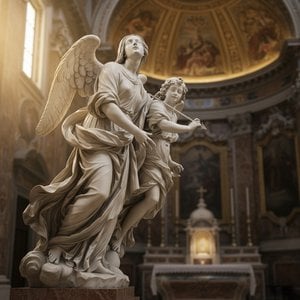
Gian Lorenzo Bernini: Sculpting Baroque Emotion & the Roman Imagination
Explore the life & revolutionary art of Gian Lorenzo Bernini, the master sculptor of the Baroque era. Discover his iconic works like David and Ecstasy of Saint Teresa – a journey into Roman artistic genius.

Nicolas Poussin: Classicism, Allegory & Order in 17th-Century French Painting
Explore the life & work of Nicolas Poussin, a master of French Classicism. Discover his allegorical paintings, Roman influences, and enduring impact on art history. Expert analysis & insights.

Giovanni Paolo Panini: Capturing Roman Grandeur – A Vedute Master's Legacy
Explore the captivating world of Giovanni Paolo Panini, master of Roman vedute painting. Discover his technique, iconic works, influence on art history & collecting advice from experts at ArtsDot.

Simon Vouet: A Baroque Master's Journey from Italian Influence to French Classicism
Explore the life & art of Simon Vouet, a pivotal French Baroque painter who introduced Italian styles to France. Discover his masterpieces and lasting influence on 17th-century art.

Top 10 olejů na panelu, které změnily dějiny umění | ArtsDot.cz
Objevte 10 legendárních olejů na panelu, které změnily dějiny umění! Ponořte se do příběhů renesančních mistrů, impresionistických ikon a barokních skvostů. Reprodukce obrazů nejvyšší kvality pro váš interiér – ArtsDot.cz


