


 Zobrazit v interiéru
 Odeslat
 Sdílet
 Podrobnosti
 Průvodce

 Stáhnout obrázek
 Podobné kousky
 Rentgenové snímky
 Slideshow
 Statistiky
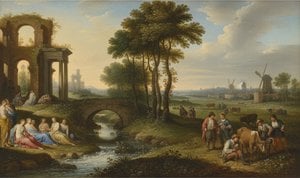
Italian Landscape with Roman Warriors
 Oil On Canvas
- WallArt
- Baroque Landscape
 1650
1650 154.0 x 174.0 cm
 Státní Ermitáž
 Přečíst si více
Ručně malovaná olejová reprodukce
Ručně malované olejné plátno v libovolném rozměru i s rámem, vyrobené našimi umělci na zakázku. ( Přepnout na tiskové verze Přepnout na digitální verzi obrazu)




P118B Kč10

P118H Kč10

P118W Kč10

P438Z Kč10

P508JH Kč12

P508YH Kč12

P805H Kč10

P805Z Kč10

P919BZ Kč10

P919G Kč10

P919XJ Kč10

P959ZH Kč10

P968JZ Kč12

W106C Kč8

W218G Kč10

W218JH Kč8

W218Y Kč10

W307PJ Kč10

W316G Kč10

W316PJ Kč8

W316Y Kč10

W398PJ Kč8

W4111J Kč10

W500HY Kč15

W500JH Kč15

W692G Kč12

W849H Kč8

W940BG Kč15

W953PJ Kč8




Vyberte si z našich přednastavených velikostí, které odpovídají původním proporcím díla.

Zadejte šířku a výšku, které potřebujete pro váš rám nebo stěnu. Protože se jedná o ruční malbu, při výběru jiného formátu může umělec kolem obrazu domalovat o něco více, nebo jej mírně oříznout — rozhodnete si vy. Před zahájením malby vám zašleme digitální náhled ke schválení. Obraz zobrazený na této stránce neodpovídá skutečnému výsledku — pouze digitální náhled jej zobrazuje.
Po přijetí objednávky vám tým ArtsDot.com zašle e-mail s pokyny a poskytne náhledovou verzi.
Celosvětová doprava () za 3–4 týdny namísto standardních 5 týdnů. (24 říjen). Bez kompromisů v kvalitě.

Zdarma celosvětová expresní doprava

Vysoce kvalitní lněné plátno

Úplné pojištění přepravy

Záruka vrácení celního poplatku

Záruka věrného barevného shodu

100dení lhůta pro vrácení zboží (pouze při vadách výroby)

100% garance vrácení peněz

Sleva při více objednávkách
 Skleněná varianta je dostupná pouze u rozměrů menších než 110 cm

Italian Landscape with Roman Warriors
Technika provedení
Velikost reprodukce
-


Celková cena
Kč 5641
The Vision of Jan Both: A Mediterranean Masterpiece
Jan Dirksz Both’s “Italian Landscape with Roman Warriors,” painted around 1650, isn't merely a depiction of a picturesque Italian vista; it’s an immersive experience. Born in Utrecht and trained within the traditions of Flemish painting, Both embarked on a transformative journey to Rome, a pivotal moment that fundamentally altered his artistic trajectory. This work stands as a testament to that shift – a vibrant synthesis of Northern realism and Southern light, capturing not just a scene but a mood, an atmosphere steeped in the grandeur and drama of the Italian Renaissance.
The painting immediately draws the eye with its expansive composition. A sweeping river dominates the foreground, reflecting the azure sky above, while rolling hills cascade into the distance, culminating in hazy mountains that seem to bleed into the horizon. Yet, it’s not simply a topographical rendering; Both masterfully employs atmospheric perspective – a technique borrowed from Claude Lorrain and other Italian landscape masters – to create an illusion of depth and vastness. The colors become softer, cooler, and less saturated as they recede, drawing the viewer's eye into the heart of the scene.
The Language of Light: A Baroque Revelation
Both’s signature style is characterized by a luminous quality that elevates the landscape beyond mere representation. He was deeply influenced by the Baroque tradition, particularly its emphasis on dramatic lighting and theatrical effects. Notice how the sunlight, seemingly originating from an unseen source, bathes the scene in a golden glow, highlighting specific elements – the shimmering water, the textured foliage, and the confident postures of the Roman warriors. This isn’t a flat, even illumination; it's a dynamic interplay of light and shadow that imbues the painting with a sense of vitality and movement.
The use of color is equally deliberate. Rich ochres, deep greens, and vibrant blues are juxtaposed to create visual interest and depth. The earthy tones of the landscape contrast sharply with the gleaming armor of the soldiers, further emphasizing their power and authority. The subtle variations in hue – a hint of purple in the distant mountains, a touch of pink in the clouds – contribute to the overall sense of realism and atmospheric detail.
Symbolism and Power: The Roman Presence
Beyond its purely aesthetic qualities, “Italian Landscape with Roman Warriors” is laden with symbolic meaning. The presence of the Roman soldiers, clad in their imposing armor and wielding spears, speaks to themes of power, conquest, and military might. They are not simply figures within a landscape; they are active participants, shaping the scene and asserting dominance over it. The bandits leading prisoners further reinforces this narrative, suggesting a world of conflict and political intrigue.
However, the painting isn’t solely focused on warfare. The inclusion of a river, trees, and a sense of leisure hints at a more complex vision – one that acknowledges both the beauty and the brutality of the Italian landscape. The figures are engaged in activities that suggest a harmonious coexistence between humanity and nature, albeit within a framework of power and control.
A Legacy of Light: Both’s Enduring Influence
Jan Dirksz Both's “Italian Landscape with Roman Warriors” represents a pivotal moment in the development of Dutch landscape painting. It showcases his mastery of technique, his deep understanding of color and light, and his ability to synthesize diverse artistic influences. His work continues to captivate viewers today, offering a glimpse into a world of beauty, drama, and timeless symbolism. Reproductions of this stunning artwork capture the essence of Both’s vision, allowing us to experience its luminous quality and evocative power firsthand.
Otázky a odpovědi
Do které místnosti by se vzhledem k barevné paletě doporučovalo umístit dílo "Italian Landscape with Roman Warriors"?
Dílo „Italian Landscape with Roman Warriors“ od Jan Both s svou paletou Earthy se doporučuje do Living Room. Barvy jsou jedním z důvodů tohoto doporučení.
Co má dílo „Italian Landscape with Roman Warriors“ společného se zbytkem tvorby umělce Jan Both?
V rámci tvorby umělce Jan Both se dílo „Italian Landscape with Roman Warriors“ řadí do stylu Baroque Landscape a doplňuje tak motivy mediterranean light, roman ideals, classical landscape, heroic figures, religious allegory, moral themes, baroque drama, emotional depth.
Jaké barvy používá dílo "Italian Landscape with Roman Warriors"?
Barvy díla „Italian Landscape with Roman Warriors“ tvoří Earthy paletu. Tato klasifikace popisuje dominantní barevné skupiny.
Související díla


Biografie umělce
Jan Both (1610–1652): Mistr středomořského světla
Jan Dirksz Both byl nizozemský malíř, kreslíř a rytíř, který se vyvinul v jednu z nejvýznamnějších postav rostoucího hnutí „italských“ krajin během holandského zlatého věku. Narodil se kolem roku 1615/16 बड़ा v Utrechtu jako mladší bratr Andriese Botha. Jejich otec, Dirck Both, který byl sklářem a malířem skla, v nich vzbudil brzkou vážnost k uměleckému řemeslu. Ačkoliv biografické detaily zůstávají poměrně vzácné, odborný výzkum naznačuje, že Janovo vzdělání zahrnovalo výuku od Abrahama Bloemaerta a Gerrita van Honthorsta, což ho zapsalo mezi nejvlivnější umělce své doby.- Raný život a výchova: Formativní roky strávil Both v Utrechtu, kde si zdokonaloval své schopnosti společně se svým bratrem Andriesem a osvojoval si techniky z otcovy sklářské praxe – řemesla hluboce zakořeněného ve flamandských tradicích.
- Římský vliv: Kolem roku 1638 se Jan a Andries vydali na transformativní cestu do Říma přes Francii, kde se ponořili do uměleckého žáru papežského dvora a setkali se s velikány jako Bloemaert a Gerrit van Honthorst. Tato zkušenost hluboce utvářela jejich stylistickou citlivost.
Romanistický styl a spolupráce s Lorrainem
Řím se pro Bothův umělecký rozvoj stal pravým alchymistickým kotlem. Zatímco Andries se soustředil na žánrové scény ve stylu Pieters van Laera, Jan se věnoval primáršímu cíli – malbě krajiny. Tento styl, silně ovlivněný Claudeem Lorrainem, zachycoval éterické krásy středomořského regionu s nepřekonatelnou mistrovstvím světla a barvy. Významným momentem byla jeho úzká spolupráce s Hermanem van Swaneveltem na monumentálním projektu pro palác Buen Retiro v Madridu, čímž dokázal svou ambici a uměleckou zdatnost v nejvyšších patrech evropského mecenášství. Toto partnerství upevnilo Bothovu pověst předního inovátora krajinářského malby.Významná díla a umělecké rysy
Bothovo dílo je charakteristické rozsáhlými, představivými krajinami zahřátými v zářivém zlatavém světle – což je rys typický pro Lorrainův styl a indikativní pro širší umělecké proudy kolující po celé Evropě. Jeho mistrovské dílo, „Krajina s bandity vedoucími vězně“ (Museum of Fine Arts, Boston), ztělesňuje tento estetický brilantní projev. Diagonální cesta vede oko diváka přímo do středu scény, kde kontrastuje realistické postavy s pozadím idylických výhledů posetých precizně vykreslenou vegetací. Mezi opakující se motivy patří náboženské nebo mytologické postavy – jak je vidět v díle „Soud Paridův“ (Londýn, National Gallery) – často realizované spolupracovníky z Utrechtu, jako byl Cornelis van Poelenburch, což podtrhuje Bothův zájem o humanistické ideály a umělecké konvence.Odkaz a vliv
Bothův bratr Andries tragicky zemřel na nemoc ve Benátce během jejich cesty zpět z Říma. Navzdory krátkosti svého života se však Andries etabloval jako uznávaný umělec specializující se na scény ze života vesnin – žánr odrážející tehdejší sociální realitu. Umělecký odkaz Jana Botha však sahá daleko za hranice jednotlivých obrazů; působil jako učitel talentovaných žáků, mezi něž patřili Barend Bispinck a Willem de Heusch, čímž zajistil, že jeho stylistické inovace budou inspirovat další generace umělců. Jeho dílo zůstává oslavováno pro svou evokativní atmosféru, mistrovskou techniku a přínos k rozvoji nizozemského krajinářského malířství – jako svědectví o Bothově trvalém vlivu na evropskou dějiny umění.Sbírky
- Fitzwilliam Museum, Cambridge
- Hermitage, St. Petrohrad
- Kunsthistorisches Museum, Vídeň
- Louvre, Paříž
- Mauritshuis Royal Picture Gallery

Jan Both
1610 - 1652 , Nizozemsko
Rychlé informace
- Artistic Movement Or Style: Italská krajinní malba
- Artists Or Movements Influenced By This Artist: ['Claude Lorrain']
- Artists Who Influenced This Artist:
- Abraham Bloemaert
- Gerrit van Honthorst
- Date Of Birth: Utrecht, Nizozemsko (1610)
- Date Of Death: 9. srpna 1652
- Full Name: Jan Dirksz Both
- Nationality: Nizozemec
- Notable Artworks:
- Svatá Anna s Pannou a Dítětem
- Krajina s bandity vedoucími vězně
- Soud Parise
- Place Of Birth: Utrecht
Související články
Cornelis van Poelenburch: Bridging Mannerism & the Dutch Baroque Landscape
Discover Cornelis van Poelenburch, a pivotal Dutch Baroque landscape painter bridging Mannerism & Italianate styles. Explore his life, key works, and lasting influence on 17th-century art with ArtsDot.

Romantická krajina v malbě: 10 mistrovských děl, které definovaly umělecký proud | ArtsDot
Prozkoumejte 10 ikonických děl romantické krajinářské malby! Objevte příběhy Caspara Davida Friedricha, Turnera a dalších mistrů. Reprodukce obrazů nejvyšší kvality pro váš interiér na ArtsDot.com.

Evocations of Place: A Historical Journey Through Landscape Art
Explore the rich history of landscape art with ArtsDot. Discover renowned artists, movements like Impressionism & Romanticism, and expert guidance for collecting timeless pieces. Find your perfect serene escape today!

Jan Brueghel the Elder: A Master of Flemish Landscape & Allegory – Exploring Innovation & Influence
Explore the captivating world of Jan Brueghel the Elder, a Flemish Baroque master renowned for his stunning landscapes & allegorical paintings. Discover his collaborations with Rubens and lasting artistic legacy.

Claude Lorrain: Master of Light & Landscape in the Golden Age
Explore the luminous landscapes of Claude Lorrain, a Baroque master renowned for his masterful use of light & atmosphere. Discover his life, techniques, key works & enduring influence on art history.
