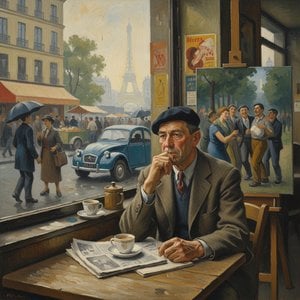
Maurice de Vlaminck was born April 4, 1876, in Paris, France, to a Flemish father who instilled musical sensibilities through violin instruction and a mother from Lorraine proficient in piano performance. This formative upbringing profoundly shaped his artistic vision. He embarked on his painting journey relatively late in life – around the age of twenty – initially pursuing self-education before cultivating an instinctive and passionate approach to art creation.
The Fauvist Movement and Artistic Style
Vlaminck stands as a cornerstone figure within the Fauvist movement (1904–1908), distinguished by its audacious embrace of color and simplified forms. Alongside luminaries like André Derain and Henri Matisse, he spearheaded this revolutionary artistic cohort that boldly challenged established conventions of representation. His distinctive style embodies several key characteristics:
Bold Color Choices: Vlaminck eschewed naturalistic hues, opting instead for vibrant, emotionally resonant colors designed to convey feeling rather than mirroring reality precisely.
Energetic Brushwork: Paintings by Vlaminck pulsate with dynamism thanks to thick, visible brushstrokes—a technique that communicates spontaneity and immediacy.
Simplified Forms: He frequently reduced landscapes and objects to their essential geometric shapes, prioritizing expressive impact over meticulous detail.
Notable early masterpieces include “Sur le zinc” (At the Bar) and “L’homme à la pipe” (Man Smoking a Pipe), which serve as exemplary illustrations of his unmistakable artistic style. These works immediately captivated audiences with their raw energy and emotive power.
Influences and Artistic Development
Vlaminck's artistic trajectory reveals connections to Impressionism, where he absorbed techniques focused on capturing fleeting moments illuminated by sunlight—a hallmark of the era’s aesthetic sensibilities. However, his creative spirit found its most potent inspiration in Vincent van Gogh. Following a visit to a Van Gogh exhibition, Vlaminck famously articulated his admiration for the artist's groundbreaking vision. This influence is palpable in Vlaminck’s expressive brushwork and pervasive emotional intensity—a testament to the enduring legacy of Impressionist art. Furthermore, from 1908 onwards, Cézanne’s muted palette exerted a considerable sway over Vlaminck’s artistic palette, prompting him to explore monochromatic tonal ranges that mirrored Cézanne's sculptural approach to painting.
Major Achievements and Historical Significance
Vlaminck’s participation in the Salon d’automne exhibitions – notably in 1905 – solidified Fauvism’s position as a pivotal movement within modern art history. His canvases became emblems of artistic innovation, capturing the spirit of Parisian life during this transformative period. Vlaminck's paintings are celebrated for their uncompromising honesty and visceral emotional expression—qualities that continue to resonate with viewers today. He bridged the gap between Impressionism and Expressionism, fostering a dialogue between aesthetic traditions and propelling artistic progress forward. His enduring contribution to art is recognized globally through museum collections and private holdings alike.
Legacy and Available Works
Today’s connoisseurs appreciate Vlaminck's oeuvre for its singular blend of spontaneity, passion, and masterful execution. Paintings such as “Bougival” and “The Bridge at Chatou” remain highly sought after by collectors worldwide—testaments to the artist’s enduring artistic merit. ArtsDot proudly presents a curated selection of Vlaminck's artworks for discerning viewers to explore and acquire – offering an unparalleled opportunity to immerse oneself in the vibrant spirit of Fauvist art.
Разгледайте топ 25 шедьоври на Франсиско Гоя – от портрети до исторически картини. Открийте историите, техниките и емоциите зад неговите най-известни творби. Луксозни репродукции за вашия дом в ArtsDot.com!
Разберете разликите между импресионизъм и постимпресионизъм с нашия експертен анализ. Съвети за колекционери, инвестиционен потенциал и ключови артисти.
Explore the life & work of Maurice Denis, pivotal French painter bridging Impressionism to modern art. Discover his Nabis symbolism, theories on 'ideation,' and profound commitment to sacred art. A deep dive for art enthusiasts.
AАсистент на студиотоНа линия · отговаря в рамките на минута
Здравейте! Мога да ви помогна с избора на произведение на изкуството, проследяването на поръчка или отговори на въпроси относно гаранцията. С какво мога да ви бъда полезен?