Портрет на Gislebertus

Вашият пътеводител към 11-те най-известни картини на Gislebertus

Обновено Октомври 2026 · класирано според нашия индекс на популярност (търсения, посещения и поръчки за всяко произведение) · 11 творби на Gislebertus в нашия каталог

Накратко

Най-известното произведение на Gislebertus е Tympanum of the main portal (detail) (1130). Можете да го откриете в Катедрала Свети Лазар в Отен в Отюън. Следващи в списъка са Pilgrims (1120) и Last Judgment (detail) (1130). В нашия каталог има 11 произведения на Gislebertus; този пътеводител представя 11 най-известни от тях, заедно с годината, музея и историята на всяко произведение.

1120 – 1135 Romanesque Най-много творби: Катедрала Свети Лазар в Отен

10-те най-важни картини на Gislebertus, които трябва да познавате

1
Tympanum of the main portal (detail) (1130) на Gislebertus

Tympanum of the main portal (detail)

The Tympanum of the main portal (detail) by Gislebertus emerges from the stone of the Saint-Lazare Cathedral in Autun, France. Created about 1130, this relief captures a profound moment of divine reckoning. It presents a scene from the Last Judgment, where the boundaries between the earthly and the eternal seem to dissolve. The figures move with a frantic, stylized energy that defines the Romanesque style. Every carved line speaks to…

2
Pilgrims (1120) на Gislebertus

Pilgrims

In the stone of Saint Lazare Cathedral in Autun, France, the relief titled Pilgrims captures a moment of quiet devotion. Created by the French Romanesque sculptor Gislebertus about 1120, the work depicts figures caught in a singular act of prayer. These travelers move through the heavy, carved medium to find a stillness in the midst of their movement. The stone holds the weight of their supplication.

3
Last Judgment (detail) (1130) на Gislebertus

Last Judgment (detail)

The work before us is the Last Judgment (detail) by Gislebertus. This relief carving, created about 1130, offers a focused view of the profound theological drama unfolding within the Saint-Lazare Cathedral in Autun, France. It is situated within the Кафедральний собор Святого Лазаря в Отюні, Autun, where it remains a central element of the cathedral's architectural and spiritual program.

10
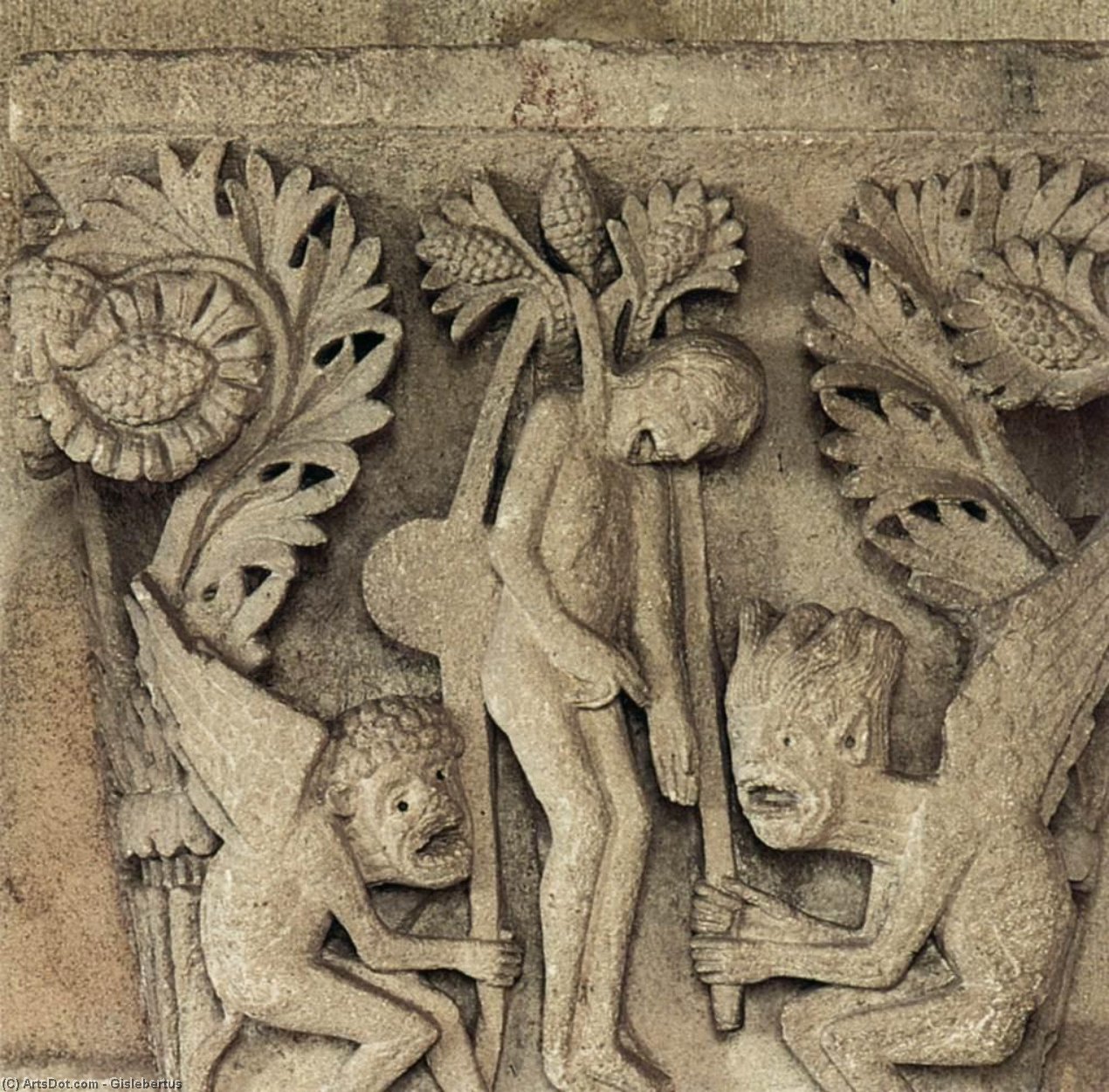
Самоубийството на Юдес (1120) на Gislebertus

Самоубийството на Юдес

1120 · Акрил върху платно · Катедрала Свети Лазар в Отен, Отюън

Гислебертус е един от най-значимите скулптори на романския стил – особено известен със своя принос към катедралата Сен Лазар в Автоун, Франция. Роден около 1120 г., Гислебертус се появи на художествения пейзаж на Бургундия през период, дълбоко оформен от религиозен фанатизъм и амбициозно строителство. Въпреки че биографични данни остават ограничени, учените смятат, че той е бил обучен в Клони Аббатство, което вероятно е центърът на европейското монашеско изкуство и интелектуално…

От 11 до 11 произведения: още картини от Gislebertus

Най-често рисувано от Gislebertus

Четирите найчесто срещани теми в тези произведения, всяка с най-известния си пример.

Къде можете да видите картините на Gislebertus

2 музея, които притежават най-голям брой от картините на тази страница.

Музеи Град Творения на Gislebertus Картини от този списък
Катедрала Свети Лазар в Отен, ОтюънКатедрала Свети Лазар в Отен Отюън 9 Tympanum of the main portal (detail), Pilgrims, Last Judgment (detail)
Musée Rolin, AutunMusée Rolin Autun 1 Eve

Година по година: най-известните произведения на Gislebertus

Всички произведения на Gislebertus от тази страница са създадени през 1130. Ето ги, подредени по популярност.

Работи по години

Изберете година, за да разгледате произведенията ѝ.

Gislebertus: бързи отговори за картините

Коя е най-известната картина на Gislebertus?Вижте отговора

На върха на списъка е Tympanum of the main portal (detail) (1130), Катедрала Свети Лазар в Отен, Отюън. Непосредствено след нея: Pilgrims (1120) и Last Judgment (detail) (1130).

На каква възраст е бил Gislebertus, когато е създал Tympanum of the main portal (detail)?Вижте отговора

На 10 години. Gislebertus е роден/а в 1120, а Tympanum of the main portal (detail) е от 1130 г.

Кои са 10-те най-известни картини на Gislebertus?Вижте отговора

Tympanum of the main portal (detail), Pilgrims, Last Judgment (detail), Dream of the Magi, Tympanum of the main portal, Eve, Last Judgment, Main portal, Last Judgment (detail) и Самоубийството на Юдес. Годината на създаване и музейът на всяка от тях са посочени в списъка по-горе.

Колко произведения на Gislebertus има във вашия каталог?Вижте отговора

В нашия каталог има 11 произведения на Gislebertus.

В кои музеи можете да видите известните произведения на Gislebertus?Вижте отговора

Повечето от тях ще откриете в Катедрала Свети Лазар в Отен (Отюън) и Musée Rolin (Autun). Списъкът с музеи по-горе съдържа пълното разпределение.

Кога Gislebertus създава най-известните си произведения?Вижте отговора

В 1130, повече от всяко друго време: 7 от 11 произведения на тази страница са от този период, като Tympanum of the main portal (detail) са сред тях.

Кои теми рисува най-често Gislebertus?Вижте отговора

Medieval art (3), Autun cathedral (3) и People (2) от общо 11 произведения на тази страница.

Коя техника се среща най-често в картините на Gislebertus?Вижте отговора

Stone, използван в 3 от 11 произведения на тази страница.

С кой стил или художествено направление е известен Gislebertus?Вижте отговора

Romanesque, както можете да видите в произведенията на тази страница.

Кои известни картини на Gislebertus се намирате в Катедрала Свети Лазар в Отен?Вижте отговора

На тази страница можете да видите 9 от произведенията в Катедрала Свети Лазар в Отен, Отюън, включително Tympanum of the main portal (detail), Pilgrims и Last Judgment (detail).

Къде мога да поръчам репродукция на Gislebertus?Вижте отговора

Да. Всяка картина на тази страница е налична като ръчно рисувано маслено репродукция или като принт, в подходящ за Вас размер. Просто отворете страницата на картината, за да направите поръчка.

Историята на Gislebertus

Gislebertus: The Sculptor of Autun Cathedral’s Divine Vision

Gislebertus, a name etched in stone and whispered through the centuries, stands as one of the most remarkable figures of Romanesque sculpture. Specifically celebrated for his profound contribution to Saint Lazare Cathedral in Autym, France, he emerged from the fertile artistic landscape of Burgundy during a period profoundly shaped by religious fervor and burgeoning architectural ambition. Born sometime around 1120, Gislebertus lived through an era where art served as the primary language of the faithful. While biographical details remain scarce, scholars believe he was trained at Cluny Abbey, arguably the epicenter of European monastic art and intellectual life at the time. This formative experience instilled in him a deep understanding of biblical narratives and imbued his work with an unwavering devotion to Christian themes.

His initial role at Cluny involved assisting the master sculptor, cementing his position within a tradition prioritizing didactic storytelling—conveying moral lessons through visual representation. The cathedral’s ambitious project demanded exceptional skill, and Gislebertus quickly established himself as a pivotal talent. Recognizing the importance of providing solace to pilgrims afflicted with leprosy—a prevalent ailment during the 12th century—the Abbey envisioned Saint Lazare as more than just a place of worship; it was intended as a sanctuary for the marginalized. This vision profoundly impacted Gislebertus’ artistic sensibilities, prompting him to create reliefs that resonated with compassion and hope, featuring imagery designed to uplift those facing immense suffering.

Mastery of Emotion and Narrative Relief

The true genius of Gislebertus lies in his ability to translate complex theological concepts into visceral, physical forms. His work at Autun is characterized by a dramatic use of line and shadow that breathes life into the cold stone. In masterpieces such as the Suicide of Judas, created around 1120-30, he captures the raw horror and despair associated with treason. Through the depiction of hanging figures and menacing demonic entities, Gisleberus showcases an exceptional skill in capturing human psychological torment, a hallmark of the Romanesque style that pushes the boundaries of medieval expression.

Beyond the scenes of tragedy, his work also celebrates the spiritual journey of the faithful. In his Pilgrims relief, one can observe a powerful depiction of devotion, where strong lines and dramatic shadows emphasize the physical and spiritual weight of the pilgrimage. This ability to oscillate between the terrifying aspects of divine judgment and the quiet strength of religious perseverance makes his oeuvre uniquely captivating. His sculptures do not merely decorate a building; they act as a window into the medieval soul, inviting the viewer to contemplate the eternal struggle between good and evil.

Legacy and Historical Significance

The artistic development of Gislebertus represents a crucial bridge in the evolution of European art. While his roots are firmly planted in the Romanesque tradition of Cluny, his expressive power and narrative complexity hint at the burgeoning naturalism that would later define Gothic art. His work on the Dream of the Magi further demonstrates this sophisticated approach to storytelling, blending historical reverence with a sense of wonder.

The enduring significance of Gislebertus can be summarized through several key contributions:

  • Narrative Innovation: He transformed architectural elements like tympanums into complex, readable storybooks for the illiterate masses.
  • Emotional Depth: He moved beyond static iconography to introduce psychological depth and human emotion into stone sculpture.
  • Cluniac Influence: He carried the high intellectual and spiritual standards of Cluny Abbey into the public sphere of cathedral architecture.
  • Architectural Integration: His ability to harmonize intricate sculptural detail with the massive, heavy forms of Romanesque architecture remains a pinnacle of medieval craftsmanship.

Today, the works of Gislebertus remain some of the most studied and revered examples of 12th-century art. He remains a master whose hands, though long since returned to dust, continue to speak through the enduring stone of Autun, reminding us of a time when art was the ultimate vessel for the divine.

Всички 11 произведения на Gislebertus →