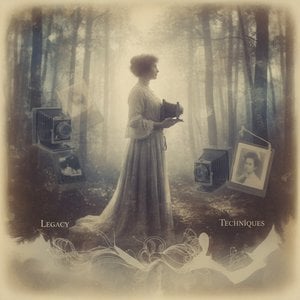
Pascal Sébah: A Pioneer of Ottoman Photography
Early Life and Origins
- Born: Istanbul, Turkey in 1823.
- Parentage: Pascal Sébah’s father was Syrian, and his mother was Armenian, reflecting the diverse cultural landscape of the Ottoman Empire.
- Early influences remain somewhat obscure, but growing up in a cosmopolitan city like Istanbul undoubtedly exposed him to various artistic traditions.
Career Beginnings and Collaboration with Henri Bechard
- Sébah began his photographic career around 1860, initially working in collaboration with the French photographer Henri Bechard.
- This partnership was crucial for Sébah’s early technical development and exposure to European photographic techniques.
- Their work gained recognition at the International Exhibition in Paris, providing a platform for Sébah's emerging talent.
Establishing “El Chark” (The Orient)
- Following their success, Sébah decided to establish his own studio in 1857, named “El Chark” (The Orient).
- Located on Grande Rue de Pera in Istanbul, the studio quickly became a hub for both locals and tourists seeking photographic portraits and views of the city.
- Strategic Location: Its proximity to embassies and hotels made it easily accessible to foreign visitors.
Photographic Style and Subject Matter
- Sébah’s style was characterized by his use of large-format cameras, allowing for exceptional detail and clarity.
- Architectural Photography: He became renowned for capturing the grandeur of Istanbul's architecture, including palaces like Çırağan Palace and mosques.
- Portraiture: Sébah also excelled in portrait photography, documenting the diverse people of the Ottoman Empire.
- His work extended beyond Istanbul to include scenes from Egypt and Anatolia.
Major Achievements and Recognition
- International Exhibition Success: Early recognition at international exhibitions boosted his reputation.
- Expansion to Cairo: In 1873, Sébah opened a second studio in Cairo, capitalizing on the growing demand for photographs from tourists visiting Egypt.
- Collaboration with Osman Hamdi Bey: He formed a valuable working relationship with Turkish painter and archaeologist Osman Hamdi Bey, providing photographic documentation for his artistic projects.
Legacy and Historical Significance
- After Sébah’s death in 1886, the studio continued to operate under the management of his brother Cosmi and later with Polycarpe Joaillier, becoming known as Sebah & Joaillier.
- Pioneering Ottoman Photography: Sébah is considered a pioneer in documenting the Ottoman Empire through photography, providing invaluable visual records of 19th-century life and culture.
- His work offers insights into the architecture, people, and landscapes of Istanbul, Egypt, and Anatolia.
- Museum Collections: His photographs are now held in prestigious museums such as the Pera Museum in Istanbul.
Въпроси и отговори
От коя държава е Pascal Sébah?
Pascal Sébah е роден в Turkey.
В кой град и държава е роден/а Pascal Sébah?
Pascal Sébah е роден в Istanbul, Turkey.
В коя историческа епоха е творил Pascal Sébah?
Pascal Sébah е творил в периода на 19th Century. Този период определя историческия контекст на творчеството на художника.