The Luminous Legacy of Henry Marvell Carr
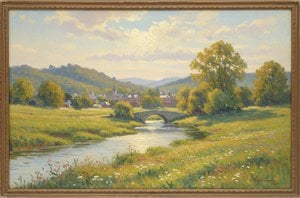
To encounter the work of Henry Marvell Carr is to step into a world where light and memory intertwine, creating a visual dialogue between the tangible landscape and the profound depths of human emotion. Born in 1894, Carr emerged as a vital figure within the tapestry of American Impressionism, though his artistic spirit was far too expansive to be confined by a single movement. His journey was one of constant synthesis, blending the rigorous technical training of the European tradition with an intimate, soulful dedication to capturing the essence of both the natural world and the African American cultural experience. Through his brush, the fleeting atmospheric shifts of a Michigan afternoon or the quiet dignity of a portrait subject were transformed into enduring monuments of light and form.
Carr’s artistic foundation was forged in the prestigious studios of Europe, most notably during his time at the École Supérieure des Beaux-Arts in Paris. Immersed in the vibrant atmosphere of the Impressionist movement, he drew inspiration from the masters such as Monet and Sisley, learning to observe how light dances across surfaces and how color can evoke the very temperature of a moment. This Parisian influence instilled in him a lifelong fascination with atmospheric perspective and a luminous palette that would become his hallmark. Upon returning to his roots in Detroit, Carr did not merely replicate European styles; instead, he repurposed these techniques to illuminate the specific beauty of the American landscape and the rich, often overlooked, narratives of his community.
A Master of Texture and Narrative
The technical prowess of Carr is perhaps most evident in his masterful command of the impasto technique. He did not simply apply paint to canvas; he sculpted it, creating textured surfaces that lend a palpable, three-dimensional quality to his works. This tactile approach allowed him to convey the ruggedness of urban environments and the soft, ephemeral qualities of nature with equal vigor. His oeuvre, which encompasses over 300 paintings and drawings, serves as a historical record of both the physical and social landscapes of the early to mid-20th century. Whether depicting the industrial grit of Detroit or the serene beauty of the Michigan countryside, Carr’s work possesses an evocative realism that transcends mere documentation.
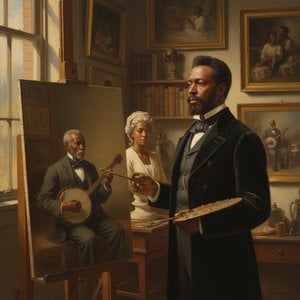
Beyond his technical skill, Carr’s significance lies in his ability to imbue his subjects with a profound sense of dignity and grace. His portraiture is particularly noted for its sensitivity, capturing the psychological depth of his sitters. In works such as “Mrs Gertrude Kinnell,” one finds a masterful balance of character study and aesthetic beauty. Furthermore, his ability to document historical moments—such as the poignant “Dismantling an Emergency Water Tank” (1945)—demonstrates his role as a chronicler of civic life and wartime effort. His art was never static; it was a living, breathing response to the world around him, capturing the tension between progress and tradition, and the enduring strength of the human spirit.
Historical Significance and Enduring Influence
The legacy of Henry Marvell Carr continues to resonate within the halls of art history, serving as a bridge between the classical traditions of the past and the burgeoning modern identities of the 20th century. His contribution to the Detroit artistic landscape was foundational, providing a sophisticated visual language that celebrated African American heritage through the lens of high-art Impressionism. By elevating everyday scenes and portraits to the level of fine art, he challenged contemporary perceptions and contributed to a more inclusive narrative of American art history.
Today, Carr’s work remains a subject of profound study and admiration for several key reasons:
- Cultural Synthesis: His unique ability to merge European Impressionist techniques with African American cultural themes.
- Technical Mastery: The enduring power of his impasto brushwork and his sophisticated use of light and color.
- Historical Documentation: His role as a visual historian of Detroit’s urban evolution and the social shifts of the mid-20th century.
- Emotional Resonance: The capacity of his landscapes and portraits to evoke deep, empathetic connections with the viewer.
As we look back upon his prolific career, Carr stands as a painter of light, but more importantly, a painter of truth—capturing the fleeting beauty of the world while anchoring it in the permanent strength of memory.
Въпроси и отговори
Мога ли да посетя виртуален музей с творбите на Henry Marvell Carr?
Възможно е виртуално посещение: страницата 3D Музей на Henry Marvell Carr представя творбите на художника в триизмерна галерия.
Къде могат да бъдат намерени произведенията на Henry Marvell Carr, групирани по ключови думи?
За да намерите творби на Henry Marvell Carr по конкретна тема, използвайте страницата на художника По ключови думи, която групира произведенията по ключови думи.
В коя историческа епоха е творил Henry Marvell Carr?
Henry Marvell Carr е творил в периода на Modern. Този период определя историческия контекст на творчеството на художника.
Как да намеря всички творби на Henry Marvell Carr в определена техника?
За да намерите всички творби на Henry Marvell Carr в определена техника, посетете страницата на художника за Всички техники.
Има ли преглед на всички теми, които Henry Marvell Carr е изобразявал?
Работите на Henry Marvell Carr могат да бъдат разгледани по теми на страницата за тематичен атлас на артиста Атлас по теми.
Има ли пълен списък с произведенията на Henry Marvell Carr?
Всяка творба на Henry Marvell Carr в този уебсайт може да бъде разгледана на страницата за всички произведения на Henry Marvell Carr: Всички произведения.
Колко произведения на Henry Marvell Carr са налични за разглеждане?
Можете да разгледате 85 произведения творби на Henry Marvell Carr на страницата Всички произведения.