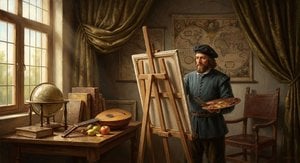
Франс Халс I: Живот в боя на четката
Франс Халс I е холандски художник, роден около 1580 г. в Антверпен, Белгия. Въпреки че ранните му години остават донякъде обгърнати в мистерия, той се издига като една от най-значимите фигури на Холандската златна ера, прославен със своята иновативна портретна живопис и жанрови сцени.
Ранен живот и обучение
Детайлите около формиращите години на Халс са оскъдни. Вярва се, че той е получил първоначалното си художествено обучение в Антверпен – важен център за живопис по това време. Въпреки това, поради религиозни и политически превратности, семейството му се преселва в Хаарлем, Нидерлантика. През 1610 г. той става член на Хаарлемското задружие на Св. Лука, което бележи официалния старт на неговата професионална кариера.
Художествен стил и развитие
Халс се отличава със свой изключително свеж и спонтанен стил. За разлика от мнозина свои съвременници, които са предпочитали прецизния детайл, Халс използва свободна и експресивна мазанка. Тази техника вдъхва на неговите картини усещане за непосредственост и жизненост, улавяйки личността и характера на своите образи по начин, който е бил революционен за епохата си.
- Неговите портрети не бяха просто прилики; те бяха психологически изследвания.
- Той се отличаваше с умението да предаде мимолетни моменти – смях, разговор или размисъл.
- Използването на светлина и сянка от страна на Халс добавя дълбочина и драма към неговите композиции.
Бележките произведения
Въпреки че Халс създава широк спектър от творби, той е най-известен със своите портрети. Някои от неговите най-прочути картини включват:
- Смеещият кавалер (1624) – класически пример за способността му да улови характер и движение.
- Мале Бабе (ок. 1633-1635) – впечатляващо изображение на възрастен жена, демонстриращо умението на Халс да предаде възраст и личност.
- Портрети на регентите на дома за възрастни хора в Хаарлем (1664) – произведение, демонстриращо неговото майсторство в груповия портрет.
Той създава и завладяващи жанрови сцени – изображения на ежедневието – които предлагат прозорци към холандското общество.
Влияния и наследство
Определянето на директните влияния върху Халс е предизвикателство, тъй като той развива изключително индивидуален стил. Въпреки това е вероятно той да е бил запознат с творбите на по-ранни фламандски художници като Питер Брейгел Стария. Неговият иновативен подход към портрета оказа дълбоко влияние върху следващите поколения артисти.
- Той повлиял на художници като Адриен Броуер и Йоханес Вермеер.
- Неговият акцент върху улавянето на личността проправя път за по-интимни и психологически портрети.
- По-късни артисти, включително импресионистите, са се възхищавали на неговата свободна техника и фокус върху светлината.
Историческа значимост
Франс Халс I играе решаваща роля в оформянето на холандската живопис по време на Златната ера. Неговата работа отразява нарастващото просперитет и индивидуализъм на Нидерландия през този период. Той се отдалечава от скованата формалност към по-натуралистичен и експресивен стил, оставяйки трайна наследствена следа в света на изкуството.
Днес неговите картини са изключително търсени и могат да бъдат открити в големи музеи по целия свят, включително в Музея на Франс Халс в Хаарлем, който притежава най-голямата колекция от неговите творби. Неговият принос продължава да вдъхновява художници и да очарова публиката и столетия по-късно.