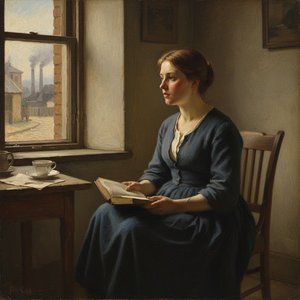
The Rise of Realism: A Rejection of Idealism
For centuries, art had largely concerned itself with the lofty—mythological narratives, religious allegories, and idealized portraits of nobility. The canvases of the Renaissance and Neoclassical periods presented worlds striving for perfection, often divorced from the everyday realities experienced by most. But as the 19th century dawned, a profound shift began to stir within the artistic community, a rebellion against these established conventions that would give birth to Realism. This wasn’t merely a stylistic change; it was a philosophical one, rooted in the burgeoning social and political upheavals of the time. Artists increasingly questioned the purpose of art itself – should it aspire to elevate and inspire through fantastical visions, or reflect the world as it truly *was*, with all its imperfections and complexities? The seeds of this new movement were sown by a growing dissatisfaction with Romanticism’s emotional excess and a desire for objective representation, a commitment to portraying life without embellishment.
Gustave Courbet: The Pioneer of a New Artistic Vision
 Wikipedia: Gustave Courbet
Jean Désiré Gustave Courbet (UK: KOOR-bay; US: koor-BAY; French: [ɡystav kuʁbɛ]; 10 June 1819 – 31 December 1877) was a French painter who led the Realism movement in 19th-century French painting. Committed to painting only what he could see, he re...
At the heart of this revolution stood Gustave Courbet (1819-1877), a figure who would become synonymous with Realism. Born in Ornans, France, Courbet possessed an unwavering dedication to depicting the world around him—not as he imagined it *should* be, but as he observed it. He famously declared his intention to “paint only what I see,” rejecting academic traditions and embracing subjects previously deemed unworthy of artistic attention: laborers, rural scenes, and ordinary people engaged in their daily lives. His early works, though demonstrating technical skill inherited from the Old Masters, quickly diverged from established norms. Paintings like After Dinner at Ornans, with its unidealized depiction of a post-meal gathering, signaled his departure from conventional aesthetics. However, it was The Stonebreakers (1849) that truly ignited the controversy and cemented Courbet’s position as a radical innovator. This unflinching portrayal of two men toiling in harsh conditions, rendered on a monumental scale typically reserved for historical paintings, shocked audiences accustomed to more polished and romanticized depictions of labor. His subsequent exhibition of works at his own “Pavilion of Realism” in 1855 was an act of defiance, challenging the authority of the official Salon and establishing a platform for this new artistic vision.
Key Characteristics & Techniques of Realist Painting
Realism wasn’t simply about choosing different subject matter; it involved a fundamental shift in technique. Courbet and his contemporaries eschewed the smooth brushwork and idealized forms favored by earlier generations, opting instead for a more direct and unrefined approach. Visible brushstrokes became a hallmark of the style, lending a sense of immediacy and authenticity to their work. They embraced earthy palettes, reflecting the natural tones of the landscapes and people they depicted. Light was often used realistically, without dramatic effects or symbolic embellishment. Woman with a Parrot, for example, showcases Courbet’s masterful use of light and shadow to create a sense of volume and texture in the reclining nude figure. The focus wasn't on creating an idealized beauty but rather on portraying the human form as it is—flawed, sensual, and undeniably real. This commitment extended to their compositions; Realist paintings often lacked the carefully constructed narratives of earlier styles, instead presenting scenes that felt spontaneous and unposed.
Social and Political Context: Reflecting 19th-Century Life
Realism was an artistic movement that emerged in France in the 1840s. Realists rejected Romanticism, which had dominated French literature and art since the early 19th century. The artist Gustave Courbet, the original proponent of Realism, sought to ...
The rise of Realism was inextricably linked to the social and political climate of 19th-century France. The Industrial Revolution had dramatically altered the landscape, creating a burgeoning working class and widening the gap between rich and poor. Political unrest simmered beneath the surface, culminating in the revolutions of 1848. Courbet’s paintings often served as subtle commentaries on these societal changes. A Burial at Ornans, for instance, depicted an ordinary funeral in his hometown with a scale and solemnity typically reserved for historical events, elevating the lives of common people to a level of importance previously unheard of. The Stonebreakers, though destroyed during World War II, remains a potent symbol of the hardships faced by the working class. These works weren’t simply depictions of life; they were statements about social inequality and a challenge to the established order. Artists like Honoré Daumier further amplified this message through his satirical lithographs, exposing the hypocrisy and corruption of Parisian society.
Beyond France: The Spread and Evolution of Realism
While originating in France, the principles of Realism quickly spread across Europe and beyond. In Germany, artists like Adolph Menzel embraced a similar commitment to depicting everyday life with meticulous detail, focusing on scenes of industrial labor and urban landscapes. In Russia, the Peredvizhniki movement (also known as The Wanderers) emerged, dedicated to portraying the lives of peasants and challenging social injustices through their art. Each country adapted Realism to its own unique context, reflecting local customs, political realities, and artistic traditions. In America, artists like Thomas Eakins focused on scenes of American life, capturing the grit and realism of urban environments and working-class communities. As the movement evolved, it paved the way for new styles such as Naturalism and Impressionism, which built upon Realism’s foundation of objective observation while exploring different aspects of light, color, and perception.
The Enduring Legacy of Realism in Modern Art
Realism's impact on the course of art history is undeniable. It shattered established conventions, challenged societal norms, and paved the way for a more democratic and inclusive artistic landscape. By focusing on the everyday lives of ordinary people, Realist artists broadened the scope of what was considered worthy of representation, influencing generations of painters to come. The movement’s emphasis on objective observation laid the groundwork for Impressionism's exploration of light and color, as well as later movements like Cubism and Abstract Expressionism. Even today, the principles of Realism—authenticity, directness, and a commitment to portraying life without embellishment—continue to resonate with artists and audiences alike. ArtsDot offers a stunning collection of reproductions from this pivotal era, allowing you to experience the power and beauty of Realist masterpieces firsthand and connect with the artistic legacy that continues to shape our world.