


 Представи си го
 Изпрати
 Сподели
 Детайли

 Изтегляне
 Подобни
 Рентгенова снимка
 Слайдшоу
Lost
 Acrylic On Canvas
- WallArt
- Heidelberg School
 1886
1886 115.0 x 73.0 cm
 Национална галерия на изкуството
 Прочетете повече
Жикле / Художествен принт
Giclée печат или принт върху платно с музейно качество, бързо производство и гъвкави опции за завършен вид. ( Купете ръчно рисувана картина Купете изображение)




P118B $10

P118H $10

P118W $10

P438Z $10

P508JH $12

P508YH $12

P805H $10

P805Z $10

P919BZ $10

P919G $10

P919XJ $10

P959ZH $10

P968JZ $12

W106C $8

W218G $10

W218JH $8

W218Y $10

W307PJ $10

W316G $10

W316PJ $8

W316Y $10

W398PJ $8

W4111J $10

W500HY $15

W500JH $15

W692G $12

W849H $8

W940BG $15

W953PJ $8




Изберете от предварително зададените размери, които съответстват на оригиналните пропорции на произведението.

Можете да въведете собствени размери, за да паснат на конкретна рамка или пространство. Ако избраният от Вас размер не съвпада с пропорциите на оригиналното изображение, ние ще изрежем произведението или ще разширим изображението с огледален или едноцветен ръб. Дигитален макет ще бъде изпратен за Ваше одобрение преди започването на производството.
Моля, имайте предвид, че предпрегледът на екрана не отразява реалното изрязване или разширяване. Само макетът ще покаже точно финалната композиция.
Въпреки че са налични персонализирани размери, препоръчваме да изберете размер от предварително дефинирания списък, за да запазите оригиналните пропорции.
Доставка по целия свят () в рамките на 2 седмици вместо стандартните 4/5 седмици. (18 Август)

Безплатна експресна доставка по целия свят

Висококачествено ленено платно

Пълно застраховане при доставка

Гаранция за възстановяване на митнически такси

Гаранция за цветова точност

60-Дневен период за връщане (Само при дефекти)

100% Гаранция за връщане на парите

Предложение за отстъпка при поръчка на едро
 Стъклото е налично само в размери под 110 см

Lost
Жикле / Художествен принт
Размер на репродукцията
-


Обща цена
$ 62
Описание на колекционерския предмет
The Haunting Beauty of Frederick McCubbin’s “Lost”
Frederick McCubbin's "Lost," painted in 1886, isn’t merely a landscape; it’s a poignant meditation on vulnerability, isolation, and the enduring spirit of the Australian outback. This evocative work, housed within the National Gallery of Victoria, transcends its simple depiction of a young girl wandering through a eucalyptus forest to become a powerful symbol of Australia's nascent national identity and the complex relationship between humanity and the vast wilderness.
The painting immediately draws the eye with its masterful use of light and shadow. McCubbin, a key figure in the Heidelberg School movement, employed an impressionistic technique—not in the purely optical sense, but rather to capture the *feeling* of the landscape. The dappled sunlight filtering through the trees creates a shimmering effect, lending an ethereal quality to the scene. Notice how he utilizes broken brushstrokes and subtle color variations to suggest depth and atmosphere, moving beyond a straightforward representation towards a more emotionally resonant portrayal.
Echoes of Tradition: Folklore and Literary Roots
“Lost” isn’t born in a vacuum; it resonates deeply with a long-standing tradition within Australian literature and folklore. The theme of the lost child, wandering alone in the bush, has been a recurring motif for centuries, reflecting anxieties about frontier life, the dangers of the wilderness, and the vulnerability of those who venture into its depths. McCubbin’s painting taps directly into this established narrative, referencing the tragic story of Clara Crosbie, a twelve-year-old girl who disappeared in the Yarra Valley in 1885. While the specific inspiration remains debated, the painting undeniably evokes the same sense of unease and potential peril that gripped the nation during that period.
Interestingly, McCubbin himself cited Arthur Loureiro’s 1885 painting depicting a girl in a similar forest setting as a key influence. This connection highlights the cross-cultural exchange of artistic ideas within Melbourne's vibrant art scene at the time – a melting pot of European and Indigenous influences. The inclusion of this reference suggests McCubbin was consciously engaging with established visual tropes while simultaneously forging his own unique style.
Symbolism and Emotional Resonance
The girl herself is a potent symbol, representing innocence, vulnerability, and the precariousness of human existence within the overwhelming power of nature. Her simple attire—a hat shielding her from the sun—and her solitary journey speak to a profound sense of isolation. The path she follows, barely discernible amidst the dense undergrowth, symbolizes the uncertainty of life’s journey and the potential for getting lost, both literally and metaphorically.
The forest itself is not merely a backdrop; it's an active participant in the scene. Its towering eucalyptus trees, rendered with meticulous detail, exude a sense of ancient wisdom and silent observation. The muted palette—dominated by greens, browns, and ochres—creates a mood of melancholy and contemplation. It’s a landscape that simultaneously invites and warns, offering beauty alongside potential danger.
A Legacy in Reproduction: Bringing “Lost” to Your Space
Reproductions of "Lost" capture the essence of McCubbin's original vision, allowing you to bring this iconic Australian artwork into your home or office. When selecting a reproduction, consider the medium – archival-quality prints on canvas offer exceptional detail and longevity, while museum-grade paper reproductions provide a stunning visual experience. Whether displayed in a formal study or a rustic living room, “Lost” will undoubtedly serve as a captivating conversation piece, prompting reflection on Australia’s rich history, its connection to the land, and the enduring allure of the bush.
Подобни произведения


Биография на художника
Frederick McCubbin - A Life Rooted in the Australian Landscape
Frederick McCubbin, born in Melbourne on February 25th, 1855, stands as a cornerstone of Australian art, inextricably linked to the nation’s evolving identity and its unique visual language. His journey from humble beginnings – the son of bakers who instilled in him a strong work ethic – to becoming a pivotal figure in the Heidelberg School is a testament to his dedication and artistic vision. McCubbin's early life was marked by diverse experiences, working as a solicitor’s clerk and assisting in the family bakery before fully embracing his calling as a painter. These formative years, though seemingly disparate, imbued him with a deep understanding of everyday Australian life, a theme that would resonate profoundly throughout his oeuvre. He received foundational training at the National Gallery of Victoria's School of Design, studying under Eugene von Guerard and George Folingsby, honing his skills in landscape painting while absorbing the prevailing artistic currents of the time. A crucial turning point arrived with his enduring friendship with Tom Roberts, a bond that would shape the course of Australian art history.Early Influences and Artistic Formation
McCubbin’s formative years instilled within him not only practical knowledge but also an unwavering appreciation for observation—a cornerstone of his artistic approach. His education at William Willmott's West Melbourne Common School and St. Paul’s School provided a solid intellectual base, complemented by evening classes at the Artisan’s School of Design where he honed his drawing skills under Oswald Rose Campbell. This formal training was further enriched by mentorship from George Folingsby, who championed Impressionistic techniques and encouraged McCubbin to explore the expressive potential of color and light. Notably, his friendship with Tom Roberts proved invaluable—Roberts introduced him to the burgeoning Heidelberg School movement and fostered a collaborative spirit that would propel their artistic endeavors forward. The influence of Julian and George Rossi Ashton also played a role in shaping McCubbin’s stylistic sensibilities during this period.The Heidelberg School: Defining Australian Impressionism
In 1885, McCubbin and Roberts established the Box Hill Artists' Camp—a watershed moment for Australian art. This plein air collective—soon joined by Arthur Streeton and Charles Conder—rejected the rigid formalism of European academic painting, opting instead to immerse themselves in the untamed beauty of the Australian bush. Their goal was ambitious: to capture not merely a visual representation but an emotional response to the landscape—a feat that demanded a radical departure from established conventions. McCubbin’s contribution to this movement was instrumental in establishing what would become known as Heidelberg Impressionism. Paintings like Down on His Luck (1889), depicting the harsh realities of rural life and infused with atmospheric color, exemplify this stylistic shift. The Camp artists meticulously studied light and shadow, striving to convey a sense of immediacy and authenticity—a characteristic that distinguishes their work from earlier landscape traditions.Iconic Landscapes and Narrative Vision
McCubbin’s artistic output is characterized by a distinctive blend of observational accuracy and narrative storytelling. Works such as On the Wallaby Track (1896) and The Pioneer (1904) are celebrated for their evocative depictions of Australian wilderness—scenes rendered with remarkable detail and imbued with symbolic resonance. These paintings aren’t simply landscapes; they're narratives that explore themes of resilience, solitude, and the human connection to nature. McCubbin skillfully employed color palettes—often dominated by earthy tones—to convey mood and atmosphere, capturing the essence of Australian light and landscape. His artistic vision extended beyond mere representation, aiming to communicate profound emotional truths about the human experience within a specific cultural context.Legacy and Enduring Influence
Frederick McCubbin’s legacy extends far beyond his individual paintings; he helped establish a national artistic identity—a celebration of Australia's unique environment and culture. He served as president of the Victorian Artists’ Society and played a crucial role in fostering the development of Australian art education. His influence can be seen in the works of subsequent generations of artists who embraced Impressionistic techniques and sought to capture the spirit of the bush landscape. McCubbin remains revered as one of Australia's most important painters—a visionary whose enduring images continue to inspire awe and contemplation, solidifying his place in art history as a true pioneer and champion of Australian artistic expression. His ability to convey emotion and atmosphere through masterful brushwork ensures that his work will resonate with audiences for years to come.
Фредерик Маккубин
1855 - 1917 , Австралия
Бързи факти
- Artistic Movement Or Style: Хеidelberg Школа
- Artists Or Movements Influenced By This Artist: ['Том Робертс']
- Artists Who Influenced This Artist:
- Евгений фон Гьоррад
- Джордж Фолингсби
- Date Of Birth: 25 февруари 1855 г.
- Date Of Death: 20 декември 1917 г.
- Full Name: Frederick McCubbin
- Nationality: Австралийски
- Notable Artworks:
- На пропадане на къщата си
- По пътя на валъби
- Превъзходството
- Place Of Birth: Мелбърн, Австралия
Всички статии

Топ 10 шедьовъра, изобразяващи пейзажа: Изкуство за вашия дом от ArtsDot
Открийте топ 10 шедьовъра в пейзажната живопис! Ван Гог, Моне и други велики художници. История на изкуството, техники и емоции. Репродукции с музейно качество за вашия дом от ArtsDot.com.

Топ 10 шедьовъра на Романтичния пейзаж: Изкуство за вашия дом от ArtsDot.com
Открийте 10 шедьовъра на Романтичния пейзаж – Фридрих, Търнър и други! Разгледайте историите зад картините, техниките и емоциите. Репродукции с музейно качество от ArtsDot.com. Вдъхновете се за вашия дом!

Evoking Nature's Sublime: A Comprehensive Exploration of 19th-Century Landscape Painting
Explore the captivating world of 19th-century landscape painting! Discover renowned artists like Friedrich & Monet, key movements, and find the perfect artwork to bring nature's serenity into your home. Expert insights at ArtsDot.
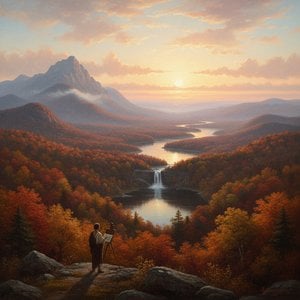
The Sublime Landscape: Exploring the Hudson River School Movement
Explore the captivating world of the Hudson River School! Discover the history, artists, and defining characteristics of this iconic American art movement. Learn about Romanticism's influence & find inspiration for your collection.

John Frederick Kensett: Luminosity, Landscape & the American Identity
Explore the luminous landscapes of John Frederick Kensett, a master of Luminism and key figure in the Hudson River School. Discover his serene paintings & enduring legacy with ArtsDot.


