
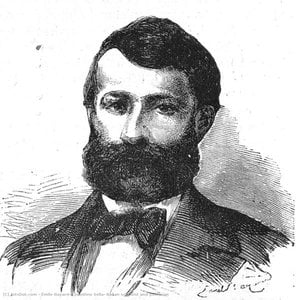
Портрет на Émile Bayard

Вашият пътеводител към 21-те най-известни картини на Émile Bayard

Обновено Октомври 2026 · класирано според нашия индекс на популярност (търсения, посещения и поръчки за всяко произведение) · 21 творби на Émile Bayard в нашия каталог

Накратко

Най-известното произведение на Émile Bayard е Quentino Sella, Italian scientist and politician (1862). Следващи в списъка са Raffaele Conforti, Italian politician (1862) и Mohamed Saïd Pasha, Viceroy of Egypt and Ethiopia (1862). В нашия каталог има 21 произведения на Émile Bayard; този пътеводител представя 21 най-известни от тях, заедно с годината, музея и историята на всяко произведение.

1837 – 1891, La Ferté-sous-Jouarre Academicism Най-много творби: Musée Victor Hugo

10-те най-важни картини на Émile Bayard, които трябва да познавате

От 11 до 21 произведения: още картини от Émile Bayard

Къде можете да видите картините на Émile Bayard

3 музея, които притежават най-голям брой от картините на тази страница.

Музеи Град Творения на Émile Bayard Картини от този списък
Musée Victor Hugo, ParisMusée Victor Hugo Paris 1 Cambronne
Russell-Cotes Art Gallery - Museum, BournemouthRussell-Cotes Art Gallery - Museum Bournemouth 1 A Peasant Girl, Brittany, France
Метрополитън Музей на изкуствата, Ню ЙоркМетрополитън Музей на изкуствата Ню Йорк 1 A soldier was signaling to them to stay away

Десетилетие по десетилетие: най-известното произведение на всеки Émile Bayard

Произведения по десетилетия

Изберете десетилетие, за да видите неговото най-значимо произведение.

Émile Bayard: бързи отговори за картините

Коя е най-известната картина на Émile Bayard?Вижте отговора

На върха на списъка е Quentino Sella, Italian scientist and politician (1862). Непосредствено след него: Raffaele Conforti, Italian politician (1862) и Mohamed Saïd Pasha, Viceroy of Egypt and Ethiopia (1862).

На каква възраст е бил Émile Bayard, когато е създал Quentino Sella, Italian scientist and politician?Вижте отговора

На 25 години. Émile Bayard е роден/а в 1837, а Quentino Sella, Italian scientist and politician е от 1862 г.

Кои са 10-те най-известни картини на Émile Bayard?Вижте отговора

Quentino Sella, Italian scientist and politician, Raffaele Conforti, Italian politician, Mohamed Saïd Pasha, Viceroy of Egypt and Ethiopia, Untitled (AQRFFZ), Untitled (AQRFFT), Untitled (AQRFFX), Untitled (AQRFFV), Untitled (AQRFG3), Lantenac и The hero Yashitzone. Годината на създаване и музейът на всяка от тях са посочени в списъка по-горе.

Колко произведения на Émile Bayard има във вашия каталог?Вижте отговора

В нашия каталог има 21 произведения на Émile Bayard, датирани от 1862 до 1887.

В кои музеи можете да видите известните произведения на Émile Bayard?Вижте отговора

Повечето от тях ще откриете в Musée Victor Hugo (Paris), Russell-Cotes Art Gallery - Museum (Bournemouth) и Метрополитън Музей на изкуствата (Ню Йорк). Списъкът с музеи по-горе съдържа пълното разпределение.

Кога Émile Bayard създава най-известните си произведения?Вижте отговора

В 1870s, повече от всяко друго време: 11 от 21 произведения на тази страница са от този период, като Untitled (AQRFFZ) са сред тях.

Кои са първото и последното известни произведения на Émile Bayard?Вижте отговора

Най-старото произведение тук е Quentino Sella, Italian scientist and politician (1862), а най-новото е A Peasant Girl, Brittany, France (1887).

С кой стил или художествено направление е известен Émile Bayard?Вижте отговора

Academicism, както можете да видите в произведенията на тази страница.

Къде мога да поръчам репродукция на Émile Bayard?Вижте отговора

Да. Всяка картина на тази страница е налична като ръчно рисувано маслено репродукция или като принт, в подходящ за Вас размер. Просто отворете страницата на картината, за да направите поръчка.

Историята на Émile Bayard

A Bridge Between Worlds: The Life and Art of Émile Bayard

Émile-Antoine Bayard, born in the tranquil French town of La Ferté-sous-Jouarre in 1837, emerged as a pivotal figure in 19th-century illustration. He wasn’t merely a recorder of his time but an active participant in shaping how stories were told and visualized—a bridge between the established traditions of academic art and the burgeoning world of modern visual storytelling. Bayard's journey began with formal training under Léon Cogniet, beginning in 1853, where he spent five years honing his skills. Even as a young student, a creative spark ignited within him; at just fifteen years old, he began publishing cartoons under the intriguing pseudonym *Abel de Miray*, hinting at the artistic ambition that would define his life. This early foray into publication wasn’t simply youthful experimentation but a declaration of intent—a desire to communicate and connect with an audience through imagery.

From Diverse Techniques to Literary Visions

The years between 1857 and 1864 were formative for Bayard, a period dedicated to exhaustive exploration across various artistic mediums. He immersed himself in charcoal drawings, paintings, watercolors, woodcuts, engravings, and lithographs—a deliberate attempt to master the diverse tools available to a visual artist. This foundational period wasn’t about finding one definitive style but rather building a versatile skillset that would later become his hallmark. It allowed him to approach each project with a nuanced understanding of how different techniques could best serve the narrative at hand. As photography began its ascent, challenging the role of documentary illustration, Bayard astutely recognized the shifting landscape and skillfully pivoted towards illustrating novels—a realm where artistic interpretation and imagination held immense power. He quickly became sought after for his ability to breathe life into literary worlds.

Illustrating a Nation’s Imagination

From 1864 onward, Bayard's career blossomed as an illustrator, initially documenting current events for magazines—including the tumultuous period of the Franco-Prussian War (1870–71). However, it was his work with literary classics that cemented his legacy. He lent his talents to iconic works such as Victor Hugo’s *Les Misérables*, Harriet Beecher Stowe’s *Uncle Tom's Cabin*, Alphonse Daudet’s *L’Immortel*, Daniel Defoe’s *Robinson Crusoe*, and, perhaps most notably, Jules Verne’s *From the Earth to the Moon*. His illustration of Cosette from *Les Misérables* is arguably his most recognizable achievement—an image so powerful that it was later adapted for the logo of the renowned Cameron Mackintosh musical adaptation. But beyond mere representation, Bayard's illustrations possessed a unique ability to capture the emotional core of these stories, resonating deeply with readers and shaping their perceptions of beloved characters and narratives.

Pioneering Visions and Lasting Influence

Bayard’s contribution extends far beyond simply illustrating popular novels; he was a true visionary who helped define new artistic frontiers. His artwork accompanying Jules Verne's *From the Earth to the Moon* is considered among the first examples of scientific space art, marking a departure from purely mystical depictions of spaceflight and embracing a more grounded, scientifically informed aesthetic. This pioneering approach laid the groundwork for future generations of science fiction artists, solidifying his place as a significant figure in both illustration history and the early development of science art. His influences were rooted in the academic style imparted by Léon Cogniet, but Bayard’s work also reflected the changing cultural landscape of 19th-century France—embracing new technologies like lithography and responding to the growing popularity of serialized novels. He understood that illustration wasn't merely about replicating reality; it was about enhancing it, interpreting it, and making it accessible to a wider audience. Émile Bayard passed away in Cairo in 1891, leaving behind a rich legacy of illustrations that continue to captivate audiences today—a testament to his skill, versatility, and enduring ability to bring literary worlds vividly to life through the power of visual storytelling.