Giovanni Lanfranco: A Leading Figure of Baroque Painting
- Born: Parma, Italy (1582)
- Died: 1647
Early Life and Training
Giovanni Gaspare Lanfranco was born in Parma in 1582, the third son of Stefano and Cornelia Lanfranchi. His artistic talent was recognized early on, leading to an apprenticeship with Agostino Carracci, brother of Annibale Carracci, a prominent Bolognese artist. He also worked alongside Sisto Badalocchio in the Farnese palaces of Parma. Lanfranco's training continued within Annibale Carracci’s large workshop in Rome, where he contributed to projects like the Galleria Farnese, including work on the panel of Polyphemus and Galatea. This period exposed him to a vibrant artistic environment and laid the foundation for his future career.
Development and Artistic Style
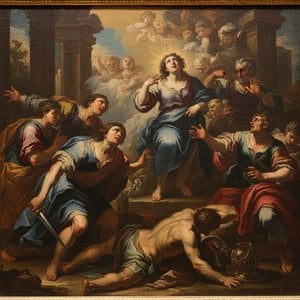
Following Annibale Carracci's death in 1609, Lanfranco briefly returned to Parma before re-establishing himself in Rome by 1612. He developed a distinctive style characterized by dynamic compositions, theatrical lighting, and a visionary approach particularly suited for ceiling frescoes. While influenced by the late works of Ludovico Carracci and possibly Caravaggio, he also demonstrated a strong affinity for Correggio’s decorative style. His early works show an eclectic range, incorporating elements from various masters while gradually forging his own path. A key aspect of his development was his ability to create illusionistic effects in fresco painting, contributing significantly to the Baroque aesthetic.
Major Achievements and Commissions
Lanfranco’s career flourished under Pope Paul V, who commissioned numerous works from him. Some of his most significant achievements include:
- Frescoes at Palazzo Mattei: Demonstrating his growing mastery of perspective and illusionism.
- Villa Borghese Ceiling (Gods of Olympus): A monumental work showcasing a complex narrative and dynamic figures.
- Sala de' Corazzieri and Sala Regia at the Quirinale Palace: Further establishing his reputation as a leading fresco artist in Rome.
- The Assumption of the Virgin at Sant’Andrea della Valle: Considered his masterpiece, this ambitious dome fresco is renowned for its dramatic lighting, crowded composition, and innovative use of perspective. It exemplifies the Baroque style's emphasis on grandeur and emotional impact.
Influence and Historical Significance
Giovanni Lanfranco played a crucial role in shaping the artistic landscape of 17th-century Rome. He rivaled Domenichino for major commissions, contributing to a period of intense competition among leading artists. His innovative approach to fresco painting, particularly his mastery of illusionistic techniques and dramatic compositions, influenced subsequent generations of artists. Lanfranco’s work reflects the broader trends of the Baroque era—a focus on dynamism, emotion, and grandeur—and cemented his place as one of the most important painters of his time. His influence can be seen in later works by Francesco Solimena and other Italian artists.