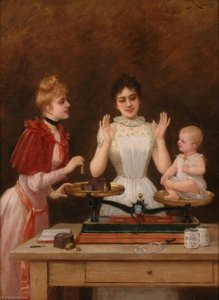
1



تحديث أكتوبر 2026 · مُرتبة حسب مؤشر شعبيتنا (عمليات البحث، والزيارات، والطلبات لكل عمل فني) · 55 أعمال لـ Emile Eisman Semenovsky في كتالوجنا
باختصار
اللوحة التي يعرفها معظم الناس للفنان Emile Eisman Semenovsky هي Marguerite (1882). يأتي بعدهما مباشرةً The Maiden of Spring (1882) وGypsy Girl (1886). من بين 55 من أعمال Emile Eisman Semenovsky في كتالوجنا، تُعد هذه 53 الأعمال هي الأكثر شهرة. يأتي كل عمل مع سنة إنتاجه، والمتحف الذي يضمّه، وملاحظة موجزة حول ما يجعله متميزاً.


المواضيع الأربعة الأكثر تكراراً في هذه الأعمال، مع ذكر أشهر مثال لكل منها.
المتاحف 1 التي تضم أكبر عدد من اللوحات الموجودة في هذه الصفحة.
| المتحف | المدينة | أعمال Emile Eisman Semenovsky | لوحات من هذه القائمة |
|---|---|---|---|
 متحف الفنون التاريخية |
فيينا | 1 | Portrait Of A Woman In A White Head Scarf; And Portrait Of A Woman In A Red Tunic With Gold Trim |
12 عاماً من أعمال Emile Eisman Semenovsky، من 1882 إلى 1893: تصفحها عاماً بعد عام واكتشف أشهر القطع الفنية لكل منها.
اختر سنة لعرض أعمالها.
تتصدر القائمة Marguerite (1882)، ويليها مباشرة The Maiden of Spring (1882) وGypsy Girl (1886).
عمره 23 عاماً. وُلد Emile Eisman Semenovsky في 1859، ويعود تاريخ Marguerite إلى 1882.
Marguerite, The Maiden of Spring, Gypsy Girl, Leisure Moments, Genre Scene, Lady in a Hat, A Parisian Beauty, The Black Hat, Tea-time و A Reclining Beauty. ستجد سنة الإنتاج والمتحف الخاص بكل منها في القائمة أعلاه.
لدينا 55 من أعمال Emile Eisman Semenovsky في كتالوجنا، وتتراوح تواريخها من 1882 إلى 1893.
ستجد معظمها في متحف الفنون التاريخية (فيينا). وتوفر قائمة المتاحف أعلاه تفصيلاً كاملاً.
في 1882، أكثر من أي وقت مضى: 2 من أصل 53 قطعة في هذه الصفحة تعود إلى تلك الفترة، من بينها Marguerite.
أقدم قطعة هنا هي Marguerite (1882)؛ وأحدثها هي Genre Scene (1893).
Women (11), Russian art (7) و Clothing (6) من أصل 53 قطعة في هذه الصفحة.
Academic realism و Realism، كما يمكنك أن ترى في الأعمال الفنية في هذه الصفحة.
نعم. كل لوحة في هذه الصفحة متاحة كنسخة زيتية مرسومة يدوياً أو كمطبوعة، بالمقاس الذي يناسبك. ما عليك سوى فتح صفحة اللوحة للطلب.
Émile Eisman-Semenowsky remains a captivating figure in the late nineteenth-century Parisian art scene, an artist whose work serves as a bridge between the rigorous discipline of academic realism and the fleeting, luminous qualities of Impressionism. Born in Poland around 1857, his early life is shrouded in much of the mystery that often surrounds artists of great talent but sparse documentation. Likely of Jewish descent, he moved through the cultural landscapes of Eastern Europe before finding his creative home in France. This movement between worlds—from the traditions of his Polish roots to the avant-garde energy of Paris—imbued his work with a unique perspective, allowing him to capture a sense of "otherness" that would become his artistic hallmark.
His training in Paris placed him at the heart of a transformative era. During this time, the art world was deeply enamored with Orientalism, a movement characterized by a romanticized fascination with the cultures and landscapes of the East. Eisman-Semenowsky did not merely observe this trend; he mastered it through a technique he famously referred to as “butterfly painting.” This method utilized delicate, evocative brushwork that mimicked the ephemeral beauty of nature, allowing him to render textures—the sheen of silk, the softness of skin, and the intricate patterns of embroidered vests—with an almost tactile grace. His ability to blend the structural precision of classical portraiture with the light-drenched spontaneity of Impressionism created a visual language that felt both timeless and modern.
The heart of Eisman-Semenowsky’s oeuvre lies in his profound devotion to the female form, often presented through the lens of exoticized beauty. His portraits are rarely mere likenesses; they are atmospheric studies of grace and ornamentation. In works such as "A Young Beauty In An Imperial Vest," one can observe how he uses warm tones and rich textures to celebrate a sense of cultural opulence. He had a remarkable talent for capturing the interplay of light on fabric, making the viewer feel the weight of heavy embroidery and the lightness of sheer veils. This focus on genre painting allowed him to tell stories of a romanticized world, where every subject seemed caught in a moment of quiet, dignified splendor.
Beyond the purely decorative, his work often touched upon the soulful connection between the subject and their environment. Whether depicting a girl with a vibrant red umbrella or a young woman amidst soft, romantic roses, there is an underlying sense of narrative depth. His paintings frequently feature:
Though his life ended in 1911, the impact of Eisman-Semenowsky’s vision continues to resonate within the history of nineteenth-century art. He stood at a pivotal moment when the boundaries of painting were being redrawn, and he navigated this transition with unparalleled elegance. His significance lies not only in his technical mastery but in his ability to synthesize disparate influences—the academic, the impressionistic, and the exotic—into a cohesive and emotionally stirring body of work. Today, his paintings remain cherished for their ability to transport the viewer to a world of idealized beauty, reminding us of an era when the canvas was a window into the most enchanting corners of the human imagination.