
- الرئيسية

- مقالات
- The Subconscious Canvas: Exploring Dream Imagery in Art History & Contemporary Practice
The Subconscious Canvas: Exploring Dream Imagery in Art History & Contemporary Practice

فهرس المحتويات
The Ancient Roots of Dream Interpretation in Art
Dream interpretation is the process of assigning meaning to dreams. In many ancient societies, such as those of Egypt and Greece, dreaming was considered a supernatural communication or a means of divine intervention, whose message could be interpret...
For millennia, the ephemeral realm of dreams has captivated humanity, serving as a source of prophecy, spiritual guidance, and profound artistic inspiration. Long before Freud’s psychoanalytic theories illuminated the subconscious, ancient civilizations recognized dreams not merely as random neurological firings but as portals to other worlds – messages from deities, glimpses into the future, or reflections of the soul. Evidence of this fascination is etched into the very foundations of Mesopotamian culture, dating back to at least 3100 BC. Kings like Gudea meticulously documented their nocturnal visions, believing them to be divine mandates influencing temple construction and ensuring prosperity. The Epic of Gilgamesh further illustrates this reverence, with dreams acting as pivotal plot devices, foretelling events and revealing character motivations. These early interpretations weren’t simply about predicting outcomes; they were deeply interwoven with the fabric of daily life, shaping political decisions and religious practices. The Assyrians built temples dedicated to Mamu, the god of dreams, underscoring their belief in a supernatural agency governing these nightly experiences. This ancient preoccupation wasn't limited to the East; the Greeks constructed Asclepieions – healing temples where individuals sought cures through induced dreams, believing divine intervention occurred within the subconscious state. The act of dream interpretation itself was often entrusted to priests or specialized seers, highlighting its importance as a sacred and complex practice.
Surrealism: Unveiling the Subconscious Mind on Canvas
 The key of dreams 1
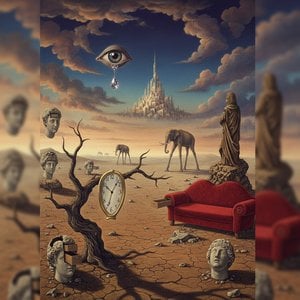
The 20th century witnessed a radical shift in our understanding – and artistic representation – of dreams with the emergence of Surrealism. Influenced profoundly by the writings of Sigmund Freud, artists sought to liberate themselves from the constraints of reason and societal norms, believing that true creativity resided within the depths of the unconscious mind. This wasn’t merely about depicting fantastical imagery; it was a deliberate attempt to bypass conscious control and tap into the raw, unfiltered power of dreams. Salvador Dalí, perhaps the most iconic figure of the movement, masterfully translated this philosophy onto canvas. His works, such as One Second Before Awakening from a Dream Caused by the Flight of a Bee Around a Pomegranate, are not literal representations of dreams but rather meticulously constructed landscapes of desire, anxiety, and irrationality. The melting clocks in The Persistence of Memory aren’t simply bizarre objects; they symbolize the subjective experience of time within the dream state, distorted and fluid. Rene Magritte similarly explored the enigmatic nature of reality through works like The Key of Dreams 1, challenging viewers to question their perceptions and embrace ambiguity. Surrealist techniques – automatism, free association, and collaborative games like Exquisite Corpse – were all designed to unlock the subconscious and allow it to dictate the creative process. MoMA’s collection provides a rich testament to this movement's enduring legacy, showcasing how artists actively sought to visualize the illogical and capture the fleeting essence of the dream world.
Symbolism & Dreams: Deciphering Hidden Meanings in Masterpieces
 Decoding the Veil: Symbolism in Art – A Comprehensive Exploration of Meaning & Interpretation
Explore the rich world of art symbolism! Uncover hidden meanings in masterpieces from Renaissance allegories to modern movements. A comprehensive guide for enthusiasts & collectors.
While Surrealism explicitly focused on accessing the subconscious, the language of dreams has permeated art history far beyond this single movement. Throughout the Renaissance and Romantic periods, artists employed symbolism as a means of conveying complex emotions and hidden narratives, often drawing upon archetypal imagery rooted in collective unconsciousness. Understanding these symbols is crucial to unlocking the deeper meaning within masterpieces. The veil, for instance, frequently appears in art as a metaphor for illusion, concealment, or the boundary between worlds – a potent symbol reflecting the elusive nature of dreams themselves. Water, too, holds profound symbolic weight, representing both the source of life and the depths of the unconscious (as we’ll explore further). Artists often used animals to embody specific traits or emotions; snakes might represent temptation or transformation, while birds could symbolize freedom or spiritual aspiration. The interpretation of these symbols isn't always straightforward, however. Artemidorus of Daldis, a 2nd-century AD dream interpreter, emphasized the importance of context and puns, suggesting that dream images often operate on multiple levels. Deciphering these layers requires careful observation, historical knowledge, and an understanding of the artist’s cultural milieu.
Water as a Metaphor for the Fluidity of Dreams in Artistic Expression
 Fluid Reflections: Exploring Water's Symbolism in Art History – From Myth to Impressionism
Explore the rich symbolism of water in art history – from ancient myths to Impressionism's fleeting beauty. Discover masterpieces & find your perfect serene artwork with ArtsDot.com.
Amongst the myriad symbols employed by artists throughout history, water consistently emerges as a particularly potent representation of the dream state. Its inherent fluidity mirrors the ever-shifting nature of dreams – their lack of logical structure and propensity for unexpected transformations. From ancient myths featuring primordial waters giving birth to creation to Impressionist paintings capturing fleeting reflections on shimmering surfaces, water embodies both the conscious and unconscious realms. Consider the numerous depictions of mythological scenes involving rivers, oceans, or lakes; these bodies of water often serve as thresholds between worlds, representing journeys into the unknown – a fitting metaphor for the exploration of one’s inner landscape. The serene beauty captured in Impressionist works isn't merely aesthetic; it evokes the ephemeral quality of dreams, their tendency to dissolve and reform with each passing moment. Artists like Monet and Renoir weren’t simply painting water; they were capturing its essence – its ability to reflect light, distort reality, and evoke a sense of tranquility or unease. This symbolic resonance extends beyond representational art; even abstract works utilizing blue hues can subconsciously trigger associations with water, evoking feelings of depth, mystery, and emotional fluidity.
Pop Surrealism and Beyond: Contemporary Artists Exploring Inner Worlds
The fascination with dreams didn’t wane with the decline of Surrealism. In the post-war era, Pop Surrealism emerged as a vibrant collision of culture, subconscious imagery, and contemporary aesthetics. Artists like George Condo and Robert Williams embraced a more accessible – yet equally unsettling – approach to dreamlike representation, often incorporating elements of popular culture and lowbrow art into their work. This movement challenged traditional notions of “high” and “low” art, demonstrating that the subconscious could be explored through any medium or style. Today, contemporary artists continue to push boundaries in their exploration of inner worlds. Digital art allows for increasingly complex visualizations of dreams, while photo-to-painting services offer a unique opportunity to transform personal experiences into tangible artworks. The enduring appeal of dream imagery lies in its universality – the shared human experience of navigating the subconscious realm. Whether through meticulously rendered oil paintings or abstract digital creations, artists continue to tap into this rich source of inspiration, offering viewers glimpses into their own inner landscapes and prompting reflection on the mysteries of the mind. At ArtsDot, we are committed to making these masterpieces – both historical and contemporary – accessible to collectors worldwide, providing expert guidance and ensuring a seamless art acquisition experience.
مقالات ذات صلة

أعلى ١٠ روائع تحدد ملامح السريالية: رحلة في عالم اللاوعي والإبداع الفني
اكتشف روائع السريالية! استكشف ١٠ لوحات أيقونية تحدد حركة السريالية مع دالي وماغritte. تعرف على الفنانين، التقنيات، و قصص هذه التحف الفنية. احصل على نسخ فنية عالية الجودة وديكور منزلي فريد على ArtsDot.com


Unveiling Inner Worlds: Exploring Psychological Depth in 20th & 21st Century Art
Explore the profound psychological themes within 20th & 21st-century art. Discover Expressionism, Surrealism & more – and learn how to collect impactful pieces with confidence. Expert insights for discerning collectors.

Max Klinger: Symbolism, Science & the Subconscious – A German Master's Legacy
Explore the captivating world of Max Klinger, a pivotal German Symbolist artist. Discover his groundbreaking prints, psychological themes, & influence on modern art movements like Expressionism. Expert analysis and insights.

The Ethereal Realm on Canvas: Exploring Themes of Fantasy & Imagination in Art History
Explore the captivating world of fantasy & surreal art history with ArtsDot. Discover iconic artists like De Chirico & Moreau, and expert guidance for collecting timeless masterpieces. Find your dream artwork today!
Salvador Dalí: Surrealism, Subconscious Exploration & Artistic Innovation
Explore the captivating world of Salvador Dalí! Discover his surrealist masterpieces, profound connection to Freud's theories, and lasting impact on art & culture. A deep dive into a visionary artist.

