

Sr. John E. Ferneley: Equestrian Portraiture & England's Social Fabric
فهرس المحتويات
The Rise of Melton Mowbray: A Sporting Epicenter
 John, Henry and Francis Grant at Melton
John, Henry & Francis Grant at Melton (1823) by sr John Ferneley. A detailed oil painting of a classic British fox hunt scene. Realistic style, muted tones, & historical appeal.
The early nineteenth century witnessed a fascinating convergence of wealth, leisure, and artistic patronage in the small market town of Melton Mowbray, Leicestershire. Before its rise to prominence, Melton was a relatively unassuming locale; however, it rapidly transformed into the undisputed heartland of British fox hunting – and with that transformation came an unprecedented demand for artists capable of capturing the thrill and elegance of the sport. This burgeoning social scene attracted not only the aristocracy but also a sophisticated clientele eager to immortalize their horses, hounds, and sporting estates. It was within this vibrant milieu that John E. Ferneley established his studio, becoming inextricably linked with the very essence of Melton’s golden age. The town's central location, coupled with excellent hunting grounds, drew enthusiasts from across the country, creating a unique atmosphere where horsemanship was celebrated and artistic commissions flourished. The development of organized hunts – notably the Quorn, Belvoir, and Cottesmore – provided a consistent subject matter for artists like Ferneley, who skillfully documented the rituals, personalities, and landscapes that defined this exclusive world.
Ferneley's Artistic Style: Realism, Detail & the Essence of the Horse
 Sir John Thorold's Bay Hunters With Their Groom In A Stable
John Ferneley Sr.'s 'Sir John Thorold’s Bay Hunters' captures 19th-century equestrian life in oil. Realistic detail, warm tones & historical scene – a stunning sporting artwork.
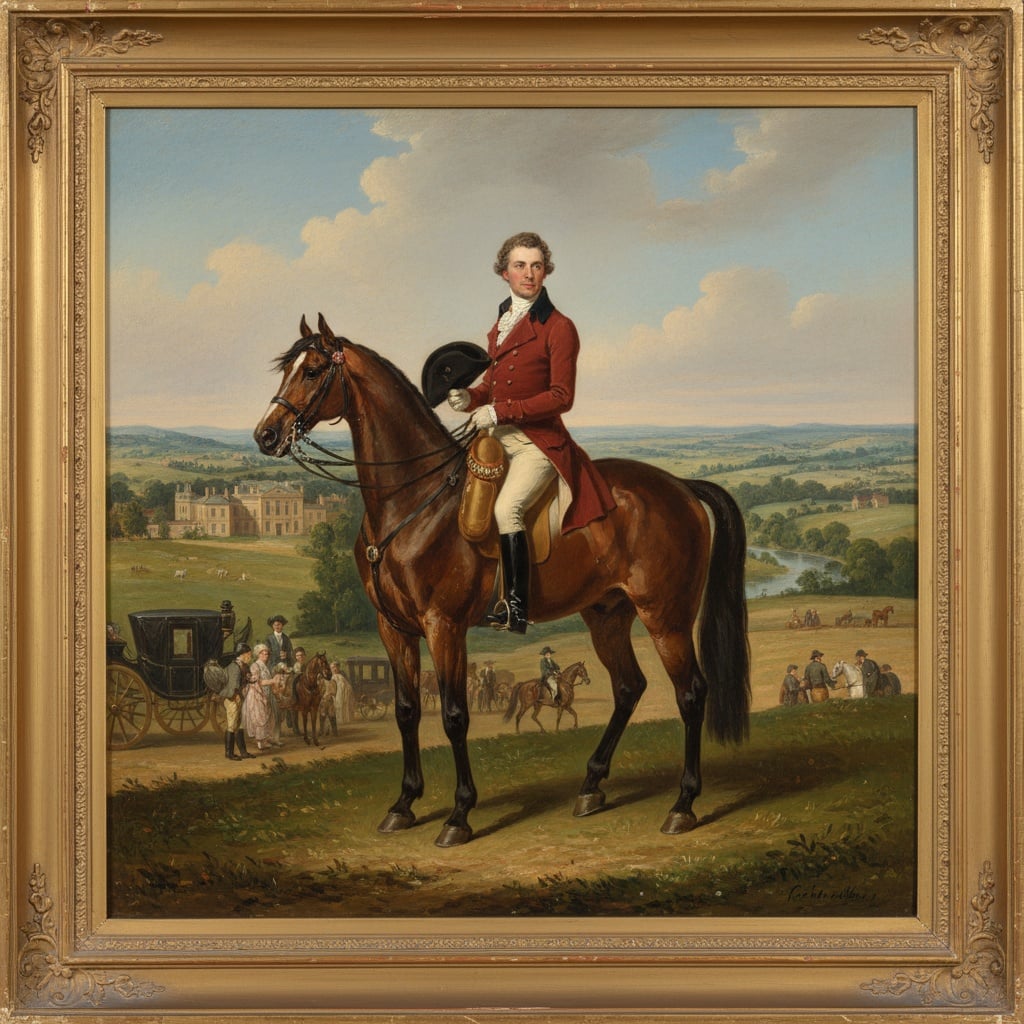
John Ferneley’s reputation rests not merely on *what* he painted – sporting scenes were a popular genre – but on *how* he painted them. While influenced by his early training under Benjamin Marshall, Ferneley developed a distinctive style characterized by meticulous realism and an almost obsessive attention to detail. His horses are not simply representations of anatomy; they possess a palpable sense of power, temperament, and individual character. He masterfully captured the musculature, coat texture, and expressive eyes that brought each animal to life on canvas. Unlike some of his contemporaries who favored idealized depictions, Ferneley’s work often embraced a more grounded approach, portraying horses with their imperfections and unique markings. This commitment to authenticity resonated deeply with his patrons, many of whom were themselves avid horsemen. His use of muted tones – earthy browns, greens, and greys – further enhanced the sense of realism, evoking the atmosphere of the English countryside. A subtle “blasted” tree often appears in his compositions, becoming a signature element that adds depth and visual interest to his scenes.
Patronage and Society: Capturing the Gentry on Canvas
 John Burgess of Clipstone, Nottinghamshire, on a Favourite Horse, with his Harriers
Admire 'John Burgess of Clipstone' by sr John E Ferneley! A stunning 1838 equine portrait featuring a nobleman and his harriers. Hand-painted reproduction available.
Ferneley’s success was inextricably linked to the patronage of the British gentry. His clientele included members of the aristocracy, wealthy landowners, and prominent figures like Beau Brummel and Count d'Orsay – individuals who embodied the style and sophistication of the era. Commissions were rarely simple portraits; they were often elaborate group scenes depicting hunts in full cry, horses being groomed at stables, or landowners with their families and estates. These paintings served not only as records of ownership but also as statements of social status and refined taste. The artist understood the importance of portraying his patrons favorably, subtly enhancing their image while maintaining a degree of realism. John, Henry & Francis Grant at Melton (1823), for example, is a remarkable depiction of three leading figures in the Meltonian sporting world, showcasing their horses and hounds with meticulous detail and capturing the camaraderie of the hunt. The paintings were often collaborative efforts, reflecting the social dynamics of the time; Ferneley frequently worked alongside Sir Francis Grant, exchanging expertise and contributing to each other’s compositions.
Beyond the Hunt: Family Life and Ferneley’s Broader Oeuvre
While best known for his hunting scenes, Ferneley's artistic scope extended beyond the thrill of the chase. He also painted portraits of family life, servants, and livestock, offering a more intimate glimpse into the world of rural England. Mr Pare’s Coachman and his Newfoundland Dog (1823), for instance, reveals a sensitivity to the lives of those who supported the gentry's lifestyle. These works demonstrate Ferneley’s versatility and his ability to capture the nuances of human relationships alongside his renowned skill with animals. He also produced numerous paintings of prize sheep and cattle, reflecting the importance of agriculture in the Leicestershire landscape. His detailed account books, meticulously maintained from 1807 to 1860, provide invaluable insights into his commissions, patrons, and artistic practices. These records reveal a prolific artist who consistently sought to meet the demands of his discerning clientele while maintaining his own distinctive style.
The Lasting Legacy: Ferneley's Influence on British Sporting Art
John E. Ferneley’s impact on British sporting art is undeniable. Though often overshadowed by George Stubbs, he is rightly regarded as one of the great equine artists of his time. His meticulous realism, attention to detail, and ability to capture the essence of the horse set him apart from his contemporaries. His paintings not only documented a specific moment in history – the golden age of fox hunting – but also provided valuable insights into the social dynamics, landscapes, and artistic tastes of 19th-century England. Sir John Thorold’s Bay Hunters with Their Groom In A Stable, exemplifies his ability to portray both the grandeur of equestrian life and the intimate connection between horse and handler. Today, Ferneley's works are highly sought after by collectors and museums alike, representing a tangible link to a bygone era. His legacy continues to inspire artists and art enthusiasts, ensuring that his contribution to British sporting art will be celebrated for generations to come. At ArtsDot.com, we are proud to offer exquisite reproductions of Ferneley’s masterpieces, allowing you to bring the elegance and sophistication of 19th-century England into your own home.
مقالات ذات صلة

John Nost Sartorius: Equestrian Portraiture & the Shifting Social Landscape of 18th-Century England
Explore the captivating equestrian art of John Nost Sartorius (1759-1828). Discover his detailed paintings of racehorses, hunting scenes & aristocratic life. Learn about collecting Sartorius's work and its lasting value.


The Equine Muse: A Historical & Artistic Exploration of Horses in Painting
Explore the captivating history of horses in painting! Discover Renaissance masterpieces, Baroque grandeur & expert insights for collecting equestrian art. Learn about symbolism, techniques & lasting value with ArtsDot.

John Frederick Herring Sr.: Equestrian Mastery & the Rise of Sporting Art in Victorian England
Explore the life & work of John Frederick Herring Sr., a leading Victorian equestrian artist. Discover his masterpieces, patronage, techniques & investment potential. Expert insights for collectors.

