

George Stubbs: Anatomical Precision & Romantic Vision in 18th-Century British Art
فهرس المحتويات
The Self-Trained Anatomist: Stubbs’s Early Life & Pursuit of Knowledge
 Wikipedia: George Stubbs
George Stubbs (25 August 1724 – 10 July 1806) was an English painter, best known for his paintings of horses. Self-trained, Stubbs learnt his skills independently from other great artists of the 18th century such as Joshua Reynolds and Thomas Gainsb...
George Stubbs, a name synonymous with the majestic beauty of horses and the burgeoning Romantic spirit of 18th-century Britain, was not a product of formal artistic training. Born in Liverpool in 1724, his path to becoming one of England’s most celebrated painters was remarkably self-directed. His father, a currier by trade, initially steered him towards the family business, but young George harbored an insatiable curiosity for the natural world – specifically, its intricate anatomy. This early fascination wasn't merely aesthetic; it was a deeply inquisitive drive to understand the very *structure* of life itself. He began sketching bones procured from local sources, demonstrating a precocious talent and unwavering dedication even at a young age. A brief apprenticeship with Hamlet Winstanley proved unsatisfying, as Stubbs chafed against simply copying existing works; his ambition lay in observing nature directly, a pursuit that would define his career.
The limited biographical details of Stubbs’s formative years are largely gleaned from the recollections of his friend, Ozias Humphry. These accounts reveal a man relentlessly pursuing knowledge independently, driven by an almost scientific rigor. He wasn't content with surface appearances; he sought to unravel the underlying mechanisms that gave form and movement to living creatures. This commitment would ultimately lead him on a groundbreaking journey – one that blended artistic skill with anatomical precision in a way rarely seen before.
Dissecting Reality: The Pioneering Anatomy of the Horse
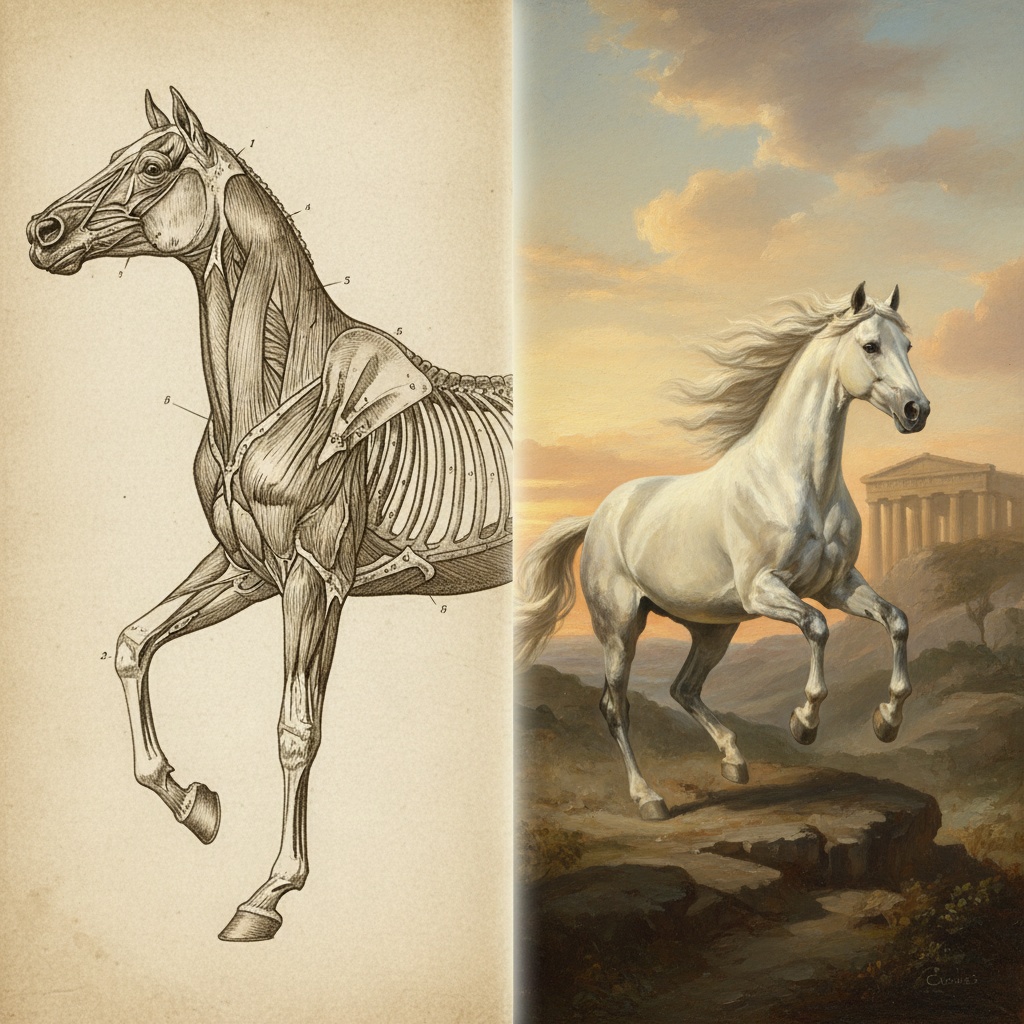
Stubbs’s most significant contribution to art history lies in his meticulous study of equine anatomy. In 1756, he embarked on an extraordinary undertaking: a systematic dissection of horses over a period of eighteen months. He constructed a makeshift studio – essentially suspending horse carcasses from the rafters of a barn – allowing him unparalleled access to their muscular and skeletal systems. This wasn’t simply about creating accurate depictions; it was a quest for *truth*, a desire to understand the horse not as an idealized form, but as a complex biological entity.
The resulting drawings, compiled into his groundbreaking treatise, The Anatomy of the Horse (1766), were revolutionary. Prior anatomical studies often relied on inaccurate or incomplete representations. Stubbs’s work, however, was characterized by its unparalleled detail and clarity. He captured not just the bones and muscles, but also the subtle interplay of ligaments, nerves, and blood vessels. The engravings accompanying the text are remarkable for their lifelike quality and expressive power, elevating anatomical illustration to an art form in itself. This treatise wasn’t merely a resource for artists; it became essential reading for veterinarians and anatomists alike.
Beyond Equine Forms: Expanding Subject Matter and Artistic Style
 George Stubbs
George Stubbs (1724-1806): Celebrated English painter renowned for his anatomical accuracy & masterful depictions of horses. Pioneer of Romanticism, famous for 'Whistlejacket'. Explore his equine art & legacy.
While Stubbs is most celebrated for his horse paintings, his artistic scope extended far beyond the stable. He skillfully depicted dogs, lions, tigers, monkeys, and even exotic birds, always bringing to bear his signature anatomical precision. His series of paintings featuring a lion attacking a horse – such as “A Lion & Tiger” (1779) – represent a pivotal moment in the development of Romanticism. These works weren’t simply depictions of dramatic encounters; they explored themes of power, vulnerability, and the untamed forces of nature.
Stubbs's style is characterized by a unique blend of realism and idealism. He wasn’t interested in portraying animals as mere beasts of burden or objects of sport. Instead, he imbued them with a sense of dignity and grace, often placing them against serene landscapes that emphasized their inherent beauty. His compositions are carefully balanced, his brushwork refined yet expressive, and his use of light and shadow masterful. He possessed an exceptional ability to capture the *essence* of each animal, conveying its personality and spirit.
A Lion & Tiger, and the Romantic Impulse in Animal Portraiture
 A Lion and Tiger
Discover George Stubbs’ ‘A Lion & Tiger,’ a stunning 1779 ceramic painting showcasing remarkable animal realism & dramatic composition. Explore this masterpiece of Romanticism!
“A Lion & Tiger,” a stunning ceramic painting from 1779, exemplifies Stubbs’s mastery of dramatic composition and his growing embrace of Romantic sensibilities. The work depicts two apex predators locked in a fierce struggle, their muscular bodies contorted with power and intensity. The realism is breathtaking – the texture of their fur, the glint in their eyes, the sheer physicality of their forms are rendered with astonishing accuracy.
However, “A Lion & Tiger” is more than just a display of technical skill. It’s a powerful exploration of primal forces, a meditation on the beauty and brutality of nature. The painting evokes a sense of awe and wonder, while also hinting at the inherent dangers of the wild. This fascination with the sublime – the combination of terror and beauty – is a hallmark of the Romantic movement, and Stubbs was among its earliest and most influential proponents. The work’s ceramic medium itself adds to its unique character, offering a tactile quality that enhances its dramatic impact.
Royal Patronage and Lasting Legacy: Stubbs’s Influence on Art History
Stubbs enjoyed considerable royal patronage throughout his career, further solidifying his reputation as one of England’s leading artists. His paintings were sought after by collectors and connoisseurs alike, and he received commissions from prominent figures such as the Second Lord Bolingbroke. His most famous work, “Whistlejacket” (1762), a portrait of a racehorse belonging to Charles Wyndham, 2nd Earl of Egremont, remains an iconic image of equine beauty and power.
Stubbs’s influence on art history is profound. He elevated animal portraiture to a new level of artistic sophistication, combining anatomical accuracy with expressive detail. His work paved the way for later Romantic artists who sought to capture the emotional intensity and sublime beauty of nature. Today, his paintings are prized possessions in museums and private collections around the world, continuing to inspire awe and admiration.
Collecting George Stubbs Today: Investing in a Master of British Art
Acquiring a work by George Stubbs is not merely purchasing a painting; it’s investing in a piece of art history. His paintings are highly sought after by collectors, and their value continues to appreciate over time. While original works command significant prices, reproductions – particularly those created through the meticulous handmade oil painting process offered by ArtsDot.com – provide an accessible way to experience the beauty and artistry of Stubbs’s work.
ArtsDot.com specializes in creating museum-quality reproductions that capture the essence of the original masterpieces. From detailed horse paintings to dramatic scenes like “A Lion & Tiger,” our skilled artists meticulously recreate each brushstroke, ensuring a faithful and stunning representation. Explore our collection today and discover the enduring legacy of George Stubbs – a master of British art whose work continues to captivate and inspire.
مقالات ذات صلة

The Noble Steed: A Historical & Artistic Exploration of Equestrian Art Across Cultures
Explore the captivating history of equestrian art with ArtsDot. Discover masterpieces from Velázquez to Van Dyck & learn about collecting these timeless works. Expert insights for discerning connoisseurs.


John Nost Sartorius: Equestrian Portraiture & the Shifting Social Landscape of 18th-Century England
Explore the captivating equestrian art of John Nost Sartorius (1759-1828). Discover his detailed paintings of racehorses, hunting scenes & aristocratic life. Learn about collecting Sartorius's work and its lasting value.

