

Cubism's Revolution: 10 Masterpieces That Redefined Modern Art | ArtsDot
فهرس المحتويات
Introduction
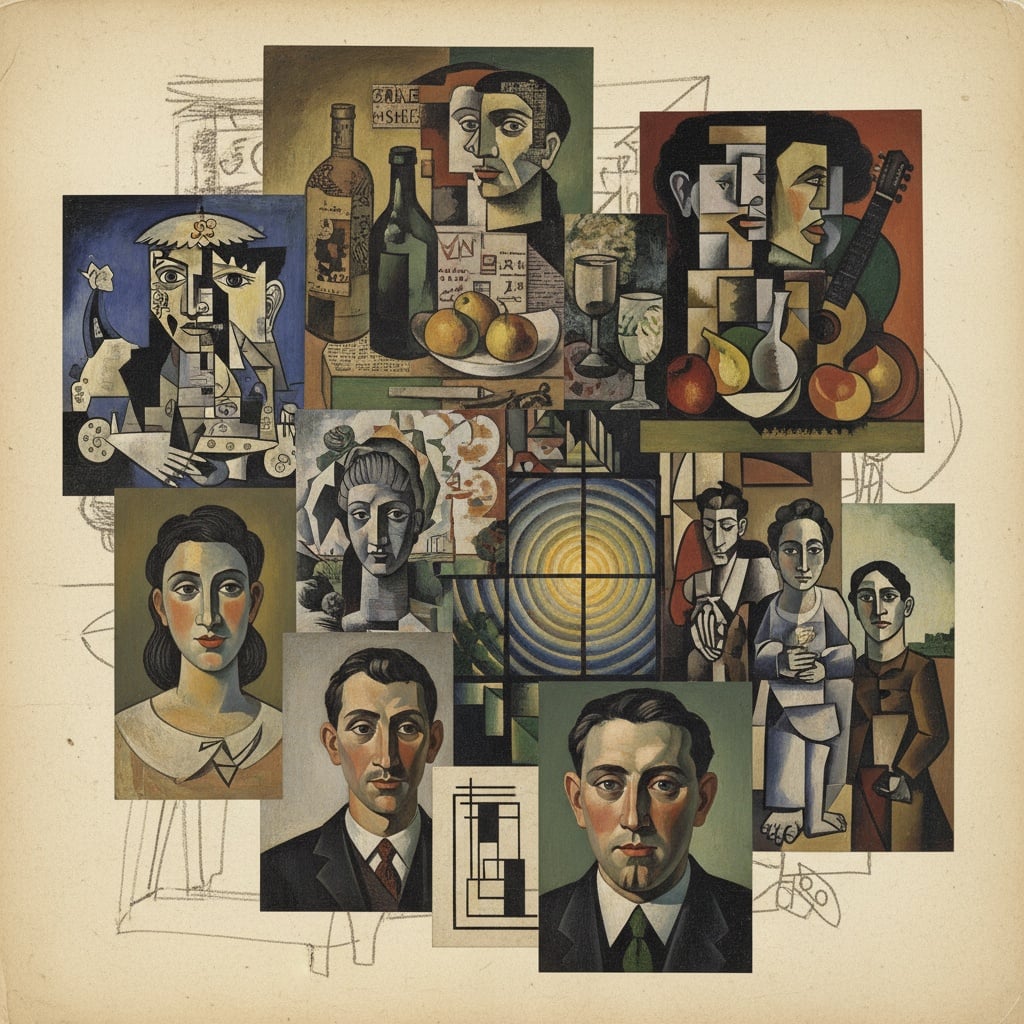
To gaze upon these ten masterpieces is to enter a realm where perception itself is fractured and reassembled, a world born from the audacious vision of Pablo Picasso and Georges Braque. The Cubist style wasn’t merely an artistic shift; it was a fundamental questioning of how we see, how we represent reality, and ultimately, what reality is .
Emerging in the early 20th century – roughly between 1907 and 1914 – Cubism arose from a confluence of factors. The rapid industrialization of Europe, coupled with advancements in science like Einstein’s theory of relativity, challenged traditional notions of space and time. Artists began to reject the single viewpoint perspective that had dominated Western art since the Renaissance, seeking instead to depict subjects from multiple angles simultaneously. This wasn't about replicating what the eye sees , but rather conveying a more complete understanding of an object’s form through intellectual analysis.
The movement initially found its voice in the works of Picasso and Braque, who collaborated closely, pushing each other to dismantle conventional forms and rebuild them on the canvas. Their early explorations – often muted palettes and fragmented figures – paved the way for Analytical Cubism, followed by the bolder, more colorful Synthetic Cubism. But Cubism quickly expanded beyond its founders, influencing artists like Juan Gris, Fernand Léger, and Robert Delaunay, each adding their unique voice to this revolutionary style.
These artworks aren’t simply historical relics; they continue to resonate powerfully today because they speak to the core of human experience. They remind us that our understanding of the world is subjective, constructed from fragments of perception and interpretation. They challenge us to look beyond the surface, to question assumptions, and to embrace ambiguity.
Prepare to embark on a journey through ten pivotal works that not only defined Cubism but also irrevocably altered the course of modern art. Each painting is a testament to the power of innovation, a bold declaration of artistic freedom, and an invitation to see the world anew.
Bull (plate X) - Pablo Picasso
 Bull (plate X) - Pablo Picasso
A stark silence emanates from Pablo Picasso’s “Bull (Plate X),” a geometric soul laid bare on paper, forever capturing the essence of raw power and distilled form.
Created in 1946, this lithograph isn't merely an image of a bull; it is a profound exploration of Cubist principles—a dismantling of traditional representation and a reconstruction of perception itself. Picasso strips away all but the essential lines and angles, presenting us with a fragmented yet undeniably potent depiction of the animal’s strength. The absence of color – rendered solely in shades of black, white, and grey – amplifies the dramatic impact, forcing our gaze to focus on the interplay of shapes and the dynamic tension within the composition.
The bull, a recurring motif throughout Picasso's career, symbolizes not only masculinity and Spanish heritage but also serves as a vehicle for his intellectual inquiry into form. The overlapping planes and fractured perspective challenge us to see beyond a single viewpoint, inviting us to piece together a more complete understanding of the subject through analytical observation.
“Bull (Plate X)” transcends its historical context, continuing to inspire contemporary interiors with its bold simplicity and sophisticated use of negative space. Its geometric harmony evokes a sense of calm strength, making it a timeless addition to any collection seeking both artistic depth and modern elegance. This masterpiece remains immortalized as a cornerstone of the Cubist movement—a testament to Picasso’s enduring legacy and his unwavering commitment to innovation in modern art , geometric abstraction , and Cubist aesthetics .
L'enlevement des Sabines - Pablo Picasso
 L'enlevement des Sabines - Pablo Picasso
A tempest of emotion captured on canvas – Pablo Picasso’s “L’enlevement des Sabines” doesn't simply depict a myth; it embodies the raw, visceral energy of conflict and its enduring impact. This monumental work, completed in 1962, stands as a powerful testament to the Cubist style’s ability to dissect reality and reveal its underlying truths.
Its inclusion among the Top 10 masterpieces is undeniable. Picasso doesn't offer a narrative illustration of the Sabine women’s abduction; instead, he presents us with a fragmented vision—a chaotic interplay of bodies, horses, and architectural elements that mirror the psychological trauma of the event. The deliberate distortion of form, the simultaneous perspectives, and the earthy palette create an unsettling yet captivating experience.
The painting's power lies in its rejection of traditional representation. By dismantling recognizable shapes into geometric planes, Picasso forces us to confront the fractured nature of perception itself. This isn’t a scene to be passively observed; it demands active engagement, inviting us to piece together meaning from the chaos.
At ArtsDot , we believe that such profound artistry should be accessible to all. Our faithful reproductions of “L’enlevement des Sabines” capture not only the painting's iconic imagery but also its emotional depth and textural richness, allowing you to bring a piece of art history—a cornerstone of Cubist aesthetics and modern art —into your home. Experience the power of Picasso’s vision firsthand, a timeless reminder of the enduring human struggle and the beauty found within disruption.
El osario (versión 3) - Pablo Picasso
 El osario (versión 3) - Pablo Picasso
Imagine a quiet room, shadows lengthening as two figures lean into each other—a moment suspended between intimacy and melancholy. Pablo Picasso’s “El osario (Versión 3)” doesn't offer a clear narrative; it evokes a feeling, a sense of shared vulnerability rendered in the language of Cubist aesthetics .
This drawing, created in 1928, is a testament to Picasso’s mastery of fragmentation and his profound exploration of human relationships. The figures are deconstructed into geometric planes, presented from multiple perspectives simultaneously—a hallmark of the movement he pioneered with Georges Braque. This isn't about depicting physical form; it’s about capturing inner emotional states, the complexities of connection and loss.
The title itself – “El osario,” meaning ossuary or bone house – adds a layer of poignant symbolism, hinting at themes of mortality and remembrance. The delicate graphite lines, meticulously hatched and cross-hatched, reveal the artist’s sensitivity to texture and light, despite the stark monochrome palette.
“El osario (Versión 3)” rightfully earns its place among the Top 10 masterpieces for its ability to move us on a deeply personal level. At ArtsDot , we understand that art is more than just decoration; it’s an invitation to contemplation, a window into the human soul. Our reproductions faithfully capture the nuance and emotional depth of Picasso's work, allowing you to bring this powerful exploration of intimacy—a cornerstone of modern art —into your own space.
Angel Fernández de Soto en el café - Pablo Picasso
 Angel Fernández de Soto en el café - Pablo Picasso
A quiet hum of conversation, the clinking of glasses—Pablo Picasso’s “Angel Fernández de Soto en el café” isn't merely a sketch; it’s an intimate glimpse into a fleeting moment, captured with the artist’s signature Cubist sensibility.
This monochrome drawing, created around 1908-1909, embodies Picasso’s revolutionary approach to representation. He doesn't seek to replicate reality but rather to dissect it—fragmenting form and presenting multiple perspectives simultaneously. The result is a dynamic composition that challenges our perception of space and depth.
The meticulous hatching and cross-hatching demonstrate Picasso’s mastery of technique, creating subtle tonal variations that convey texture and atmosphere. This dedication to craft elevates the sketch beyond a simple study; it becomes a powerful meditation on mood and psychological depth. The inclusion of Angel Fernández de Soto—a fellow artist and friend—adds a layer of personal connection.
“Angel Fernández de Soto en el café” rightfully claims its place among the Top 10 masterpieces for its subtle yet profound impact on modern art . At ArtsDot , we believe that such quiet brilliance should be accessible to all. Our reproductions faithfully capture the nuance and emotional resonance of Picasso’s work, allowing you to bring a touch of artistic innovation—a cornerstone of Cubist aesthetics —into your home.
The Diver - Pablo Picasso
 The Diver - Pablo Picasso
Pablo Picasso’s “The Diver,” completed in 1932, is more than a depiction of an athletic feat; it's a profound exploration of the human condition—a fragmented reflection on perception and emotion rendered with striking Cubist precision.
This etching with colored paper additions earns its place among the Top 10 masterpieces for its radical departure from traditional representation. Picasso dismantles form, presenting multiple viewpoints simultaneously within a defined rectangular space—a technique that challenges our very understanding of reality. The monochrome palette, reminiscent of charcoal sketches, amplifies the artwork’s intensity and invites contemplation.
The angular lines and geometric shapes aren't merely stylistic choices; they represent an attempt to capture the underlying structure of existence, mirroring the anxieties and intellectual ferment of the early 1930s. The fragmented figures evoke a sense of dynamism and disorientation, reflecting the complexities of modern life.
At ArtsDot , we believe that art should be more than just decoration; it should spark conversation and inspire reflection. Our faithful reproductions of “The Diver” allow you to bring this iconic work—a cornerstone of modern art and a testament to the power of Cubist aesthetics —into your home, inviting a timeless dialogue between culture and decor.
Sill Life with Bottle - Pablo Picasso
 Sill Life with Bottle - Pablo Picasso
Imagine a quiet afternoon, sunlight filtering through a window onto a tabletop—a moment of stillness disrupted by the radical vision of Pablo Picasso’s “Still Life with Bottle.” Executed in 1909, this artwork isn't merely an arrangement of objects; it’s a fragmented reflection on modern consciousness and a cornerstone of Cubist aesthetics.
Alongside Georges Braque, Picasso dismantled traditional perspective, fracturing forms into geometric planes that overlap and intersect. The monochrome palette—a subtle interplay of grays—amplifies the artwork’s intellectual rigor, prioritizing structure over chromatic embellishment. This deliberate reduction invites contemplation on themes of isolation and the complexities of perception.
The inclusion of two hearts introduces a poignant element of sentimentality into this otherwise analytical framework, hinting at Picasso's personal life during this period. The meticulous etching technique—characterized by precise lines and tonal variations—reveals his dedication to craft and mastery of printmaking.
“Still Life with Bottle” rightfully earns its place among the Top 10 masterpieces for its profound influence on modern art . At ArtsDot , we believe that such timeless beauty should be accessible to all. Our reproductions faithfully capture the nuance and emotional depth of Picasso’s work, allowing you to bring a touch of artistic innovation—a conversation starter—into your home.
Café in Royan - Pablo Picasso
 Café in Royan - Pablo Picasso
Imagine a quiet evening in a Parisian café—the murmur of conversation, the clinking of glasses, a fleeting moment captured in time. Pablo Picasso’s “Café ‘Royan’” – completed in 1940 – isn't merely a depiction of a seaside town; it’s a glimpse into the formative stages of his artistic revolution and a cornerstone of Cubist aesthetics.
This sketch, executed with rapid pencil strokes, embodies the core principles of Picasso’s burgeoning style: fragmentation, multiple perspectives, and an exploration of form beyond mere representation. The deliberate lack of color—a grayscale palette ranging from deep blacks to pale whites—amplifies the artwork’s intellectual rigor, prioritizing structure over chromatic embellishment.
The asymmetrical composition and overlapping planes create a sense of dynamism that reflects the anxieties of wartime Europe. While not overtly symbolic, “Café ‘Royan’” speaks volumes about Picasso’s artistic concerns during this period—a desire to capture the transient nature of experience and convey a sense of alienation.
This preparatory sketch rightfully earns its place among the Top 10 masterpieces for revealing Picasso’s unwavering commitment to pushing boundaries. At ArtsDot , we believe that such raw artistic energy should be accessible to all. Our reproductions faithfully capture the nuance and emotional depth of Picasso’s work, allowing you to bring a touch of modern art —a conversation starter—into your home.
Sketchbook no. 95 (10) - Pablo Picasso
 Sketchbook no. 95 (10) - Pablo Picasso
Before the grand canvases and iconic portraits, there were sketchbooks—intimate spaces where Pablo Picasso wrestled with form, perspective, and the very nature of reality. “Sketchbook no. 95 (10)” offers a rare glimpse into this creative process, embodying the core tenets of his groundbreaking Cubist style.
This work isn’t merely a study; it's a distillation of Picasso’s revolutionary approach to representation—a deliberate fracturing of objects into geometric planes and their simultaneous presentation from multiple viewpoints. The bulbous shape, reminiscent of a distorted head or fruit, is supported by an elongated stem-like structure, creating a dynamic asymmetry that challenges conventional notions of space.
The thick, dark lines delineate the contours, while lighter hatching techniques model forms and suggest depth—a testament to Picasso’s mastery of pencil sketching. This sketch earns its place among the Top 10 masterpieces for revealing his unwavering commitment to pushing boundaries and redefining visual perception.
At ArtsDot , we believe that art should be more than just decoration; it should spark conversation and inspire reflection. Our faithful reproductions of “Sketchbook no. 95 (10)” allow you to bring this iconic work—a cornerstone of modern art —into your home, inviting a timeless dialogue between culture and decor.
Mother and child - Pablo Picasso
 Mother and child - Pablo Picasso
A tender embrace fractured into a thousand planes—Pablo Picasso’s “Mother and Child” (1953) isn't simply a portrait of familial love; it’s an intensely layered exploration of the bonds that shape us, rendered through the revolutionary lens of Cubism .
The muted palette—soft pinks juxtaposed with greens, blues, and browns—creates a sense of intimacy while simultaneously disrupting conventional notions of representation. The figures are constructed from geometric shapes stacked upon each other, suggesting multiple perspectives and the multifaceted nature of motherhood.
This work earns its place among the Top 10 masterpieces for Picasso’s masterful deconstruction of form and his ability to convey complex emotions through abstraction. It's a testament to the power of Cubist principles—challenging viewers to see beyond surface appearances and engage with the underlying essence of human connection.
At ArtsDot , we believe that art should resonate deeply within your space, sparking conversation and inspiring reflection. Our faithful reproductions allow you to bring this iconic work into your home—a timeless reminder of the enduring power of love and the beauty found in fragmented perspectives.
Violinista con bigote - Pablo Picasso
 Violinista con bigote - Pablo Picasso
Before the sweeping landscapes and poignant portraits, there was a radical reimagining of form—embodied in Pablo Picasso’s “Violinist with Mustache.” This deceptively simple sketch, created around 1909-1910, isn't merely a depiction of musical performance; it’s a cornerstone of Cubist innovation and a profound exploration of perception itself.
The figure is dissected into geometric planes—squares, rectangles, and triangles—reflecting Picasso’s desire to represent multiple viewpoints simultaneously. Bold, angular lines disrupt conventional contours, creating a palpable sense of movement and instability. This wasn't simply an aesthetic choice; it was a deliberate attempt to capture the multifaceted reality experienced by the human mind.
“Violinist with Mustache” rightfully earns its place among the Top 10 masterpieces for challenging traditional artistic conventions and paving the way for new modes of visual expression. At ArtsDot , we believe that art should provoke thought and inspire dialogue. Our faithful reproductions allow you to bring this iconic work—a testament to the power of Cubism —into your home, inviting a timeless conversation between culture and decor.
Conclusion
As we conclude our journey through these ten defining masterpieces of Cubism , it’s important to remember that their impact extends far beyond the canvas and museum walls. These works—born from a desire to challenge convention and explore new ways of seeing—continue to resonate with us today, shaping not only our understanding of art but also how we perceive the world around us.
The fragmented forms, bold lines, and unconventional perspectives pioneered by Picasso, Braque, and their contemporaries have left an indelible mark on modern design, architecture, and even our everyday aesthetics. A touch of Cubist influence can be found in everything from graphic design to interior spaces—a subtle reminder that beauty often lies in the unexpected.
More than just historical treasures, these paintings are living presences—inviting us to contemplate the complexities of human experience and the enduring power of artistic expression. They remind us that art isn’t merely about representation; it's about feeling, questioning, and connecting with something deeper within ourselves.
At ArtsDot , we are honored to bring these iconic works into your home—allowing you to experience their transformative power firsthand. Explore our full collection and discover the timeless beauty of Cubism for yourself.
مقالات ذات صلة

أفضل 10 روائع تحدد حركة التكعيبية: فن وإلهام لديكور من ArtsDot
اكتشف روائع التكعيبية! استكشف 10 أعمال فنية خالدة لبيكاسو، برات وغيرهم. تعرف على تاريخ الفن، أساليبه وألوانه الجريئة. ArtsDot: وجهتك للوحات زيتية عالية الجودة وديكور منزلي فريد. تسوق الآن!


