


 معاينة الحجم الحقيقي
 مشاركة
 مشاركة
 التفاصيل

 تحميل الملف
 قطع مشابهة
 الأشعة السينية
 عرض شرائح
But Mary kept all these things and pondered them in her heart - Alice Havers
 ألوان الأكريليك
- لوحات جدارية
- Romanticism
 2026
2026- Studio Hand Painted Art Available Now
 50 x 71 cm
- Artwork Reference (Famous): 'But Mary kept all these things and pondered them in her heart'
 عرض المزيد
Stock Discount Oil Painting Available
لوحة زيتية مرسومة يدوياً متوفرة وجاهزة للشحن؛ يمكنك إضافة إطار عند إتمام عملية الشراء. ()





































شحن سريع ومجاني لجميع أنحاء العالم

قماش كتان عالي الجودة

تأمين شحن شامل

ضمان استرداد الرسوم الجمركية

ضمان مطابقة الألوان الحقيقية

سياسة الإرجاع خلال 60 يومًا (في حالات العيوب فقط)

ضمان استرداد نقدي بنسبة 100%

خصم عند طلب عدة قطع
 خيار الزجاج متاح فقط للمقاسات التي تقل عن 110 سم

But Mary kept all these things and pondered them in her heart - Alice Havers
Stock Discount Oil Painting Available
مقاس النسخة المطبوعة
-


شحن سريع ومميز
شحن سريع دولي. خلال أسبوع واحد. (16 يوليو).
مُضمَّن
السعر الإجمالي النهائي
$ 112
وصف العمل الفني
A Symphony of Sentiment: Romantic Reverie
“But Mary kept all these things and pondered them in her heart” – Alice Havers’ evocative watercolor captures the very essence of Romanticism, transporting viewers to the tranquil Falkland Islands where Havers spent formative years immersed in artistic exploration. This isn't merely a depiction; it's an invitation into a realm of profound emotion and idealized beauty—a testament to the movement’s unwavering belief in the power of imagination.
The artwork centers around a young woman gazing upon her sleeping infant, bathed in soft light emanating from a window. Havers skillfully employs a luminous color palette dominated by delicate pinks and creamy whites, mirroring the ethereal quality of the Falkland landscape—a deliberate nod to Romantic artists’ fascination with sublime natural vistas.
Technically masterful, the painting showcases loose brushstrokes that convey subtle nuances of texture and emotion. The artist's meticulous attention to detail brings forth a palpable sense of vulnerability and tenderness, mirroring the core themes explored by Havers throughout her artistic career. Collectors will appreciate the artwork’s ability to evoke nostalgia for Victorian England and its enduring celebration of maternal love.
Subject Matter & Symbolism
Havers' subject matter—the quiet contemplation of motherhood—resonates deeply with Romantic ideals, reflecting a belief in spiritual truth found within everyday experiences. The sleeping infant symbolizes innocence and purity, while the woman’s gaze embodies unwavering devotion—symbols that encapsulate the movement’s preoccupation with moral virtue.
Emotional Resonance
More than just aesthetically pleasing, “But Mary kept all these things…” possesses an undeniable emotional impact. It speaks to universal themes of compassion, tenderness, and the profound beauty inherent in familial bonds. Viewers are transported into a moment of serene introspection—a reflection of Romantic artists’ desire to stir the soul.
Why Collect This Masterpiece
This hand-painted acrylic artwork represents a rare opportunity to own a piece of artistic history—a genuine expression of Romantic sentiment crafted by Alice Mary Havers. Its luminous color palette, masterful brushwork, and poignant subject matter solidify its place among the finest examples of Victorian watercolor art. Don’t miss out on adding this captivating treasure to your collection!
Ready to Elevate Your Art Collection? Explore framing options at ArtsDot.com today!
- Click Here for Pricing & Availability
أعمال فنية ذات صلة


السيرة الذاتية للفنان
A Life Amongst Landscapes: The Evocative World of Alice Mary Havers
Alice Mary Havers, a name perhaps less celebrated than some of her Victorian contemporaries, nonetheless carved a significant niche for herself as an English painter specializing in evocative watercolors and poignant illustrations. Born on May 19th, 1850, at Thelton Hall in Norfolk, she was steeped in a world of rural beauty and familial stability—a foundation that would profoundly shape her artistic vision. Her father, Thomas Havers, a man of commerce and administration, instilled within his children an appreciation for observation, while the family’s ancestral home provided a constant source of inspiration. However, this idyllic existence was soon disrupted by a journey to the remote Falkland Islands in 1854, when her father accepted a managerial position with the Falkland Islands Company. This relocation, though challenging, proved formative, exposing young Alice to a dramatically different landscape and culture—a world far removed from the gentle English countryside she had known. The family remained there until 1860, an experience that subtly infused her later work with a sense of melancholy and a keen awareness of social disparities.From Falkland Islands to Parisian Studios: A Developing Artistic Voice
The Havers family’s subsequent move to Montevideo, Uruguay, further broadened Alice's horizons before their return to England in 1870 following the death of her father. It was upon this return that Alice truly began to pursue her artistic inclinations. She enrolled at the School of Art at South Kensington—now the Royal College of Art—where she quickly distinguished herself and earned a free studentship, demonstrating an innate talent and dedication to her craft. Her early works reflected a growing mastery of watercolor techniques, capturing scenes of domestic life and rural landscapes with remarkable sensitivity. In 1872, Alice married fellow artist Frederick Morgan, and for the next two decades, she exhibited regularly at prestigious venues such as the Society of British Artists and the Royal Academy. A pivotal moment in her artistic development came in 1888 when she moved to Paris with her three children, drawn by the allure of the French school of painting. This immersion in the Parisian art world exposed her to new influences—Impressionism and Realism—which subtly began to inform her style, adding a greater emphasis on light, color, and atmospheric effects.Themes of Social Conscience and Domesticity
Havers’s oeuvre is characterized by a compelling blend of social commentary and intimate portrayals of domestic life. While she achieved recognition for paintings like *Ought and Carry One*, purchased by Queen Victoria, it was her works addressing the plight of the working class that truly revealed her artistic depth. Paintings such as *'Tis a Very Good World We Live In* and *The Rights of the Poor* offered poignant glimpses into the lives of those less fortunate, challenging Victorian societal norms and prompting viewers to confront uncomfortable truths. These were not merely depictions of poverty; they were empathetic studies of human resilience and dignity. Alongside these socially conscious pieces, Havers also excelled in capturing the quiet moments of everyday life—mothers with children, women engaged in domestic tasks—imbued with a sense of warmth, tenderness, and psychological insight. Her ability to convey emotion through subtle gestures and nuanced expressions established her as a leading figure in Victorian genre painting.A Brief but Brilliant Career: Legacy and Historical Significance
Tragically, Alice Havers’s career was cut short by her untimely death on August 26th, 1890, at the age of forty. The circumstances surrounding her death—an accidental overdose of morphia—overshadowed much of the critical acclaim she had received during her lifetime. However, in recent years, there has been a renewed appreciation for her artistic achievements and her unique contribution to Victorian art. Her paintings offer valuable insights into the social and cultural landscape of 19th-century England, while her mastery of watercolor techniques continues to inspire artists today. Havers’s work also highlights the challenges faced by women artists during this period—the societal expectations that often limited their opportunities and the tendency to focus on personal tragedies rather than professional accomplishments. Her story serves as a reminder of the importance of recognizing and celebrating the contributions of all artists, regardless of gender or circumstance.Illustrations and Final Recognition
Beyond her paintings, Havers also found success as an illustrator, collaborating with her sister Dorothy Henrietta Boulger—writing under the pseudonym “Theo Gift”—on several popular stories. This work allowed her to explore different narrative styles and reach a wider audience. Her commissions for special programs at Savoy Operas further demonstrate her versatility and artistic range. While she may not be a household name, Alice Mary Havers’s legacy endures through her evocative paintings, which continue to captivate viewers with their beauty, sensitivity, and social conscience. She stands as a testament to the power of art to illuminate the human condition and challenge conventional perspectives—a truly remarkable artist whose work deserves continued recognition and appreciation.
alice mary havers
1850 - 1890
حقائق سريعة
- Artistic Movement Or Style: Realism, Impressionism
- Date Of Birth: May 19, 1850
- Date Of Death: August 26, 1890
- Full Name: Alice Mary Havers
- Nationality: English
- Notable Artworks:
- Ought and carry one
- 'But Mary kept...
- Blanchisseuses
- Belle of the Village
- Place Of Birth: Thelton Hall, Norfolk
مقالات ذات صلة

Watercolor Wonders: 10 Masterpieces That Redefined Art History | ArtsDot
Journey through 10 legendary watercolor masterpieces by Sargent, Turner & Homer! Explore iconic landscapes, portraits & floral art that redefined history. Find museum-quality reproductions and curated decor ideas at ArtsDot.com.

Ephemeral Visions: Exploring the Artistic Legacy & Contemporary Practice of Watercolor Painting
Explore the captivating world of watercolor painting! Discover its rich history, essential techniques, influential artists & collecting tips. A comprehensive guide for art enthusiasts from ArtsDot.

Blush & Brilliance: 10 Iconic Paintings Dominated by Light Pink Tones |
Explore 10 iconic paintings bathed in captivating light pink tones! From Monet's Impressionism to Renoir’s romance, discover the stories behind these blush-hued masterpieces. Find museum-quality art reproductions & decor inspiration at .

Ephemeral Visions: Exploring the History & Emotional Resonance of Watercolor Painting
Explore the captivating history of watercolor painting, from ancient techniques to modern masters like Kandinsky & Blake. Discover essential artists, collecting tips & the emotional power of this luminous medium. Expert insights for art enthusiasts.
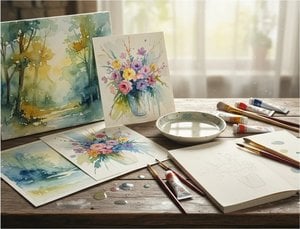
Ephemeral Visions: Exploring the Artistic Legacy & Nuances of Watercolor Painting
Explore the captivating world of watercolor painting! Discover its rich history, essential techniques, influential artists & collecting tips from art experts. A comprehensive guide for enthusiasts.

