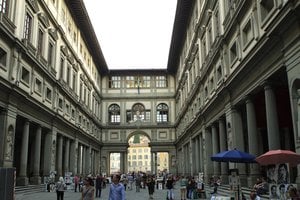
بورتريه لـ Giuliano da Sangallo

أشهر لوحات Giuliano da Sangallo: جميعها 9، مرتبة

تحديث أكتوبر 2026 · مُرتبة حسب مؤشر شعبيتنا (عمليات البحث، والزيارات، والطلبات لكل عمل فني) · 10 أعمال لـ Giuliano da Sangallo في كتالوجنا

باختصار

اللوحة الأكثر شهرة للفنان Giuliano da Sangallo هي Design for the façade of San Lorenzo, Florence (1516)، ويمكنك مشاهدتها في معرض أوفيزي، فلورنسا. يأتي بعدهما مباشرةً Tomb of Francesco Sassetti (detail) (1485) وVilla Medici (1480). من بين 10 من أعمال Giuliano da Sangallo في كتالوجنا، تُعد هذه 9 الأعمال هي الأكثر شهرة. يأتي كل عمل مع سنة إنتاجه، والمتحف الذي يضمّه، وملاحظة موجزة حول ما يجعله متميزاً.

1443 – 1516, Florence High renaissance أكبر مجموعة أعمال: سانتا ترينيتا

أفضل 10 أعمال لـ Giuliano da Sangallo: اللوحات التي يعرفها الجميع

1
Design for the façade of San Lorenzo, Florence (1516) للفنان Giuliano da Sangallo

Design for the façade of San Lorenzo, Florence

1516 · Acrylic On Canvas · معرض أوفيزي, فلورنسا

Design for the Façade of San Lorenzo, Florence Giuliano da Sangallo’s Design for the Façade of San Lorenzo stands as a testament to Renaissance architectural ambition and humanist ideals—a project born from the patronage of Lorenzo de' Medici and destined to reshape the spiritual heart of Florence. Completed in 1516, just before his untimely demise, this monumental undertaking represents more than merely a building; it embodies Sangallo’s profound understanding of…

نسخة زيتية مرسومة يدوياً من $175 30 × 34 cm
اطلب هذه القطعة المزيد عن هذه القطعة
2
Tomb of Francesco Sassetti (detail) (1485) للفنان Giuliano da Sangallo

Tomb of Francesco Sassetti (detail)

1485 · Stone · سانتا ترينيتا, فلورنسا

Located within the Basilica of Santa Trinita in Florence, this stone relief carving by Giuliano da Sangallo offers a tactile encounter with Renaissance funerary art. Created in 1485, the work functions as a detailed section of the larger tomb commissioned for Francesco Sassetti and his wife, Nera Corsi. The relief is characterized by a high-relief technique, where the figures emerge from the marble surface with a palpable three-dimensionality. This subtractive…

7
Ruins of the Ancient Roman Theater of Marcellus (1480) للفنان Giuliano da Sangallo

Ruins of the Ancient Roman Theater of Marcellus

1480 · Ink On Paper · المكتبة الرسولية الفاتيكانية, مدينة الفاتيكان

Ruins of the Ancient Roman Theater of Marcellus: A Testament to Time’s Passage The drawing by Giuliano da Sangallo, titled “Ruins of the Ancient Roman Theater of Marcellus,” transcends mere architectural representation; it embodies a profound meditation on history and decay. Executed in 1480s Florence during the High Renaissance, this piece stands as a cornerstone of humanist artistic thought—a deliberate effort to recapture the grandeur of antiquity while acknowledging its…

نسخة زيتية مرسومة يدوياً من $175 29 × 35 cm
اطلب هذه القطعة المزيد عن هذه القطعة
9
Exterior of the church للفنان Giuliano da Sangallo

Exterior of the church

Giuliano Da Sangallo, an Italian architect and sculptor, was a prominent figure during the Renaissance period. He is best known for his work on religious buildings, including Santa Maria delle Carceri in Prato, Italy. This church is considered one of the earliest examples of Greek cross plan architecture in the Italian Renaissance. The Architecture of Santa Maria delle Carceri Designed by Giuliano da Sangallo and built between 1485 and 1490,…

نسخة زيتية مرسومة يدوياً من $175 28 × 36 cm
اطلب هذه القطعة المزيد عن هذه القطعة

أكثر ما رسمه Giuliano da Sangallo

المواضيع الأربعة الأكثر تكراراً في هذه الأعمال، مع ذكر أشهر مثال لكل منها.

حيث يمكنك مشاهدة لوحات Giuliano da Sangallo

المتاحف الـ 5 التي تضم أكبر عدد من اللوحات الموجودة في هذه الصفحة.

المتحف المدينة أعمال Giuliano da Sangallo لوحات من هذه القائمة
سانتا ترينيتا, فلورنساسانتا ترينيتا فلورنسا 2 Tomb of Francesco Sassetti (detail), Tomb of Francesco Sassetti's Wife
Santa Maria delle Carceri, PratoSanta Maria delle Carceri Prato 2 Exterior, Exterior of the church
معرض أوفيزي, فلورنسامعرض أوفيزي فلورنسا 1 Design for the façade of San Lorenzo, Florence
Palazzo Gondi, FlorencePalazzo Gondi Florence 1 Façade
المكتبة الرسولية الفاتيكانية, مدينة الفاتيكانالمكتبة الرسولية الفاتيكانية مدينة الفاتيكان 1 Ruins of the Ancient Roman Theater of Marcellus

لوحة شهيرة لكل فنان Giuliano da Sangallo في كل عقد

الأعمال حسب العقد

اختر عقداً لتشاهد أبرز أعماله.

لوحات Giuliano da Sangallo: ما يود الناس معرفته

ما هي اللوحة التي اشتهر بها Giuliano da Sangallo؟شاهد الإجابة

تتصدر القائمة لوحة Design for the façade of San Lorenzo, Florence (1516)، في معرض أوفيزي, فلورنسا. وتليها مباشرةً: Tomb of Francesco Sassetti (detail) (1485) وVilla Medici (1480).

كم كان عمر Giuliano da Sangallo وقت إنجاز Design for the façade of San Lorenzo, Florence؟شاهد الإجابة

عمره 73 عاماً. وُلد Giuliano da Sangallo في 1443، ويعود تاريخ Design for the façade of San Lorenzo, Florence إلى 1516.

كم عدد أعمال Giuliano da Sangallo؟شاهد الإجابة

لدينا 10 من أعمال Giuliano da Sangallo في كتالوجنا، وتتراوح تواريخها من 1480 إلى 1516.

ما هي المتاحف التي تضم أشهر لوحات Giuliano da Sangallo؟شاهد الإجابة

ستجد معظمها في سانتا ترينيتا (فلورنسا), Santa Maria delle Carceri (Prato) و معرض أوفيزي (فلورنسا). وتوفر قائمة المتاحف أعلاه تفصيلاً كاملاً.

متى رُسمت أشهر أعمال Giuliano da Sangallo؟شاهد الإجابة

في 1480s، أكثر من أي وقت مضى: 5 من أصل 9 قطعة في هذه الصفحة تعود إلى تلك الفترة، من بينها Tomb of Francesco Sassetti (detail).

ما هي أقدم وأحدث اللوحات الشهيرة لـ Giuliano da Sangallo؟شاهد الإجابة

أقدم قطعة هنا هي Villa Medici (1480)؛ وأحدثها هي Design for the façade of San Lorenzo, Florence (1516).

ما هي أكثر المواضيع التي رسمها Giuliano da Sangallo؟شاهد الإجابة

Architecture (2) و Buildings (2) من أصل 9 قطعة في هذه الصفحة.

إلى أي حركة فنية ينتمي Giuliano da Sangallo؟شاهد الإجابة

High renaissance، كما يمكنك أن ترى في الأعمال الفنية في هذه الصفحة.

ما الذي يمكنك رؤيته لـ Giuliano da Sangallo في سانتا ترينيتا؟شاهد الإجابة

يمكنك مشاهدة 2 من القطع الفنية في هذه الصفحة في سانتا ترينيتا, فلورنسا، بما في ذلك Tomb of Francesco Sassetti (detail) و Tomb of Francesco Sassetti's Wife.

هل يمكنني طلب نسخة مطبوعة من أعمال Giuliano da Sangallo لمنزلي؟شاهد الإجابة

نعم. كل لوحة في هذه الصفحة متاحة كنسخة زيتية مرسومة يدوياً أو كمطبوعة، بالمقاس الذي يناسبك. ما عليك سوى فتح صفحة اللوحة للطلب.

تعرف على Giuliano da Sangallo

The Architect of Renaissance Florence

Giuliano da Sangallo stands as a monumental figure in the Italian Renaissance, an architect whose vision shaped the cultural landscape of Florence and beyond. More than just a builder, he was a craftsman steeped in classical ideals, mentored by luminaries like Leon Battista Alberti and Filippo Brunelleschi. His legacy resides not only in the grandeur of his structures but also in the transmission of artistic knowledge across generations, profoundly influencing masters such as Raphael and Leonardo da Vinci. Born around 1445 in Florence, Giuliano’s formative years were marked by a privileged upbringing thanks to his father, Francesco Giamberti, a skilled woodworker and architect who served under Cosimo de' Medici. This familial connection provided invaluable access to artistic patronage and fostered a lifelong partnership with Lorenzo de' Medici—a relationship that would define Sangallo’s career trajectory.

Like many aspiring artisans of the era, Giuliano began his apprenticeship as a joiner, honing foundational skills in construction and craftsmanship. Crucially, he embraced the humanist ideals championed by Alberti and Brunelleschi, immersing himself in the study of ancient texts and architectural precedents. His ascent to prominence began with Cosimo de' Medici’s commission for a fortified villa—a project that showcased his burgeoning talent for defensive architecture and solidified his reputation as a formidable engineer. This initial undertaking established a crucial bond with Lorenzo the Magnificent, who would become his most enduring patron. Recognizing Sangallo’s versatility, Lorenzo entrusted him with ambitious projects extending beyond fortifications, allowing the architect to weave classical elegance into the very fabric of Florentine urbanism.

Mastery of Form and Classical Influence

The work of Giuliano da Sangallo is characterized by a seamless blend of strength and grace, a hallmark of the High Renaissance style. His designs often sought to revive the mathematical harmony and proportion found in Roman antiquity, yet they remained deeply rooted in the local traditions of Tuscany. One of his most celebrated contributions is the Design for the façade of San Lorenzo in Florence. Commissioned by Lorenzo de' Medici, this project exemplifies the architect's ability to create spaces that are both spiritually uplifting and structurally profound. This basilica, which features the vibrant stained glass windows of Ghirlandaio, stands as a testament to Sangallo’s influence on artistic innovation and his ability to coordinate diverse artistic talents toward a singular, harmonious vision.

Beyond religious structures, Sangallo's mastery extended to the creation of villas and churches that defined the era's aesthetic. His work on Santa Maria delle Carceri remains a pinnacle of his architectural achievement, showcasing a sophisticated use of geometry and classical motifs. The architect's ability to balance the rugged requirements of military engineering with the delicate beauty of residential design allowed him to navigate the complex needs of the Medici court. His influence was not merely structural but also deeply personal; through his brother Antonio da Sangallo the elder and his sons, Antonio and Francesco, the architectural language he helped pioneer continued to evolve and dominate the European landscape for decades.

A Lasting Legacy in Stone and Spirit

The historical significance of Giuliano da Sangallo lies in his role as a bridge between the early innovations of Brunelleschi and the refined classicism of the later Renaissance. He was a pivotal figure who helped translate the intellectual theories of humanism into tangible, enduring monuments. His life's work represents a period where architecture ceased to be merely functional and became an expressive medium for political power, religious devotion, and philosophical inquiry.

To reflect on his impact, one might consider these key pillars of his career:

  • The Medici Connection: His role as the preferred architect for Lorenzo the Magnificent, which allowed him to shape the physical identity of the Medici era.
  • Architectural Synthesis: The successful integration of Alberti's theoretical classical principles with the practical engineering traditions of Florence.
  • Generational Influence: The establishment of a family dynasty of architects that carried his stylistic DNA into the 16th century.
  • Urban Transformation: His contribution to the development of both fortified defensive structures and elegant, light-filled religious and residential spaces.

Though he passed away in 1516, the stones of Florence continue to speak his name. Every time a viewer gazes upon the balanced proportions of a Renaissance facade or feels the rhythmic harmony of a classical courtyard, they are experiencing the enduring spirit of Giuliano da Sangallo.